Your Choice of Fat Changes the First Bite
A cook opens the fridge to make pastizzi and finds blocks of butter where the tub of lard or vegetable shortening ought to be. Reaching for that butter changes both how the dough handles on the counter and how the baked shell breaks between your teeth. Butter is a distinct ingredient with its own physical structure, so substituting it alters the pastry that Nanette is trying to recreate from her Maltese kitchen memory.
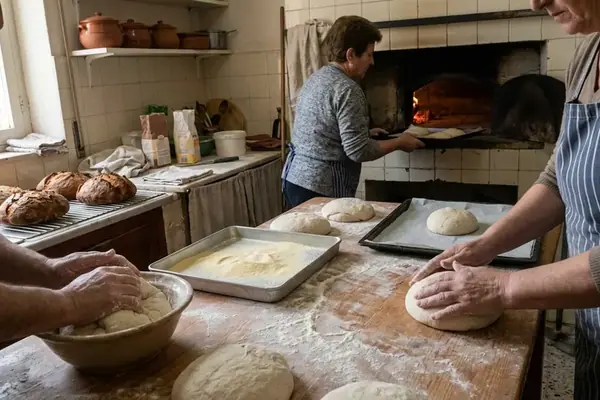
The substitution matters most at the exact moment you grease the dough. In many home methods, the rested dough is pulled and stretched across the work surface until it is translucent, often thin enough to see the grain of the bench through the sheet. At that gossamer thickness, the physical consistency of the fat decides whether your fingers glide across the surface or tear right through it.
Nanette's Maltese roots shape her perspective on this step. Through her kitchen comparisons of different fats in pastizzi dough, she evaluates how each option performs across four practical points: finished texture, flavour, behaviour on the bench, and dietary suitability for cooks who avoid pork. Understanding what happens during that first bite requires looking closely at what separates these fats before they ever reach the oven.
The Thin, Shattering Layers Nanette Wants from Pastizzi
When you bite into the style of pastizz Nanette prizes, the shell should be delicate and crisp, breaking into distinct, glass-thin shards at the edges and leaving loose flakes behind on the plate. Inside that crisp casing sits a savoury filling, most familiarly drained ricotta or seasoned mushy peas, held securely within the pastry pocket so the moisture stays inside rather than soaking through the base.
When we look for a quick reference point for flaky pastry, it is tempting to think of ready-made butter puff pastry, which I considered early on as a shorthand for describing layered dough before setting the comparison aside. Puff pastry builds its lift by folding a thick envelope of dough repeatedly around a cold block of fat, creating a structure that behaves much like a traditional blind-baked pastry shell when baked unfilled. Pastizzi dough achieves its layers through an entirely different mechanical path. The cook stretches the dough thin, smears it with fat, rolls it up into a tight log, and slices that log into rounds. When each round is pressed open with the fingers into a small cone or pocket, the coiled layers fan outward in delicate rings around the filling.
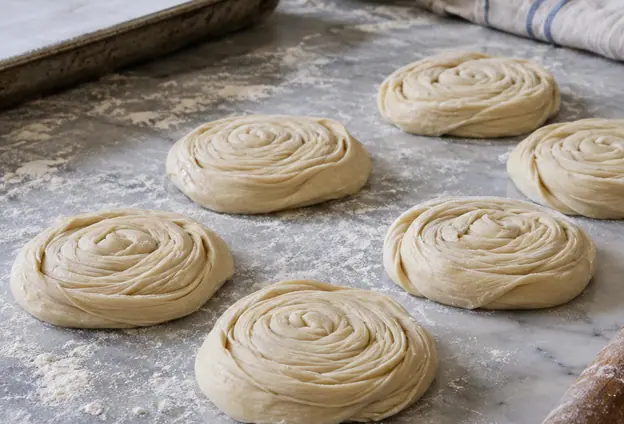
Because both methods produce visible layers, a flaky result alone cannot show that a pastry matches the specific heritage texture Nanette has in mind. Puff pastry wrapped around seasoned ricotta makes a very good warm snack, yet it remains a different pastry with a different preparation and a heavier, puffier bite. Pastizzi layers are made by stretching, greasing, rolling and coiling the dough, not by folding it around a butter block. A fat that behaves well in puff pastry can still drag, tear or pool on dough stretched thin enough to see the bench through.
Nanette grounds her preference in the Maltese food she grew up with and cooks in Melbourne today, while recognising that household habits and commercial pastizzerias vary. Maltese cooks do not all follow one identical formula or rely on a single fat in every kitchen, so her standard represents a clear culinary target rather than a universal law.
Butter, Lard, and Shortening Compared at the Pastry Bench
When a home cook stands at the bench deciding what to rub across a stretched sheet of dough, the choice comes down to what is inside the fat, how it tastes, how it spreads under the palm, how it bakes, and who at the table can eat it.
| Feature | Butter | Lard | Vegetable shortening |
|---|---|---|---|
| Composition | Fat plus water and milk solids | Predominantly fat; products vary from soft tubs to firm blocks | Predominantly fat; formulations vary across brands |
| Flavour contribution | Rich, sweet dairy notes; milk solids brown and add colour | Savoury, mild, or neutral depending on rendering | Neutral; lets the wheat dough and savoury filling lead |
| Spreading behaviour | Hard from the fridge, softens quickly in a warm room; narrow workable window | Generally pliable; soft tubs spread more easily than firm blocks | Engineered to stay pliable across a wide range of room temperatures |
| Finished texture | Crisp and flaky, though water content can fuse delicate stretched layers | Thin, distinct, shattering layers that stay separate | Crisp, well-separated shells similar to lard |
| Dietary suitability | Vegetarian; contains dairy | Pork-derived; unsuitable for vegetarian, vegan, halal, or kosher diets | Often plant-based, though some blends contain animal fat; check labels |
The structural divergence starts with composition. Butter contains water and milk solids suspended alongside its fat. When a tray of pastry goes into a hot oven, that water turns to steam while the milk solids toast, which gives butter its golden colour and unmistakable dairy aroma. Butter's flavour is a real advantage in baking, yet flavour is not the deciding test for this particular shell.
Plain lard and conventional shortening are predominantly fat. When you smear them over stretched dough, what sits between the coiled layers is pure fat rather than a fat-and-water emulsion. In a laminated puff dough with thicker layers, steam from butter helps push the sheets apart. In pastizzi dough, where the stretched sheets are already paper-thin, extra water introduced between the coils can hydrate the flour right where you want separation, causing adjacent layers to weld together before the crust sets.
Consistency across room temperatures matters just as much. Butter sets hard in the chill of the refrigerator and melts rapidly once the kitchen warms up, giving the cook a narrow window where it spreads smoothly. Shortening is made to stay workable across a wider temperature span. Lard products also vary on the shelf, ranging from soft tubs to firmer blocks, meaning two different packages of lard may not spread the exact same way under your hand.
Where Butter Falls Short in Nanette's Pastizzi
In her notes, Nanette connects these bench behaviours directly to the finished pastry she wants to serve. Comparing fats in her own kitchen led her to prefer lard or vegetable shortening for the thin, shattering shell she associates with heritage-style pastizzi. When butter is used to grease the stretched sheet, the baked shell shifts away from that fragile, splintering crispness.
Her conclusion is a specific preference about one traditional savoury pastry, never a general ruling against butter. She uses butter happily in her cakes, biscuits, desserts, and ice creams across the blog. Even in pastizzi, butter can still produce a crisp, delicious pastizz that people eat warm from the tray with great pleasure. The distinction she draws lies in the specific kind of crispness achieved, rather than whether the pastry turns out crisp at all.
At the same time, her preference was formed working with her own dough in her own kitchen, and a different flour-to-water balance, fat spread warmer or colder, a thicker stretch, a shorter rest after rolling the log, or a hotter or cooler oven could narrow or widen the gap between butter and lard or shortening. A crisp, tasty butter pastizz settles nothing about heritage texture. It only shows how butter behaved in that dough, at that kitchen temperature, on that tray.
Keep the Fat Spreadable and the Dough Layers Intact
Because kitchen temperatures fluctuate from season to season, judging your layering fat by how it looks and feels under the hand is far more reliable than chasing a fixed thermometer reading. A usable fat moves across the stretched dough like a soft paste and leaves an even, translucent film behind. It should neither drag in stiff lumps nor melt into shiny, liquid pools.
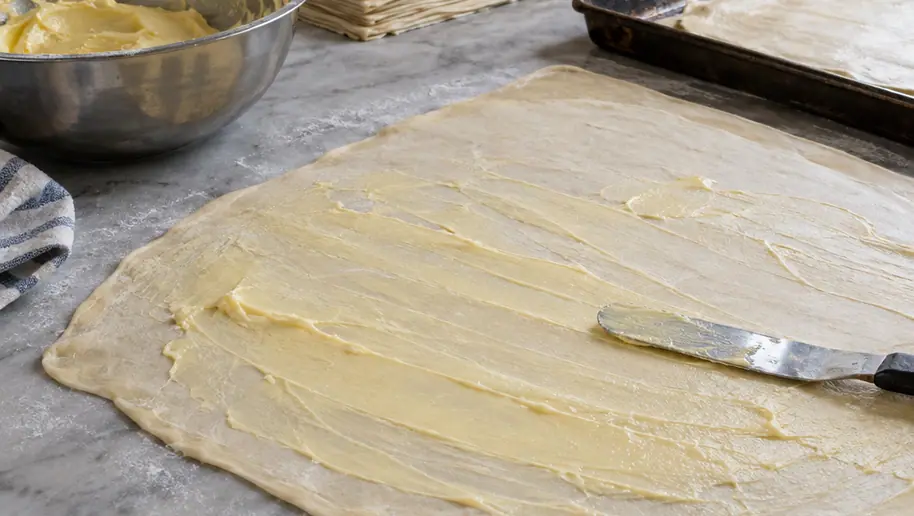
If the dough fights back, springs inward, or begins to tear while you stretch and grease it, stop immediately. Cover the sheet with a clean cloth or plastic film so the exposed surface does not dry into a skin, and rest or chill both dough and fat according to the timings given in your base recipe before continuing. Forcing tight dough or cold fat only ruins the coils.
When you replace a recipe's specified lard or shortening with butter gram for gram, you automatically put less actual fat between the layers because part of the butter's weight consists of water and milk solids. Its softer melting behaviour at warm bench temperatures also alters how much fat stays inside the log versus squeezing out onto the board. Separating filling moisture from fat behaviour prevents misdiagnosing a soft shell. When comparing fats, weigh each portion of filling and drain ricotta well in a strainer before assembly so a wet filling cannot be mistaken for a pastry fault.
Diagnose Torn Pastry Layers
- Torn dough sheets: Usually points to tight gluten that needed a longer rest, uneven pulling pressure, or fat that was too firm when applied.
- Dense, bready spots in the baked shell: Caused by bare patches left ungreased on the stretched dough, allowing the coiled layers to fuse together.
- Greasy, heavy layers: Points to fat that was spread too warm, applied in an overly thick coat, or compromised by a wet filling that leaked during baking.
Choose the Fat for the Pastizzi You Want to Serve
Selecting a fat at the shops is a practical kitchen decision based on the meal you plan to put on the table and the guests sharing it.
- Recreating Nanette's preferred heritage-style shell: Use the lard or vegetable shortening specified by a reliable pastizzi recipe so the stretched layers stay distinct and shatter cleanly.
- Cooking for pork-free, vegetarian, halal, or kosher tables: Turn the vegetable shortening package over and check both the ingredient list and any recognised dietary certification symbol before buying. Shortening labels differ across supermarkets; some products are blended fats and some contain animal tallow or lard despite generic front-of-pack branding.
- Prioritising butter flavour or baking with what is already in the fridge: Approach the batch as an adaptation. Enjoy the rich dairy aroma and browned notes, while expecting the shell to handle and bake differently from a lard-laminated coil.
- Trying a pastizzi recipe for the first time: Make your first batch with the exact fat the recipe specifies before changing anything, giving yourself a solid baseline for how the dough should stretch and bake.
Try One Shortening Batch Beside One Butter Batch
To see how fat composition changes pastizzi dough in your own oven, run this side-by-side home comparison. Treat this setup as a diagnostic kitchen exercise rather than a validated butter-conversion recipe; keeping every variable identical except the layering fat reveals exactly how butter and shortening diverge on your bench.
- Prepare a single base dough: Choose an established pastizzi recipe that specifies vegetable shortening for the layer-forming fat, and mix and rest its base dough completely unchanged. Leave any fat already incorporated inside that base dough formula exactly as written.
- Divide the dough and weigh the layering fats: Cut the rested dough into two equal portions by weight. Allocate half of the recipe's specified layer-forming fat weight to each piece: for example, if the recipe calls for 200 g of shortening for greasing the sheets, weigh out 100 g of shortening for the first portion and 100 g of butter for the second.
- Prepare uniform filling portions: Drain your ricotta thoroughly, mix your filling, and weigh out equal portions for each pastry so moisture stays consistent across both halves of the test.
- Stretch, grease, and take bench notes: Stretch the first dough half, spread it with the shortening, roll it into a log, and chill as directed. Repeat with the second dough half using the butter. While spreading, jot down on a notepad where the butter dragged, tore the thin dough, or softened faster under your fingers than the shortening.
- Label and map the baking trays: Before shaping the rounds into pockets, stick a piece of masking tape on the edge of your trays marked S for shortening and B for butter so the pastries cannot be mixed up once baked. Because home ovens rarely heat evenly from front to back or side to side, write down which shelf and which side of the oven each tray sits on during baking.
- A side-by-side scoring example: One pastizz from tray S and one from tray B have each cooled for 10 to 15 minutes, so both shells have set but remain warm. Each gets a separate entry in the notes for visible layer separation at the rim, shell crispness on the first bite, greasiness left on the fingers and plate, and overall flavour. If the butter version tastes richer but has fewer distinct layers at the rim, those are two separate findings: a flavour gain and a change in the shell Nanette prizes.