Quick Nav
- Why Mediterranean tart pastry rewards patience
- Tarts, crostatas, and Mediterranean pastry styles
- Pantry and tools
- Blind baking shortcrust
- Fruit, nut, and custard fillings
- Glazing, lattice, and final bake
- Five recipe pathways
- Common problems
- Scope and limitations
- Bottom line
Introduction: Why Mediterranean Tart Pastry Rewards Patience
Perfect Mediterranean tarts at home come from a dependable shortcrust base, controlled blind baking, well-balanced fillings, and a finish suited to the fruit or nut filling.
That is the practical answer. The slower answer is more useful in the kitchen.
I built this guide backwards from the Gourmet Worrier archive rather than from a pastry-school syllabus. The older Ms.Gourmet posts from 2009 keep returning to the same working habits: Magimix pastry preparation, Blind bake technique, almond and walnut fillings, fruit sharpened with liqueur or wine, and rustic finishes that care more about flavour than ruler-straight edges.
This is not one crostata recipe dressed up as a masterclass. Think of it as a foundation for fruit tarts, Italian crostata, almond and walnut fillings, date tarts, and filo-based ricotta variations. In my Maltese kitchen notes, I compare these choices the way I compare layered Maltese and Sicilian techniques: first by structure, then by texture, then by how forgiving the pastry feels under warm hands.
Tarts, Crostatas, and Mediterranean Pastry Styles: What Changes?
A tart is a baked pastry shell, usually filled before baking, after partial baking, or after a full bake depending on what the filling needs. A crostata is an Italian-style rustic tart, often open-faced and often finished with a lattice. The distinction matters less than the pastry behaviour.
Start with structure, not nationality
Shortcrust pastry gives you a clean, crumbly shell that can carry custard, fruit, or nut cream. Sweet shortcrust adds sugar and often egg yolk, so it browns attractively and tastes richer, but it asks for cooler handling. Commercial artisanal pastry, such as Carême, sits in a different category: it saves time and delivers a refined result when the filling is already doing the hard work.
Filo pastry behaves differently again. It flakes rather than crumbles. It suits ricotta fillings because the layers bring lightness where a thick shortcrust might make the tart feel heavy.
The archive examples make this map clearer. There is an Italian crostata with lattice and almond meal, a sweet shortcrust with egg wash, a filo pastry ricotta tart, and a French Tart Tatin sitting nearby as an upside-down apple tart rather than a crostata. One March 2009 archive recipe was adapted from a Gourmet Traveller source, which helps place it in a broader Australian-Mediterranean baking conversation without turning it into a fixed rulebook.
Field Note: I do not sort these pastries first by country. I sort them by how much reliability the filling demands from the base.
The Pantry and Tools That Make the Pastry Easier
The simplest shortcrust pantry is not glamorous: flour, sugar, butter, and, for sweet shortcrust, egg yolk. Flour gives structure. Butter gives tenderness and flavour. Sugar encourages colour and a finer bite. Egg yolk enriches the dough and helps it hold together.
The Magimix question
The Magimix appears repeatedly in Ms.Gourmet’s pastry posts, so I treat it as the archive workhorse. It cuts cold butter through flour quickly and keeps handling to a minimum. That matters.
Hands work too. Another processor works. The condition is simple: the butter must stay cold and the dough must not be overworked. Warm hands or a warm kitchen undo the tenderness you are trying to protect.
Mediterranean supports for flavour and texture
- Almond meal: the backbone of frangipane-style fillings, especially with pears, dates, or jam.
- Walnuts: the base for Crema di Noci, a walnut cream that feels deeper and earthier than almond.
- Semolina: useful where a custard needs body without becoming stiff.
- Unwaxed lemons: better for zest because the peel goes straight into the filling.
- Apricot jam: loosened when needed for a shine-giving glaze on fruit.
Pears marinated overnight in Amaretto, roughly 8 to 12 hours, are a good example of pantry logic. The liqueur perfumes the fruit, but it also adds moisture. Once you know that, you can decide whether the base needs a Blind bake before the filling goes in.
How to Blind Bake Shortcrust Without a Soggy Base
Blind baking is the core skill. It sets the pastry before wet fruit, custard, or nut cream has time to soften the base.
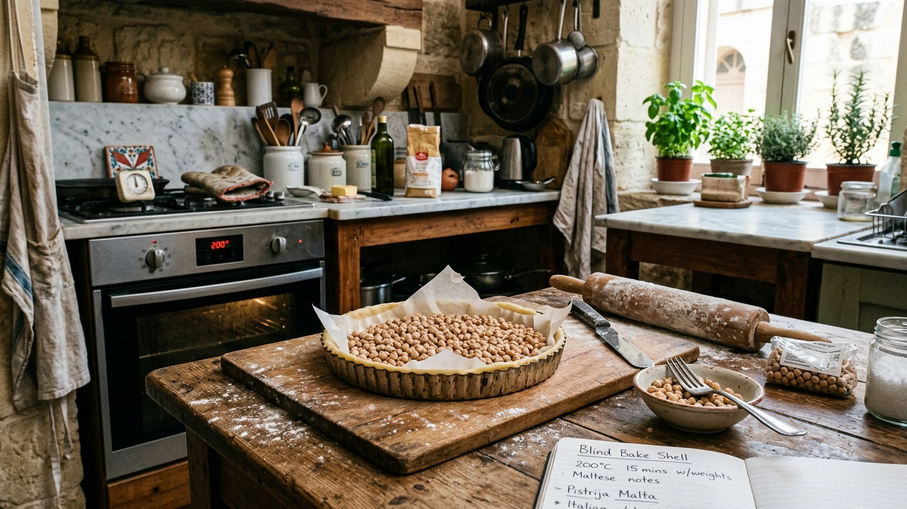
The working sequence
- Chill the pastry before rolling so the butter firms and the gluten relaxes.
- Roll evenly, turning the dough rather than stretching it.
- Line the tart tin and ease pastry into the corners with your fingers.
- Dock the base if the filling and recipe call for it.
- Line with parchment.
- Fill with baking weights so the base stays flat and the sides keep their shape.
- Blind bake the lined, weighted pastry for 15 minutes before adding suitable fillings.
The archive records the 15-minute blind bake, but not every original post fixes the same temperature in the surrounding notes. So I watch for visual cues: pastry that looks set rather than raw, edges holding shape, and a base that has started to dry.
Important: A blind-baked shell can still go soft if a juicy fruit filling is added without a thickener or barrier. The pre-bake sets the pastry; it does not seal it against prolonged moisture.
Fruit, Nut, and Custard Fillings: Choosing the Right Match
Fillings behave before they become recipes. That is the useful lens.
Juicy fruit fillings
Granny Smith apples bring acidity and firmness, which is why they are so welcome in tarts. Pears marinated in Amaretto are softer and wetter. Fruit baked with Marsala brings sweetness, perfume, and extra liquid to manage.
Ask three questions: How acidic is the fruit? How sweet is it? How much moisture will it release? Those answers tell you whether blind baking is essential, merely helpful, or too much for the final texture.
Nut creams
Almond meal anchors frangipane-style fillings because it absorbs some moisture while giving the tart a soft, dense crumb. It is especially kind to pears and dates. Crema di Noci, built on walnuts, has a more savoury edge. It can make a tart feel older, darker, and less patisserie-polished in the best way.
Do not over-process nut creams. Once the oils start to press out, the filling can feel heavy rather than plush.
Ricotta and semolina custards
Ricotta fillings need air. Egg whites are folded in whipped to keep that air in the mixture, which is particularly important when filo is the base. Semolina-thickened custards sit in another family: smooth, spoonable, and steadied by grain rather than nuts.
Arabesque by Lucy and Greg Malouf, published in 2006, and Ottolenghi the Cookbook by Yotam Ottolenghi and Sami Tamimi, published in 2008, sit in the background here as part of the wider Mediterranean pantry conversation. They are context, not a demand that every tart taste the same.
Glazing, Lattice, and the Final Bake
Finishing is not decoration added at the end. It changes flavour, texture, and how confidently the tart announces itself at the table.
Glaze after, egg wash before
Apricot jam glaze belongs after baking when you want fruit to shine. If the jam is too thick, loosen it with a little water before brushing it over the fruit. Egg wash belongs before baking, on exposed pastry edges or lattice strips, where it can brown and gloss the dough.
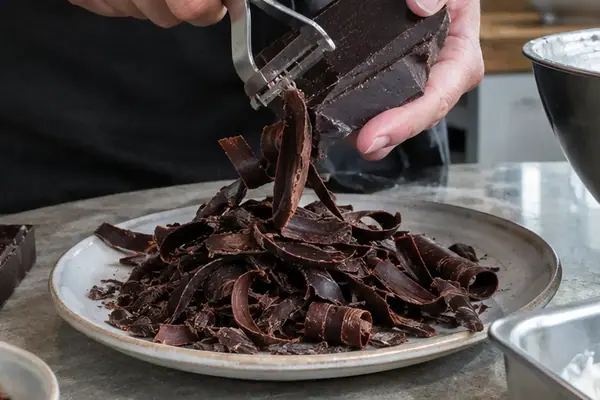
Keep wet glaze away from chocolate components. Melted chocolate used as a finishing or barrier layer will seize and clump if even a little water reaches it, so glaze, wet fruit, and chocolate need dry boundaries.
Lattice as a crostata signal
Lattice strips over jam, fruit, or almond filling give a crostata its Italian home-baked identity. They do not need perfect patisserie geometry. A slightly uneven strip tells me a human rolled the pastry, and I am happy to eat that evidence.
Five Recipe Pathways to Build Confidence
Five pathways are more useful than five full recipes here. Each one trains a different judgement: base, filling behaviour, key technique, and finish.
Five Pathways at a Glance| Pathway | Base | Filling style | Key technique | Finish |
|---|---|---|---|---|
| Classic fruit tart | Blind-baked shortcrust | Juicy fruit | 15-minute blind bake with weights | Apricot jam glaze after baking |
| Italian crostata | Sweet shortcrust | Jam, fruit, or almond filling | Rustic rolling and lattice work | Egg-washed pastry strips |
| Medjool date and almond tart | Shortcrust or sweet shortcrust | Dense fruit and almond | Balance the sweetness with a sturdy base | Light glaze or plain finish |
| Pear and Amaretto tart | Shortcrust | Frangipane-style almond filling with marinated pears | Drain and arrange fruit carefully after overnight soaking | Apricot shine after baking |
| Filo ricotta tart | Filo pastry | Whipped ricotta mixture | Fold whipped egg whites gently | Clean bake with crisp layered edges |
The archive dates help orient the cook: March 16, 2009 for the Gourmet Traveller-linked tart, July 6, 2009 for pear and Amaretto, July 20, 2009 for crostata, and May 26, 2010 for the filo ricotta piece. Antonio Carluccio’s Simple Cooking, published in 2009, belongs to that same period of accessible Italian home cooking that shaped how many of us approached crostata without fuss.
Common Problems: Shrinking, Soft Bases, and Heavy Fillings
When pastry shrinks
Shrinkage usually starts before the tin reaches the oven. The dough was warm, stretched, or handled too firmly. Chill it. Roll it gently. Ease it into the tin rather than pulling it across the base.
A tart shell remembers rough treatment.
When the base stays soft
Return to the 15-minute blind bake with weights. Then reassess the filling. A wet fruit layer, a loose custard, or a nut cream with too much added liquid can defeat a shell that looked fine on its own.
Bottom Line: The same 15-minute blind bake that suits a custard or nut-cream tart can over-firm a thin sweet shortcrust meant to bake again under a heavy filling. Rustic crostata dough tolerates handling that would toughen a delicate frangipane shell.
When fillings feel heavy
For ricotta, fold whipped egg whites gently and stop while the mixture still looks aerated. For nut creams, process only until combined. Heavy fillings often come from overworking, not from the ingredient list itself.
Scope and Limitations
This guide is a synthesis of the Gourmet Worrier archive, named cookbook context, and general pastry practice. It is not a side-by-side comparison across flours, ovens, tins, or brands of butter.
Treat Gourmet Traveller, Arabesque, Ottolenghi the Cookbook, Carluccio, Carême, and Tasty Kitchen as context for where these recipes sit. Do not assume their instructions transfer unchanged to your own oven or tart tin. When you have the original Ms.Gourmet: author post in front of you, bake from that recipe’s specific directions.
Conclusion: The Patient Route to Better Mediterranean Tarts
If you are new to Mediterranean tarts, begin with a blind-baked fruit tart or a Medjool date and almond tart. They teach structure without asking for perfect lattice work or filo confidence.
Then move to crostata. Let the strips be a little uneven. Let the jam bubble where it wants to. After that, try the filo ricotta tart, where tenderness comes from layering and air rather than from shortcrust discipline.
The craft is not mysterious. Keep the butter cold, match the filling to the base, Blind bake when moisture demands it, and finish with intent. That is how a home tart begins to taste Mediterranean in the truest sense: practical, generous, and made for the table.