Quick Nav
- A practical tour through Mediterranean cakes and bakes
- How the archive choices were made
- The twelve recipes, read through technique
- What the sources can and cannot tell us
- How to choose the first bake for your own kitchen
A Warm Tour Through Mediterranean Cakes, Custards, Pancakes, and Bakes
This guide begins in the Gourmet Worrier archive, not in a grand checklist of every cake ever baked near the Mediterranean.
That matters. A list built from the archive has flour on its sleeves. Each recipe already lived as a tested, written-up post, shaped by Nanette’s Ms.Gourmet: author voice and the sort of kitchen judgment that notices whether a batter looks sleepy, whether sugar has gone from gold to bitter, or whether a custard trembles before it sets.
The promise here is simple: a curated guide to traditional Mediterranean cakes and bakes for home cooks who want heritage flavor, achievable technique, and a story behind the plate. I am not trying to flatten Morocco, Portugal, Spain, Italy, France, Malta, and the broader Mediterranean table into one tidy dessert tray. I am comparing the way techniques travel.
The range is generous: Moroccan semolina pancakes, Portuguese pineapple cake, Spanish fried custard, Italian sweet bread, clafoutis, crumble, cheesecake, and custard desserts. Eight bake families appear across archive posts dated from 2009 to 2011, and that narrow window gives the collection a useful intimacy. These are not abstract examples. They are recipes someone cooked, watched, adjusted, and wrote down.
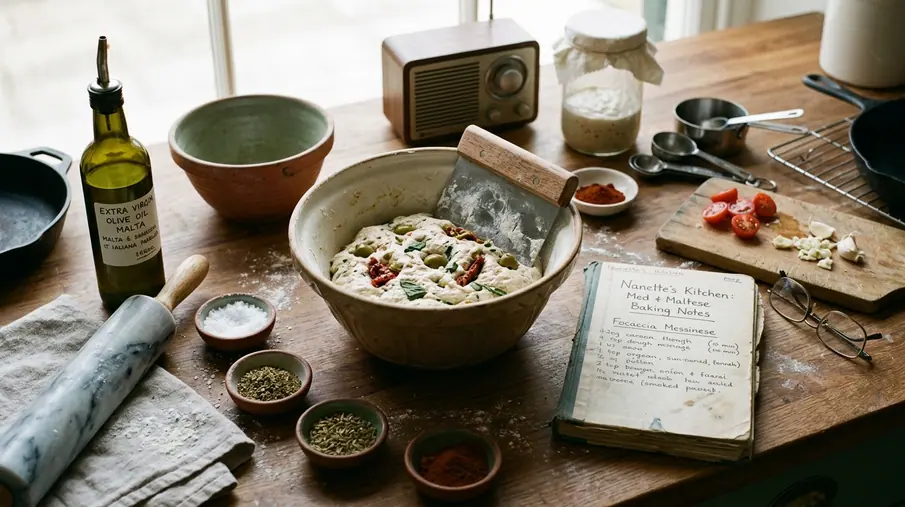
Field Note: I read these bakes as kitchen notes first and cultural signals second. The pan tells me things the title never will.
How These Mediterranean Bakes Were Chosen
The selection had to clear its filters early. Otherwise a curated list becomes a pretty cupboard where everything vaguely sweet gets pushed onto the same shelf.
Four checks guided the choices, in sequence:
- A traceable Mediterranean link through ingredient, tradition, cookbook source, or family cooking context.
- A distinctive technique worth practicing, such as yeast activation, caramelization, egg-white folding, bain-marie baking, stovetop thickening, shallow frying, or grill-pan cooking.
- Real home-kitchen makeability, because heritage baking loses its usefulness if it only works in fantasy kitchens with endless bench space.
- A narrative reason to include it, meaning the archive offered more than a name and a method.
The named cookbook references matter, but they need careful handling. The archive draws source context from The Food of Morocco, Tessa Kiros’s Piri Piri Starfish, Maria Elia’s The Modern Vegetarian, and The Food of Spain. A cookbook appearing beside a recipe signals where the kitchen drew inspiration; it does not mean the author or publisher reviewed, approved, or endorsed this collection.
That qualifier is important because this page carries several authority signals at once: dated posts, named culinary writers, chef inspiration, cookbook context, and family testing. Used plainly, they help a reader understand lineage. Used carelessly, they start to sound like decoration.
The Curated List: 12 Traditional Mediterranean Cakes and Bakes
The order here follows the archive’s chronology and technique spread rather than popularity. A 2009 Portuguese pineapple cake sits comfortably near a 2010 beghrir because both teach something useful at the stove.
1. Beghrir — Moroccan semolina pancakes with tiny surface bubbles
Beghrir announces itself visually before it announces itself by flavor. The surface should bloom with tiny holes, a lace of bubbles that catches butter and honey instead of letting them slide away.
The hinge is the yeast. In the July 8, 2010 archive entry, connected to The Food of Morocco, the yeast activates in warm sugared water for 10 to 15 minutes before the batter is ready. If that activation is rushed, the signature bubbled surface fails to form, leaving a flat pancake with no holes to catch the good things.
That is why beghrir belongs near the start. It teaches patience in miniature.
2. M’hencha — the Moroccan snake pastry
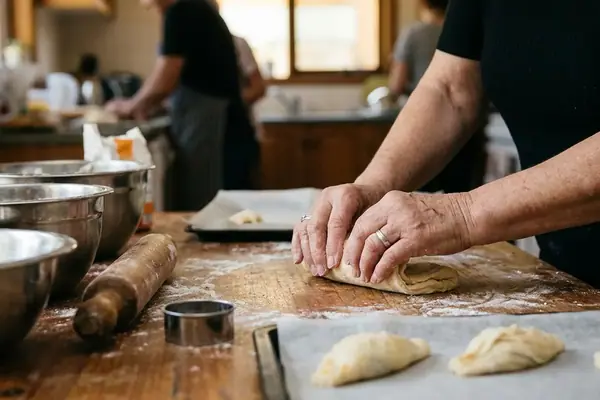
M’hencha gets its drama from shape. The pastry coils into a spiral, giving the dish its snake-name logic, and that form turns a filled pastry into a centerpiece before anyone cuts it.
The archive post from October 25, 2010 gathers several strands of influence without pretending they are the same thing. Anissa Helou and Shane Delia sit in the inspiration background; Claudia Roden’s advice about using filo pastry appears as separate practical context. Traditional Moroccan pastry types such as warka or brick are part of the broader conversation, and they are often deep-fried, though the home-kitchen adaptation depends on what a cook can source and handle.
Here, technique is also temperament. The coil must be confident but not rough. Too tight and the pastry fights you; too loose and the shape loses its clean table presence.
3. Portuguese pineapple cake
The Portuguese pineapple cake, posted March 23, 2009, is the one I would give to a cook who wants a lesson in caramel without making a separate dessert sauce. The source context is Tessa Kiros’s 2008 Piri Piri Starfish, and the archive gives Hoover a charming place as Nanette’s kitchen assistant.
The practical core is caramelization: sugar melts with water until it browns. Not beige. Not nearly there. Brown enough to bring depth to the pineapple without tipping into bitterness.
Then comes lift. Egg whites fold into the batter, giving moisture and height without making the cake heavy. That fold is not a decorative instruction; it is structure.
4. Cardamom crème brûlée
The May 19, 2009 cardamom crème brûlée sits in the custard family, but it is not interchangeable with every burnt-sugar dessert on the Mediterranean map.
Crema catalana and crème brûlée diverge in practice. The Catalan version is typically thickened on the stovetop and finished without a bain-marie, while the cardamom crème brûlée here sets ramekins in a water bath. Swap the methods and the texture changes.
That is the lesson: names can sound adjacent while heat management remains stubbornly specific.
5. Sourdough casalinga and flatbread
The January 16, 2010 archive pairing of sourdough casalinga and flatbread moves us away from dessert as sweetness and toward bread as daily architecture.
Flatbread rewards heat and timing. Sourdough casalinga asks for a different patience, the kind that watches dough rather than the clock alone. Together they show the yeasted side of the collection: not just celebration, but staple craft.
6. Leche frita
Leche frita, posted May 5, 2010, comes with The Food of Spain as source context. It is Spanish fried custard, and that description sounds stranger than it feels once the pan is hot.
The custard must hold its shape before it reaches the oil. The archive specifies shallow-frying in grapeseed oil, which places this dish closer to careful pan work than carnival excess. You are not rescuing a loose pudding; you are browning a set custard.
7. Marsala apple shortcake
The Marsala apple shortcake from August 20, 2009 is useful because it reminds me that fortified wine is not a generic splash.
In this shortcake, apples are stewed in Marsala. That means the fruit, wine, sugar, and reduction time work together. Treat the wine as interchangeable with the crumble below and the balance shifts. Marsala behaves differently depending on whether it surrounds fresh apples or soaks dried fruit.
8. Lemon curd cheesecake
The June 25, 2009 lemon curd cheesecake belongs to the practical school of beauty. It can split as it cools.
That does not make it a failure. A curd or ganache topping is suggested less as decoration than as a cover for surface cracks, which is exactly the kind of kitchen honesty I trust. Some fixes are aesthetic and structural at once.
9. Marsala dried-fruit crumble
The Marsala dried-fruit crumble, posted June 10, 2009, takes a different route from the apple shortcake. Here, dried fruit is soaked, so the wine enters the fruit before heat finishes the dish.
Quantity and reduction time are not interchangeable between the two Marsala recipes. The ingredient may be the same; the job is not.
10. Spanish peach clafoutis
The Spanish peach clafoutis from June 4, 2009 rests in that tender zone between cake and custard. It is simple to assemble but not casual in the oven.
Clafoutis needs enough heat to set the batter around the fruit while keeping the centre soft. Overbake it and the custard charm disappears. Underbake it and you have spooned batter with peaches.
11. Rosewater ricotta pancakes
The March 10, 2010 rosewater ricotta pancakes are quick, fragrant, and a little deceptive. They look like a small breakfast project, but the balance is delicate.
Ricotta brings softness. Rosewater brings perfume. Too much confidence with either and the pancake loses its modesty.
12. Panettone
The January 2, 2010 panettone closes the list with long-proved ambition. It is the opposite of the quick pancake mood.
Panettone asks a home cook to respect fermentation, enrichment, and time. It belongs here because Mediterranean baking is not only stovetop custard and fruit cake; it is also the slow lift of sweet bread made for a table that expects company.
The Techniques That Connect These Bakes
Once the twelve are laid out, the regional labels become less useful than the methods. I would sort them by skill.
Start with yeast. Beghrir gives the shortest lesson, with that 10 to 15 minute activation in warm sugared water. Sourdough casalinga and flatbread widen the conversation into dough feel, heat, and daily bread rhythm. Panettone stretches the same family of skills into a long-proved, enriched bread where impatience has nowhere to hide.
Then look at custard control. The group spans five bakes using bain-marie and stovetop thickening methods: crème brûlée, crema catalana, leche frita, clafoutis, and cheesecake. The differences are not fussy. A bain-marie softens oven heat around ramekins. Stovetop thickening asks for direct attention. A cheesecake cools with its own risks, including surface cracks.
Important: Do not treat custard methods as interchangeable just because the finished desserts share eggs, dairy, and sugar. Heat route shapes texture.
Pastry brings another comparison. M’hencha depends on handling and shaping; Portuguese pineapple cake depends on caramel and folded whites; crumble depends on the relationship between fruit, soak, and topping. Not every pastry here asks for a Blind bake, but every one asks the cook to notice where structure comes from.
Scope, Sources, and What This Collection Is Not
This is a curated archive selection, not a complete survey of Mediterranean baking traditions. It covers twelve bakes drawn from four named cookbook contexts and several chef inspirations, with archive references concentrated from 2009 to 2011. The broader archive also includes a Mediterranean Feast tour running June 7 to 17, 2011, but this page stays with cakes, custards, pancakes, breads, and related sweets.
No popularity rankings are offered. No origin-superiority claims are being made. No nutritional figures appear because the archive facts supplied for this collection do not support them.
Citations
- Gourmet Worrier archive posts dated 2009 through 2011.
- The Food of Morocco, used as source context for the beghrir archive entry.
- Tessa Kiros’s Piri Piri Starfish, used as source context for the Portuguese pineapple cake.
- Maria Elia’s The Modern Vegetarian, included among the archive’s named cookbook references.
- The Food of Spain, used as source context for leche frita.
- Anissa Helou, Shane Delia, and Claudia Roden, included where the archive supplies inspiration or practical pastry context.
That distinction may seem plain, but it keeps the article honest. Named cooks and books help trace the kitchen conversation. They do not turn this list into a certified map of Mediterranean dessert history.
Which One Should You Bake First?
Choose by occasion, not by region.
For a quick stovetop project, begin with beghrir, rosewater ricotta pancakes, cardamom flatbread, or leche frita. These give you direct feedback: bubbles, browning, fragrance, set custard. They suit an afternoon when you want to learn something without clearing the whole day.
For a dramatic table centerpiece, choose M’hencha, Portuguese pineapple cake, lemon curd cheesecake, or panettone. These bakes hold attention before the first slice, and each teaches a different kind of control: coiling pastry, browning caramel, covering a cracked surface gracefully, or waiting for enriched dough.
Bottom Line: If you want speed, cook at the stove. If you want ceremony, make the bake that asks you to slow down.
That is the quiet advantage of reading the archive this way. The recipes stop being a scattered set of sweets and start behaving like a set of lessons: yeast, caramel, custard, fruit, pastry, patience.