Start With the Cheese, Then Let the Dinner Follow
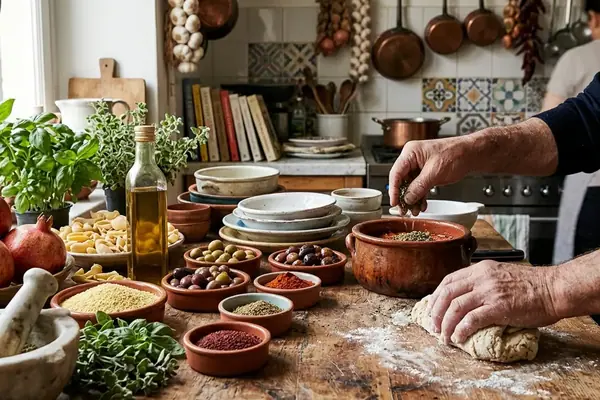
I remember sitting at Nanette’s table in Melbourne, watching a familiar modern habit unfold. Shoppers often bring home three or four mediocre cheeses, scatter some crackers, and suddenly they are serving a cheese board instead of dinner. Ms.Gourmet always approached the Mediterranean table differently.
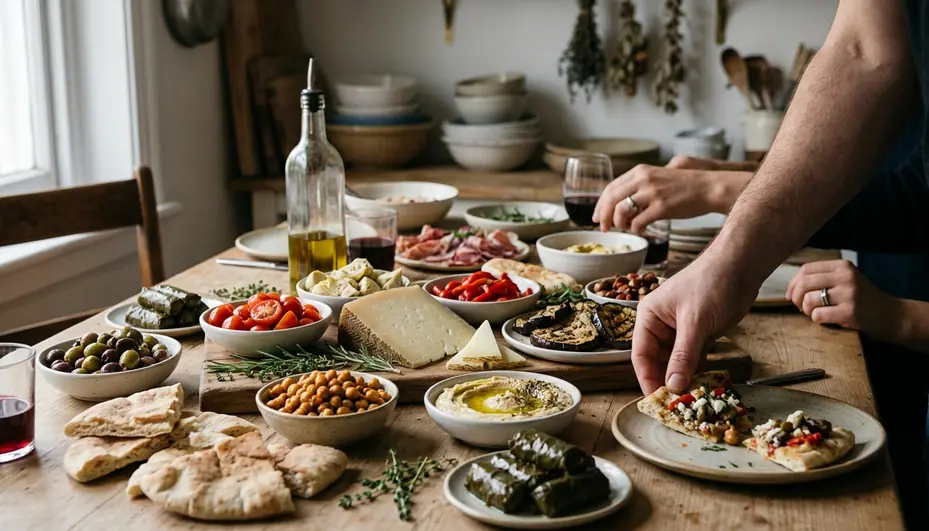
The better approach is to anchor the entire meal on one carefully chosen cheese. This single ingredient can shape the whole evening without turning dinner into a grazing platter. From there, choose the cheese, give it a role, build the supporting dishes, and finish the table simply.
Choose a Cheese With Enough Character to Lead
In group sessions, home cooks get better results when they sort cheeses by what they physically do at the table rather than by region. Texture predicts the meal more reliably than provenance, a useful approach for weeknight cooking. A crumbly cheese steers you toward salads and grains. Firm cheeses suit shaving or grating over warm plates. Soft cheeses demand spooning, while a sturdy grilling cheese easily becomes the centrepiece.
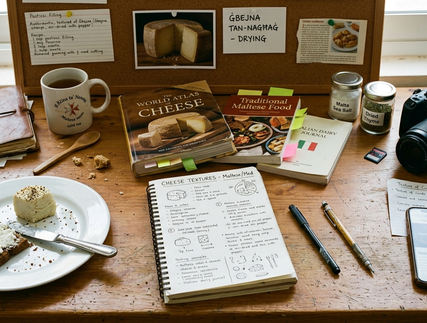
Under typical conditions, if you are lucky enough to find Maltese-style ġbejna, you have options. The fresh version is soft and must be eaten within two to three days. The semi-dried and peppered dried versions keep for weeks in the fridge. Burrata, on the other hand, is best used within 24 to 48 hours of opening, since the cream centre slackens fast.
Outside Malta and parts of Italy, ġbejna and certain aged sheep’s milk cheeses may not be available at all. The method is built to work with whatever single strong cheese your local market actually stocks well.
Decide Whether the Cheese Is the Star, the Seasoning, or the Sauce
The most common home-cook mistake is using too much cheese in every direction at once. Assigning one job up front means the rest of the meal falls into place naturally. We use a practical three-role framework—the star, the seasoning, or the sauce.
When the cheese is the star, think of a whole fresh goat cheese dressed with herbs and oil, or burrata split over roasted tomatoes. If it plays the seasoning role, you might shave pecorino or ricotta salata over beans, greens, or roasted vegetables.
For a sauce, a soft cheese loosened with hot pasta water creates a rich coating. In domestic-kitchen practice, we found it takes roughly two to four tablespoons of hot pasta water per 100g of soft cheese to reach a smooth coating without becoming gluey.
Field Note: Assigning a strict role prevents the palate from fatiguing. If the cheese is the sauce, do not also grate a hard cheese over the top.
Build the Plate Around Salt, Sweetness, Crunch, and Acidity
Most lead cheeses arrive at the table salty and fatty. The supporting dishes are chosen specifically to balance that profile, bringing the necessary brightness, texture, and freshness. The meal needs a balancing formula.
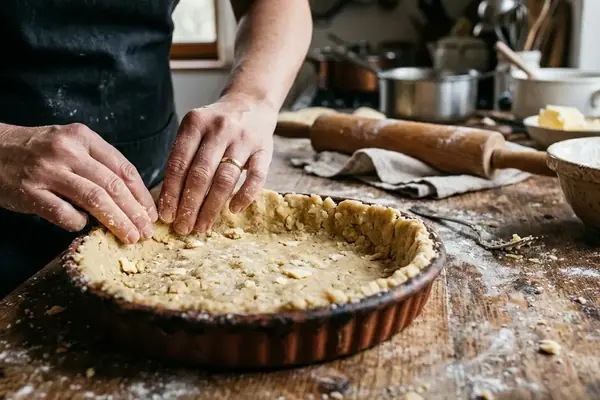
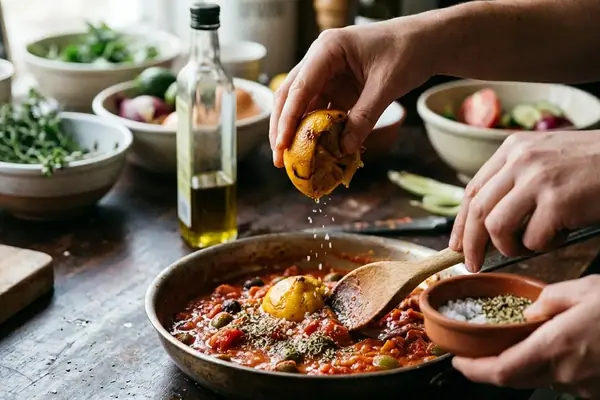
Starch provides the foundation. Crusty bread, focaccia, couscous, or roasted potatoes absorb the richer elements. If you blind bake a simple tart shell, a soft cheese and roasted vegetable filling needs very little else. Vegetables bring the counter-punch. Charred zucchini, roasted capsicum, fennel, and bitter greens cut through the dairy weight.
Texture and acidity are non-negotiable.
Toasted breadcrumbs for scattering take about four to six minutes in olive oil over medium heat, stirred until evenly gold. Quick pickled onions need only 15 to 20 minutes in red wine vinegar before they soften enough to bring a bright lift to a salty plate.
Use One of These Mediterranean Dinner Templates
Each template was built so the cheese has exactly one job and the rest of the table covers the gaps.
Template 1: The Warm Vegetable Table
This leans on feta or goat cheese as a soft centre, pairing it with roasted eggplant, tomatoes, chickpeas, and a lemony salad. Feta baked whole at around 200°C softens in 18 to 25 minutes. A baked feta left in too long tightens into a salty, rubbery block instead of spreading—pulling it at the far end of that range matters more than the exact oven temperature.
Template 2: The Pasta or Grain Supper
Pecorino or ricotta salata grated over pasta with greens, breadcrumbs, lemon zest, and olive oil. The cheese acts purely as a heavy seasoning, letting the starch and olive oil carry the bulk of the meal.
Template 3: The Grill-and-Salad Dinner

Halloumi or firm sheep’s cheese with grilled zucchini, olives, flatbread, and cucumber salad. Halloumi grills in roughly two to three minutes per side over medium-high heat, just until grill marks set and the surface stops weeping. Halloumi that sits even a couple of minutes after grilling turns from squeaky to leathery, so it has to hit the table almost straight off the heat.
Match the Cheese to Its Role and Supporting Cast| Cheese | Texture | Best Role | What the Rest of the Plate Must Bring |
|---|---|---|---|
| Halloumi | Firm, grilling | Star | Cool crunch, acid, fresh herbs, flatbread |
| Feta | Crumbly, brined | Star or seasoning | Sweetness, grains, olive oil |
Serve It at the Right Temperature and Use Every Crumb
Serving temperature is a deliberate flavour decision. Most cheeses taste flat straight from the fridge. Firm cheeses like pecorino or aged sheep’s milk show their fuller flavour after 30 to 45 minutes out of the fridge.
Timing the assembly requires attention. Brined goat cheese can make a salad inedibly salty if dressed before the cheese is added. On a sweeter plate of roasted grapes and honey, the same cheese reads as balanced. Always dress salads after the salty cheese has been added to the bowl.
Do not discard the liquids. Feta or goat cheese brine keeps in a sealed jar for about five to seven days and can replace part of the salt and acid in a dressing. Let vegetables, bread, grains, and pulses carry the meal so you can portion the cheese generously but not excessively.
Important: Taste your greens after folding in crumbly cheeses. You will often find you need zero additional salt.
Know What This One-Cheese Method Can and Cannot Do
This is a flexible home-cooking framework, not a strict record of every regional tradition. We must be clear about this distinction so cooks do not treat a substitute as an exact historical match.
Many traditional cheeses are tied to specific places. The European Union geographical indication and quality schemes protect these methods for good reason. A certified origin-protected or seasonal cheese can be approximated but not truly replicated. A substitute may be delicious while tasting clearly distinct from the original.
There are also dietary limitations to consider. Very salty, aged, or brined cheeses may not suit every table. Plant-based substitutes require their own careful balance of salt, fat, and acidity to anchor a meal successfully. In our ongoing community observation, adjusting the acid profile is the biggest hurdle when swapping dairy for plant-based alternatives.
The Simple Rule: Let the Cheese Lead, Not Overwhelm
The entire method distils into a sequence you can hold in your head. Choose one expressive cheese, give it a clear role, then build contrast around it with vegetables, starch, herbs, acid, and texture.
A cheese-led dinner should still feel like dinner. It is not a collection of nibbles. When one good ingredient is treated with care, a Mediterranean meal becomes abundant, personal, and memorable. It brings back that heritage-table feeling, where the food is generous and the cook actually gets to sit down and eat.
Bottom Line: Stop buying four average cheeses. Buy one excellent piece, respect its texture, and let the pantry do the rest of the heavy lifting.