When a Family Dish Meets a Victorian Kitchen
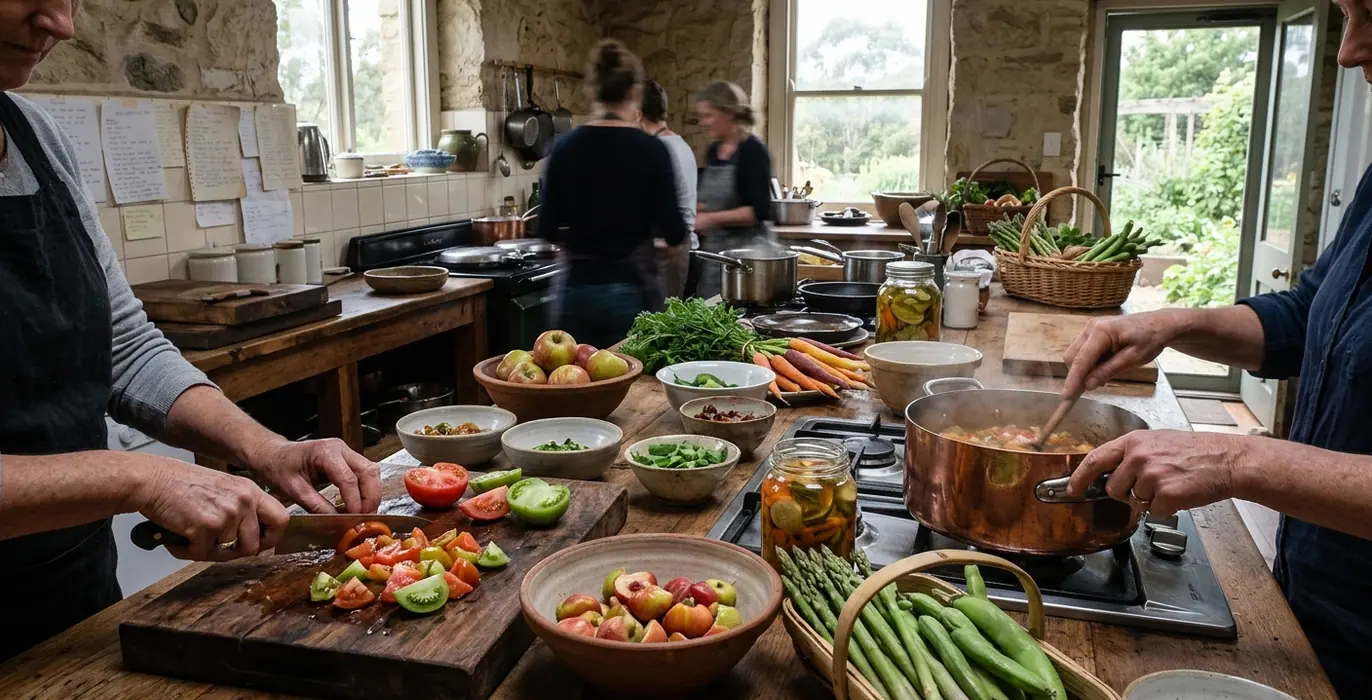
I stood at the bench in Nanette's kitchen with a menu in mind and a pile of produce that refused to cooperate. We had planned a caponata. I picked up an eggplant. It felt hollow and pale-skinned. It lacked the dense weight a ripe eggplant intended for frying should carry. A proper specimen gives slightly under the thumb near the stem.
The tomatoes were equally unyielding. Cutting one open revealed dense, watery flesh that released almost no scent. I missed the sharp green-sweet smell of a fragrant summer tomato.
Faithful heritage cooking preserves a dish's intention, flavour balance, and method without forcing unsuitable produce into the pan.
What Should Stay Constant When Ingredients Change?
Authenticity operates across three distinct layers. You can evaluate a dish's flavour architecture, its defining technique, and its role at the table independently before swapping a single ingredient.
Flavour architecture relies on structural pillars. The sweet-and-sour balance anchors a caponata. Garlic and oil carry bitter greens. A tomato base supports rather than drowns a pasta sauce.
Technique often matters more than botanical identity. Browning vegetables in batches, reducing a sauce until concentrated, and resting a finished dish preserve character when produce changes. A substitution can stay faithful to one documented family version while departing from broader regional practice.
Read the Produce, Not Just the Calendar
Importing a Mediterranean planting calendar to Victoria rarely works. Local microclimates, a few days of shifting weather, the specific grower, storage conditions, and retail handling all dictate what actually reaches the kitchen.

You have to look for observable signs of readiness. Seek weight and skin gloss in an eggplant. Wait for fragrance and slightly yielding flesh in tomatoes. Fennel requires a squeak-crisp firmness. Leafy greens should feature pliable, but never limp, leaves.
These kitchen-bench observations apply across farmers' markets, independent greengrocers, and supermarkets. Availability shifts constantly between Melbourne shops, regional towns, and individual growers.
A Four-Step Test Before Making a Substitution
Step one requires naming the ingredient's job. Decide whether it supplies structure, moisture, acidity, sweetness, bitterness, aroma, or visual identity.
Step two protects the non-negotiable. Identify the taste or technique that would make the finished dish feel wrong if lost.
Step three demands the smallest useful change. Adjust cooking time or preparation before replacing the ingredient completely.
Step four involves tasting five elements separately. Evaluate salt, acidity, sweetness, texture, and concentration while correction is still possible.
Isolate Your Variables
Change exactly one major variable per cooking session so the cause of any improvement or decline remains legible.
Adapt the Method Before Replacing the Ingredient
A supermarket tomato might technically sit in stock, but if it cuts watery and scentless—postpone the raw-tomato dish. Use a longer-reduced base instead. For under-fragrant tomatoes, reduce them longer on the stove, reach for good pantry tomatoes, or pick a dish that bypasses raw tomato flavour entirely.
Mature zucchini requires intervention. Scoop the watery seed core and use firmer-flesh methods such as stuffing or a longer braise. Substituting zucchini for eggplant on looks alone fails because it releases water rather than absorbing oil, thinning the sauce instead of enriching it.
Robust greens benefit from a quick blanch or braise before finishing with garlic, oil, or acidity.
Build a Seasonal Memory for Your Own Kitchen
A short recipe note builds repeatable knowledge without overwriting inherited recipes. Annotate alongside the original wording to preserve both family memory and the Victorian adaptation.
Each note should capture four fields:
- Where the produce was bought
- Its sensory condition
- The cooking change made
- What to repeat next time
Noting useful signals such as 'needed longer reduction' or 'best after resting' builds a reliable guide for future meals.
Worked Example: Caponata When Fresh Tomatoes Disappoint
This caponata serves as a repeatable adaptation exercise. For four servings, gather two medium eggplants, one onion, two celery stalks, 400 grams of canned whole tomatoes, two tablespoons of capers, about 80 grams of olives, two tablespoons of red wine vinegar, one teaspoon of sugar, and olive oil.
- Skip automatic salting. Assess the eggplant for bitterness and moisture first.
- Cut the eggplant into even cubes.
- Brown it in uncrowded batches so it retains distinct edges. A cook who browns eggplant crowded in one pan steams it grey instead of colouring it, and the cubes collapse into the caponata.
- Incorporate the canned tomatoes. They provide the necessary concentration and sweetness when fresh options lack aroma.
- For a later fresh-tomato comparison, use roughly 500 grams of chopped fresh tomatoes and check reduction time, sweetness, and aroma against this canned version.