From Melbourne’s Olive Harvest to the Kitchen Sink
How can a Melbourne home cook turn raw, bitter green olives into something ready for the table? Slit sound olives, soak them in fresh water changed every day, then pack them in a weighed lemon-and-fennel brine.
That sequence follows the rhythm of a suburban kitchen in late autumn. A bucket arrives from a Victorian grower, often with leaves still caught between the fruit, and it needs attention that evening. The practical scale is roughly 1.5–3 kg of olives in a 4–5 litre glass or food-grade plastic vessel, leaving enough room for water above the fruit.
Nanette’s Maltese kitchen logic sits behind the flavour: preserve the olive’s firm character, temper its bitterness patiently, and season it with lemon and fennel. This is a small household cure ending in the refrigerator. It does not cover commercial drums, heat processing or pantry-shelf canning.
Three Fixed Stages
Open every olive, change its water every 24 hours, then finish it in brine made with 100 g of non-iodised salt per litre of water. Keeping those stages distinct makes the job easier to manage around work, school runs and dinner.
Finding Fresh Green Olives Around Victoria
Victoria’s green table-olive harvest generally falls from late April through early June, though the useful dates move with the district, variety and season. Cooler high-country groves may pick one to three weeks after warmer inland sites. A calendar gives you a starting point; a conversation with the seller tells you whether the fruit in front of you is genuinely fresh.
Questions for the Grower or Grocer
Try Victorian farm gates, produce markets, Mediterranean grocers and growers who sell directly. Ask specifically for untreated, freshly harvested green olives suitable for curing, then establish:
- When were these olives picked?
- Have they been sprayed, washed or treated since harvest?
- Does the seller know the variety?
- Were they held somewhere cool after picking?
Manzanillo, Verdale, Sevillano and Frantoio are useful names to ask for. Kalamata fruit is usually left on the tree longer for black curing.
Buy for Tonight
Choose only the quantity you can sort and submerge within 6–12 hours of reaching home. Fruit held in a sealed bag or a warm car can heat and soften within a day. Firm skins, clean grassy aromas and fruit without bruised patches give the batch a sound beginning.
Sort, Rinse and Slit Every Olive
Set a plastic board over an old towel before opening the bucket. Olive juice readily stains grout, unsealed timber, marble and tea towels, so this modest bit of preparation saves a long clean-up. Rinse the sink as soon as the cutting is finished.
Pull out leaves and stems. Discard shrivelled olives, badly bruised fruit and anything with soft, broken or discoloured patches. Rinse the selected olives under cool water.
A Slit Holds Its Shape
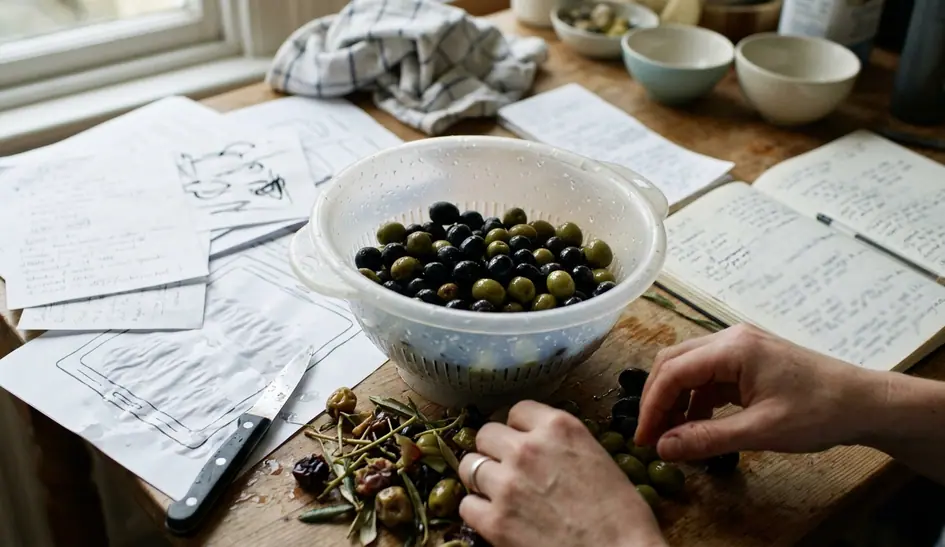
I favour one lengthwise knife slit, stopping when the blade touches the stone. The cut admits water while preserving a recognisable olive for the antipasto plate. A light crack also works and exposes more flesh, although forceful smashing creates ragged pieces that soften sooner. Keep the stone intact and avoid cutting the fruit into halves, which tend to collapse during a long soak.
Place each opened olive straight into a clean glass, glazed ceramic or food-grade plastic vessel. Aluminium, copper, galvanised buckets and unlined metal can pick up metallic taints from olive juice.
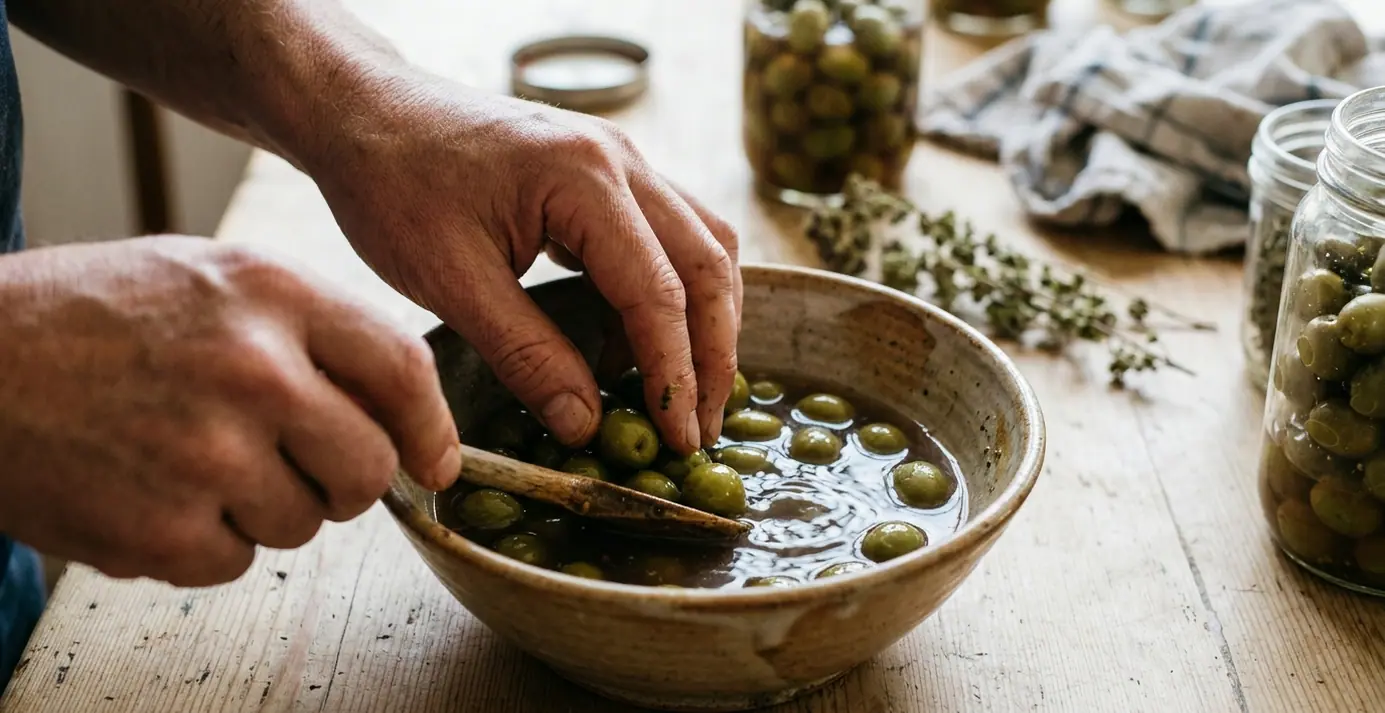
Cover the fruit generously with fresh cool water. For a 2–3 kg batch, a dinner plate topped with a water-filled 500 ml jar makes a straightforward weight. Check around the plate’s edge: every olive must sit below the surface because floating fruit can discolour within hours.
The Once-a-Day Water Change
The curing routine fits into one repeated action: drain, inspect, rinse if needed, refill and re-weight. Do it at roughly the same hour every 24 hours. Linking the change to the morning kettle or the after-dinner washing-up turns an awkward preserving task into a kitchen habit.
- Lift off the jar and plate, keeping both clean.
- Drain away all the old water.
- Look over the olives for changes in smell, skin and firmness.
- Rinse the vessel if sediment has collected.
- Refill with fresh cool water and restore the weight.
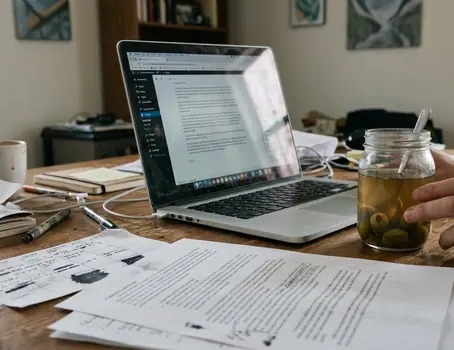
The water commonly runs tea-coloured for the first 4–6 days, then becomes progressively paler. In a kitchen around 14–20°C, slit green olives typically need 10–21 days of daily changes. Large, firm-fruited varieties often sit toward the longer end.
Taste the Flesh, Not the Water
Begin tasting around day 8, then sample another olive every second or third day. Lift one out, rinse it, bite into the flesh and notice both bitterness and texture. Clean olive bitterness feels astringent and drying while the flesh remains crisp. Stop the soak when the remaining bitterness tastes pleasant enough to carry lemon, fennel and salt.
Slippery Means Stop
A sour or sewer-like smell, slimy skins, flesh that squashes to pulp, or fuzzy grey, green or black growth ends the batch. Discard it instead of attempting another rinse. During a warm spell the fruit softens faster, so change the water twice within 24 hours and keep the vessel out of sunlight.
Weigh the Lemon-and-Fennel Brine
The finishing brine seasons the cured olives and helps them retain their texture. Salt belongs on a scale here. Flaked and fine crystals occupy very different volumes, making spoonfuls an unreliable measure.
The Formula Per Litre
- 1 litre water
- 100 g non-iodised salt
- Peel of 1 lemon, cut in wide strips with the white pith pared away
- Either 1–2 teaspoons fennel seed or two to three fresh fennel fronds
Stir the salt into warm water until the liquid runs clear, then cool it completely before it touches the olives. Allow 60–90 minutes on the bench, or prepare the brine the night before and refrigerate it. Warm brine can soften fruit that has already spent days holding its shape through the soak.
Drain the olives and pack them into clean, straight-sided jars with the lemon peel and fennel. Pour in enough cooled brine to cover them fully. As a working measure, 500–600 ml of brine covers about 1 kg of well-packed drained olives.
Lemon supplies perfume and flavour; it does not establish safe acidity. Removing the pith also prevents the cure from acquiring a second, harsher kind of bitterness. Garlic, chilli and Mediterranean herbs can join a later batch, but lemon and fennel give this jar its clear Maltese-Mediterranean line.
Keep the Finished Jar Cold and Submerged
Write the packing date and olive variety on masking tape, stick it where you can read it, and refrigerate the jar at 1–4°C. Keep every olive beneath the liquid. If the level falls, top it up with freshly prepared brine at the same strength of 100 g salt per litre.
Use a clean, dry spoon or fork for serving and return the jar to the refrigerator within a few minutes. Fingers introduce food scraps and moisture, while a jar left through a long lunch warms repeatedly.
Check Before Serving
Each opening deserves a quick sensory pass. Smell the jar, inspect the surface and feel the texture of the first olive lifted out. Discard the jar if you find an off or sour aroma, white or fuzzy surface growth, a hiss or bulging lid, slippery skins, or collapsed fruit.
Sound olives can go straight onto an antipasto plate with cheese and cured meats. They also carry a tomato and cucumber salad, warm briefly with crusty bread and oil, or sharpen pasta tossed with anchovy and parsley.
One Two-Kilo Batch, from Farm Gate to Fridge
Here is the whole routine with the decisions already made. Bring home 2 kg of firm green olives from a farm gate in mid-May. Keep them cool on the drive, then sort and slit them that evening. Allow roughly 45–60 minutes to cut each olive lengthwise until the knife meets the stone.
- Put the slit fruit into a clean 5 litre glass vessel and cover it with fresh cool water.
- Hold the olives down with a dinner plate topped by a water-filled jar.
- After dinner every evening, drain the water, inspect the fruit, rinse away any sediment, refill and replace the weight.
- Taste one rinsed olive on days 8, 11 and 14. Continue while the bitterness remains too severe.
- On day 16, taste again. If the flesh is crisp and the bitterness has softened to a clean, appetising edge, drain the batch.
- Dissolve 120 g non-iodised salt in 1.2 litres of warm water. Cool the brine completely.
- Divide the olives between two clean 1 litre jars. Add wide strips of pith-free lemon peel and fennel seed, then pour over the cooled brine until every olive is submerged.
- Label both jars with the packing date and variety, then place them at eye level in a 1–4°C refrigerator.
Leave the packed olives for 10–14 days so the lemon oils and fennel scent move through the brine. Then lift out a small bowl with a clean spoon, return the jars promptly to the fridge, and serve those firm, hand-slit olives beside bread, cheese and sliced tomatoes.