The Shift from Kitchen Reality to Neon Display Cases
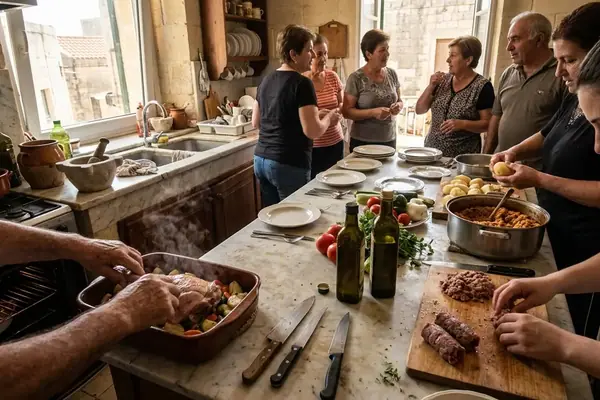
Modern display cases use saturated shades as shorthand for flavour, training the eye to expect visual volume before the spoon even lifts. Mounds of neon-bright dessert set an expectation that the tongue often struggles to verify. Nanette framed her review around a single query at the freezer door: does colour tell you anything about flavour? Rooted in Maltese memory and shaped by Melbourne life, her approach treats the raw ingredient with total respect. Maltese and Mediterranean home cooking prizes the ingredient itself. A pale strawberry or lemon gelato requires no cosmetic intensity when the underlying fruit is sound.
The comparison covers one fruit at a time, made twice in the same week, in the same domestic churn, with the same milk-and-cream base—the only variable is fruit purée versus a bought flavour paste. Comparison batches were kept to roughly 800 millilitres to one litre. This volume represents the practical ceiling for most domestic churns and the exact amount her household finishes in four to seven days. Gelato is served warmer and denser than ice cream, typically around -11°C to -13°C. Home tubs need five to ten minutes on the bench before the flavour opens up. The question is: which approach produces the more convincing flavour for a home batch?
The Mechanics of Pigment Loss in the Churn
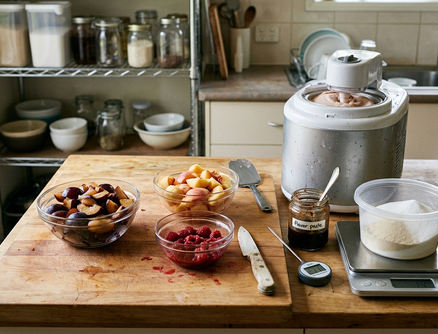
Nanette logged what each fruit actually looked like at three points to track pigment loss directly. She recorded the raw purée in the jug, the purée once folded into the pale base, and the finished scoop after a night in the freezer. The pale-scoop breakdown ladder follows a strict sequence. Dilution by the white base happens first. Air exposure and straining follow. Freezer-cold numbing of aroma happens third. Colour drops at the mixing jug, flavour drops at the freezer, and the two failures need different fixes.
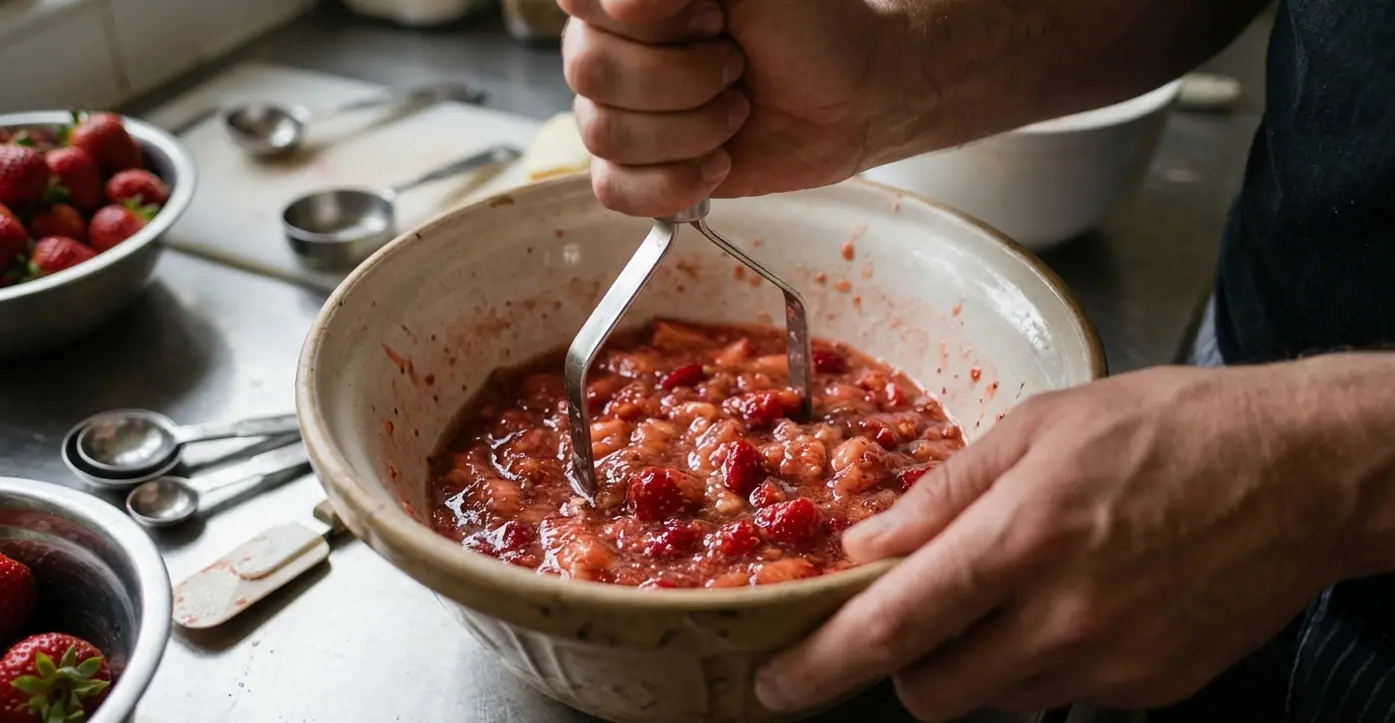
Strawberry purée that reads deep red in the jug typically settles to a dusty rose once combined with a milk-and-cream base and frozen overnight. Peach and apricot land in muted cream-orange. Lemon sits close to ivory. Mango ranges anywhere from pale straw to deeper gold depending on cultivar and ripeness. The white base scatters light and pigment long before the temperature drops.
Timing the Purée
Cut fruit surfaces begin dulling within 15 to 30 minutes of exposure to air. She purées immediately before combining to preserve the initial shade. Cold suppresses aroma perception. A scoop assessed straight from a -18°C freezer will read paler in flavour as well as colour compared with the same scoop after tempering.
Evaluating the Spoon: Seasonal Harvest Versus Commercial Paste
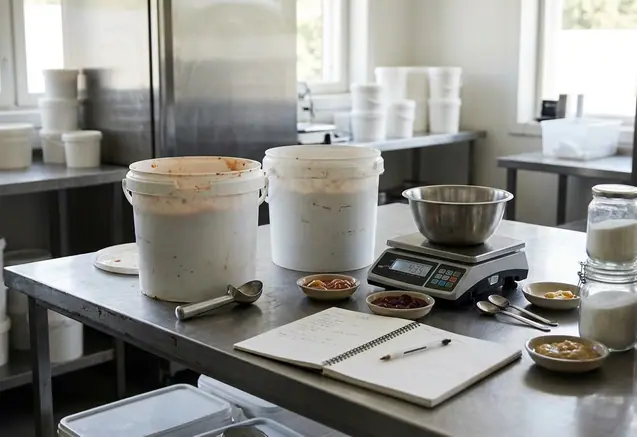
The criteria were fixed before the first batch so the comparison would avoid drifting into preference. The evaluation covered recognisable aroma on opening the tub, complexity across the first three seconds of the spoon, aftertaste at fifteen seconds, colour consistency between batches, convenience, and how much control the cook retains over sweetness. Nanette scored each pair from notes taken during tasting, anchoring the evaluation in sensory facts.
Fresh-fruit batches made from the same variety three weeks apart differed noticeably in tartness and perfume. They carry ripe, tart, floral, and slightly imperfect notes that make the finished gelato taste specific to the ingredient. Paste batches matched each other closely, delivering the repeatability that serves as their primary selling point. Commercial flavour paste provides consistent colour and flavour. It proves highly practical when suitable fruit is unavailable.
Formulations differ widely across brands. Ingredient labels vary in whether fruit appears first, second, or well down the list, and in whether sugar is already carried in the paste. This shifts the sweetening decision in the base. Fruit purée typically arrives with 80 to 90 percent of its weight as water. It dilutes a base in a way a concentrated paste avoids. Validated by notes taken during tasting, the finding applies strictly to home batches eaten within a week; a cook needing identical colour across repeated batches for a party or a stall is solving a different problem.
Sourcing Ingredients by Fragrance and Yield
Nanette's selection method used to start at the shelf, choosing the reddest punnet or the most evenly blushed peaches. She abandoned that habit after a summer of brilliant, hollow-tasting strawberry gelato. Now, she buys nothing she has not smelled first. If the raw fruit lacks the taste of something you would happily eat standing at the sink, churning will only mute it further. A vivid, underripe strawberry or mango will remain flat in the base.
- Look for fragrance from about 20 centimetres away without pressing the fruit.
- Ripe stone fruit should give slightly at the shoulder near the stem, while the cheek remains firm.
- Taste three to four pieces from across a punnet or tray, sampling both the top and lower layers because the presentable fruit is always loaded on top.
The sensory check at the market stall serves as the primary quality control gate. Melbourne summer stone fruit peaks from midsummer into early autumn. Local strawberries run strongest from late spring through summer. Mangoes arrive from the north during summer.
Sequencing the Base to Protect Delicate Aromas
The working order emerged from repeated batches where the fruit disappeared. Prepare and taste the fruit, purée it, strain only if seeds or fibre demand it, combine with a fully chilled base, chill again, then churn. Straining moved from automatic to conditional once Nanette noticed that removing pulp from peach also removed body. Macerating cut fruit with a portion of the recipe's sugar for 20 to 45 minutes at room temperature draws out juice and aroma without cooking the fruit. The sugar acts osmotically on the fruit cells, pulling out the essential liquids.
Managing Base Temperature
Sweetness must be judged in the chilled base. Cold flattens perceived sugar, meaning a mix tasted at room temperature will be over-sweetened by the time it freezes. The base is chilled to fridge temperature and rested 4 to 12 hours, ideally overnight, before churning. Resting the base allows the milk proteins to hydrate fully, creating a final texture that carries the delicate fruit notes without masking them. A warm or under-rested base extends churn time and coarsens the texture.
Home churning generally runs 20 to 35 minutes depending on the machine and base temperature, followed by 3 to 4 hours of hardening before the first proper assessment. A measured touch of lemon may sharpen a flat-tasting batch. Add acid conditionally, because naturally tart fruit requires balance alongside its inherent sharpness. Vanilla, strong extracts, and heavily cooked dairy notes compete directly with delicate fruit. Leave them out entirely for lemon, apricot, and white peach.
Committing to the Natural Finish
The honest fruit batches consistently improved relative to the paste ones once the initial impact faded. A useful test of a finished batch occurs after swallowing. The fruit should still be identifiable at around 15 to 20 seconds. If it vanishes, the base is dominating. Judge the batch on day two, after 12 to 18 hours of hardening and 5 to 10 minutes of tempering on the bench.
Choose the best-tasting fruit available, make a simple base, photograph its natural shade only after churning, and judge it first by aroma and flavour. Notice whether the finish recalls the fresh fruit, leaving behind the memory of an intensely coloured shop display. The visual restraint of a pale scoop signals a confident kitchen. When good seasonal fruit is available, let the gelato remain pale and spend the effort entirely on flavour.