When Ricotta Becomes a Leftover
Leftover ricotta means the usable portion remaining after another recipe, rather than a tub bought expressly for a new dish. The clearest example sits on the bench after a torta ta' l-irkotta has gone into the oven: an opened 500 g tub with perhaps 200–250 g still inside.
That handling history matters. Ricotta left wet in the tub behaves differently from ricotta already drained for the torta. Time matters too. Once opened, return it promptly to the back of the fridge, where the temperature stays steadier than in the door, and follow the package's opened-storage instructions. The printed window is typically two to three days after opening.
I begin with three questions: how much remains, has whey pooled around it, and does the next meal want savoury or sweet? Half a tub can become six small parcels when drained, or a lemony pasta sauce when used wet that evening. The same ricotta takes two quite different paths.
This is a home-kitchen way of thinking, familiar from Nanette's half-tub-after-torta problem. It should not be mistaken for a universal Maltese household rule. Family techniques, pastry preferences and fillings vary widely. The useful principle is narrower: let the ricotta already in front of you set the scale of the dish.
A Generous Scoop Belongs at the Savoury Table
Qassatat-Style Filling
With roughly 250 g of drained ricotta, qassatat-style parcels become practical. Combine the ricotta with one egg, a generous tablespoon of chopped parsley, salt and black pepper. A small handful of peas adds sweetness and gives the filling a familiar green fleck.
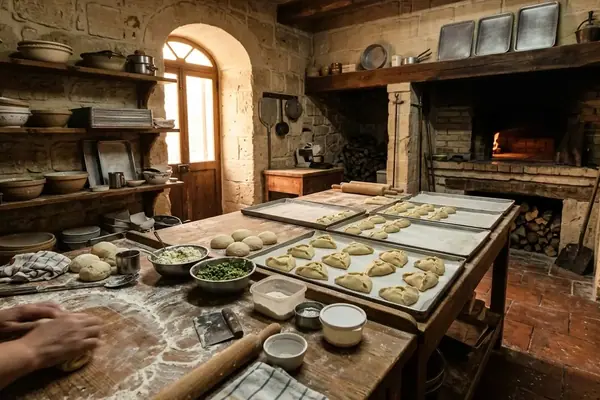
This is a quick home filling rather than a definitive account of qassatat. Maltese cooks shape dough and season ricotta according to household practice. Ready-made pastry can carry the filling on a weeknight, while handmade qassatat dough gives a distinct texture and deserves its own careful treatment.
Ricotta Sauce Without a Separate Pot
Wet ricotta is useful for pasta because its whey helps form the sauce. For 150 g dried pasta, reserve two to three tablespoons of starchy cooking water. Beat that water into the ricotta with olive oil and black pepper, working off the heat, then fold in the drained pasta.
Lemon zest sharpens the dairy richness. Spinach or peas can go in when they are already waiting in the fridge. Avoid opening three new packets to use one old ingredient; the elegance here comes from restraint.
Toast, Bread and Small Patties
A thick slice of Maltese-style bread or sturdy toast will take a broad smear of ricotta beneath tomatoes, olives, herbs or roasted vegetables. If the amount feels too substantial for toast, patties offer another route. Mix about one tablespoon of dry breadcrumbs into each 100 g of drained ricotta, season, shape and shallow-fry over medium heat for two to three minutes per side, until browned and set.
Once the quantity drops below roughly two tablespoons, skip the filling projects. Stir it through beaten eggs during the final seconds of cooking, when the curds can soften without disappearing.
The Last Spoonful Can Lean Sweet
Ricotta has enough gentle acidity to carry honey without becoming cloying. For each 100 g, start with one to two teaspoons of honey and the zest of half a lemon or orange. Beat for 60–90 seconds, until the visible curd texture softens into a spread.
Taste before adding more honey. A ricotta tub may already carry a trace of sweetness from its earlier use, particularly if utensils moved between a torta filling and the remaining cheese. Breakfast also asks for a lighter hand than dessert.
Three Directions From One Bowl
- Citrus and cinnamon: spoon onto toast, crumpets or warm fruit.
- Chocolate: fold through finely chopped chocolate and use as a pancake filling.
- Coffee: add a little coffee to the whipped ricotta, then layer it with fruit and toasted nuts in a glass.
A few spoonfuls can also enrich pancake or cake batter. Two to three tablespoons of ricotta usually call for reducing the milk by about the same volume, since wet ricotta brings liquid of its own. Watch the batter rather than chasing exact symmetry: it should still fall from the spoon readily.
For a colder dessert, soften the ice cream on the bench for eight to ten minutes, then ribbon in sweetened ricotta. That brief softening period allows marbling without melting the whole container.
Texture Tells You What to Do Next
Pastry exposes watery filling quickly. Whey seeps towards the base, the crumb loses its crispness, and even a Blind bake cannot solve moisture introduced later. Set the ricotta in a fine sieve over a bowl and let gravity do the work in the fridge.
- For a spread: drain for 20–30 minutes.
- For fritters or pastry: allow two to four hours.
- For ricotta visibly sitting in whey: drain overnight.
Pressing the curd beneath a weighted plate may seem faster, yet the pressure compacts it into a dense, chalky mass. A sieve preserves a looser curd that can still be beaten smooth.
Season After Draining
Add salt, pepper and herbs once the whey has drained away. Seasoning beforehand means the final mixture may taste stronger than intended as its liquid volume falls.
Graininess calls for movement and a small amount of liquid. For a savoury spread or sauce, beat one to two teaspoons of olive oil or milk into each 100 g of ricotta for about a minute. Honey or a squeeze of citrus juice performs the same textural job in a sweet bowl.
Reserve egg-bound mixtures for 200 g of ricotta or more. With smaller quantities, egg can overwhelm the cheese and leave the filling loose; breadcrumbs and seasoning give better control.
Discard Doubtful Ricotta
Draining, blending and seasoning repair texture only. Ricotta with a doubtful smell or surface, or a tub left on the bench for an uncertain period, goes in the bin before the oven is switched on.
Pair the Quantity With the Right Dish
Quantity rules dishes in or out; moisture chooses the cooking method. This two-part check takes only a few seconds and prevents a small leftover from turning into a larger shopping list.
First, Look at the Amount
- One to two tablespoons: stir through eggs at the end of cooking or spread on toast.
- Three to five tablespoons: beat into a pasta sauce or sweeten for a breakfast spread.
- About 200 g or more: drain for pastries, fritters or another filled bake.
Then, Check for Whey
Wet ricotta fits sauces and batters, where its liquid contributes to the finished texture. Drained ricotta suits anything that must hold a shape, particularly a pinched pastry or shallow-fried patty. Grainy but otherwise sound ricotta belongs in either group once beaten with a suitable liquid.
Let the Tub Decide
Choose from the amount and moisture already present. A leftover succeeds when it saves ingredients as well as ricotta.
Turn Half a Tub Into Six Pinched Parcels
Here is the half-tub case worked from fridge to tray. It uses ready-rolled shortcrust pastry as an open convenience: traditional qassatat dough has its own handling, flavour and family variations.
- Drain the ricotta. Place about 250 g in a fine sieve over a bowl. Leave it in the fridge for two to four hours if time allows. If it is only lightly wet, begin draining while the oven heats.
- Heat the oven. Set it to 200°C conventional or 180°C fan. Line a baking tray.
- Mix the filling. Combine the drained ricotta with one egg, a generous tablespoon of chopped parsley, a small handful of peas, salt and black pepper. Stir only until evenly mixed.
- Cut the pastry. Unroll supermarket shortcrust pastry, usually around 3 mm thick, and cut six rounds large enough to pinch around a central mound of filling.
- Divide evenly. Spoon one-sixth of the ricotta mixture into the middle of each round. Keeping the portions even helps all six centres set together.
- Shape the parcels. Lift and pinch the pastry edges into pleats, leaving the ricotta visible in the centre. Set each parcel on the lined tray.
- Bake and judge the base. Check at 20 minutes. Expect the pastry to turn golden and the centre to set within 22–28 minutes. Thicker or hand-rolled dough needs longer, so lift one parcel gently and look for a cooked, lightly coloured base.

For a smaller leftover of about 150 g, beat one egg separately and add only half to the ricotta; brush the remaining egg over the pastry edges. The copied plan is then simple: drain, mix, cut, divide, pinch and bake until the sixth parcel has a golden base and a firm, visible ricotta centre.