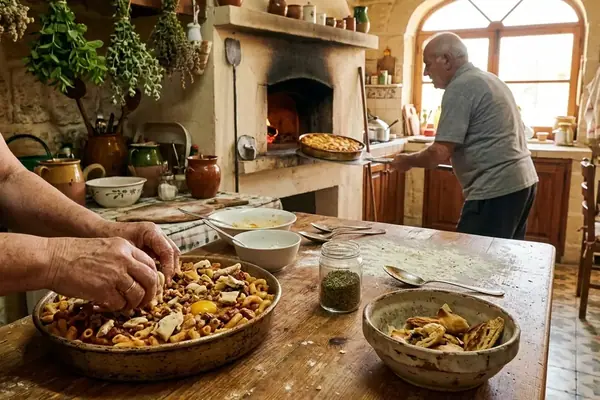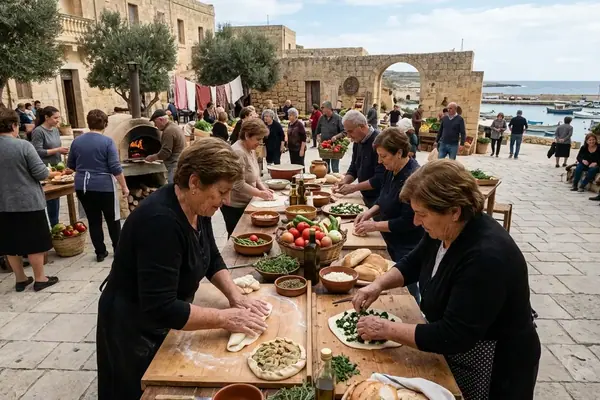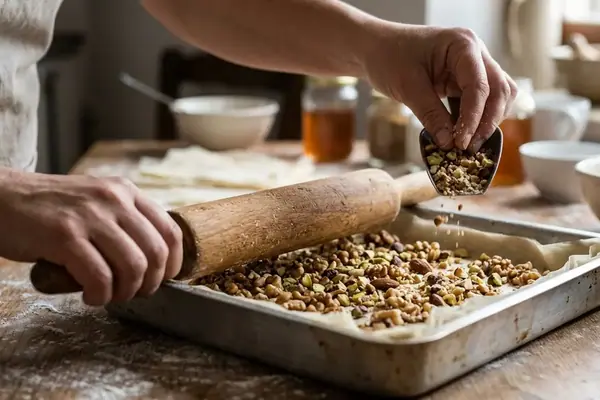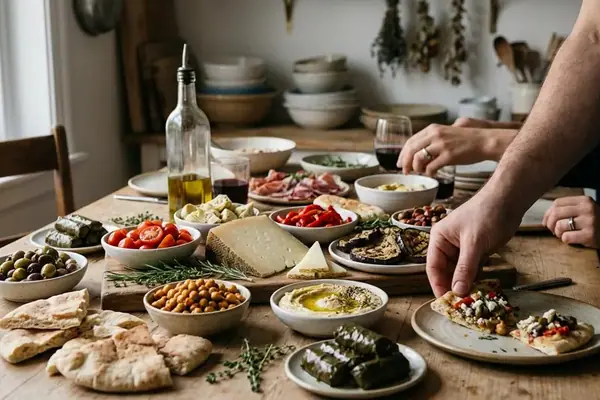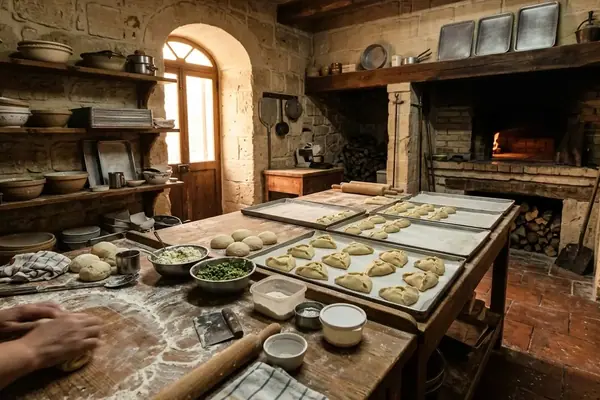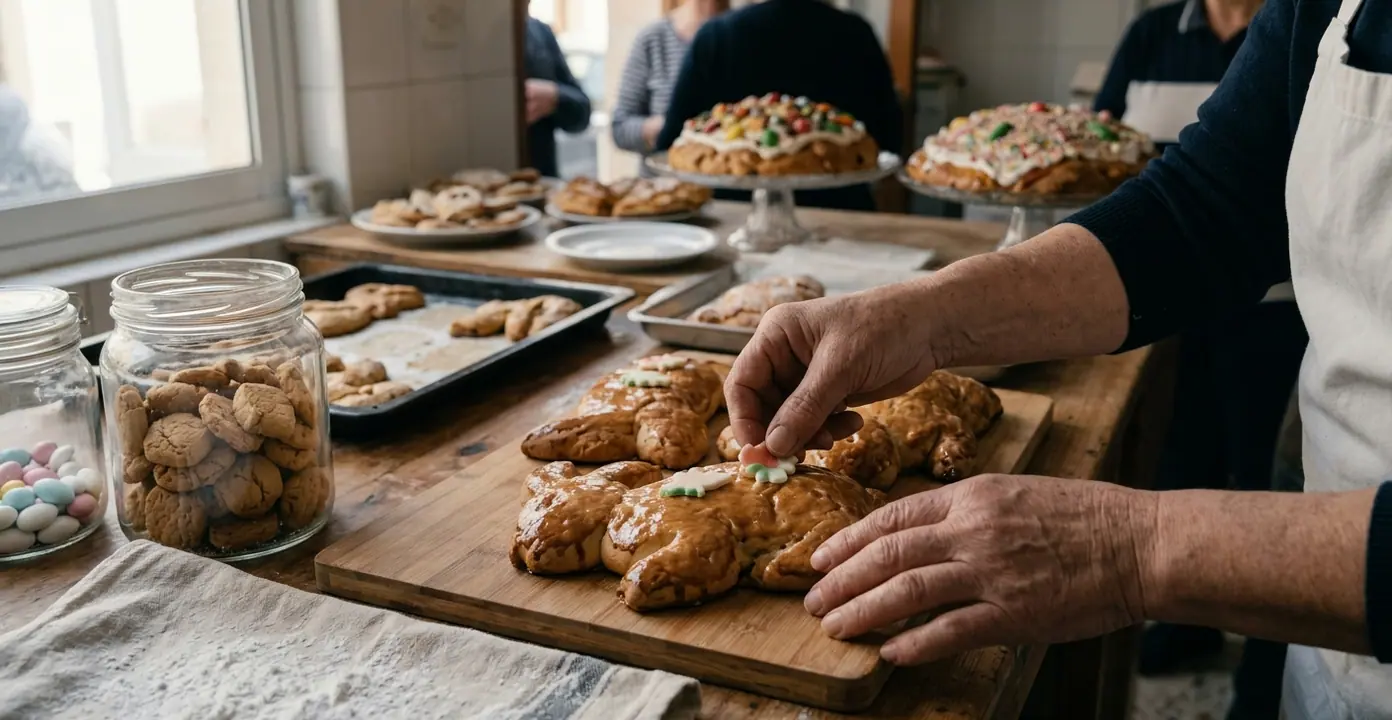
Maltese Easter does not arrive all at once. In Nanette’s Maltese-rooted kitchen, it creeps in through the small jobs: almonds ground for filling, dough left to rest, trays set aside for biscuits that should not be rushed, and the first serious conversation about who is coming for lunch.
This is not a formal religious history. It is a cook’s guide to the foods worth recognising before Easter, especially for anyone trying to understand Maltese heritage cooking from a home kitchen rather than a museum case.
Quick Nav
- A Maltese Easter table begins before Easter Sunday
- How these Maltese Easter foods were chosen
- A note on family traditions, regions, and timing
- The classic Maltese feast foods to know
- How to build a Maltese-style Easter spread at home
- What to remember before Easter
A Maltese Easter table begins before Easter Sunday
The Maltese Easter table begins in Lent, not at the moment the roast comes out of the oven. The mood changes first. Sweets become plainer. Meatless meals move forward. Bread matters more. The kitchen starts keeping time with Holy Week.
By the final stretch before the feast, the house smells different. Almond biscuits cool on wire racks. Bakery bread rings wait in paper bags. Broad beans turn up in spring soups. Seafood stews make sense on meatless days, and someone starts planning the generous Easter roast with the seriousness it deserves.
Ms.Gourmet: author notes often return to this sequence because it is how the season feels to a cook. Not as a chart. As a bench with flour on it.
For readers in Melbourne, that rhythm can shift. In a Melbourne kitchen, broad beans for kusksu may only be reliably fresh in the local spring months, so the dish lands at a different calendar point than it does in Malta where it coincides with Lent. That does not make the dish less Maltese. It makes the adaptation visible.
How these Maltese Easter foods were chosen
The list below was built like a menu, not a trophy cabinet. Each food had to earn its place by helping the reader understand the movement from restraint to celebration.
Field Note: The selection follows three practical filters: a clear link to Lent, Holy Week, Easter baking, spring produce, or family feast tables; usefulness in explaining the Lent-to-Easter arc; and home-kitchen practicality for a reader who may not have a Maltese bakery nearby.
The list is kept shy of eight items on purpose. A single weekend cook does not need a catalogue. They need a path.
That path starts with sweets that carry memory, moves through bread and vegetables, then lands at the family table with baked dishes and roast lamb. It is an editorial judgement from a heritage home cook’s perspective, not a ranking from a survey or formal culinary register.
A note on family traditions, regions, and timing
Maltese Easter food varies. It varies by family, village, bakery, parish calendar, and migration history. One household may treat figolli as essential. Another may remember the bread more strongly. A third may speak first about the octopus stew, because that was the dish everyone waited for during Holy Week.
Community observation suggests that even the familiar foods do not stay fixed. Figolli shapes, icing styles, and kusksu seasoning can shift between northern and southern villages. Parish Holy Week timing may also move when a bread or fritter appears by several days.
There is one important caveat: several dishes here belong to Lent or the weeks before Easter, not Easter Sunday itself. That is why this is framed as foods to know before Easter, rather than a single feast-day menu that every Maltese family would recognise as their own.
Nanette’s perspective, like the wider Gourmet Worrier kitchen, is heritage-minded and home-kitchen focused. It does not claim that every Maltese family serves every dish below. It asks a gentler question: which foods help a cook feel the season properly?
The classic Maltese feast foods to know
The order matters here. It follows the emotional rhythm of the season more than the alphabet.
-
1. Figolli
Figolli are the emotional centrepiece of Maltese Easter baking: almond-filled biscuits cut into shapes, baked ahead, decorated, and often gifted to children, relatives, neighbours, or anyone lucky enough to be standing close to the kitchen.
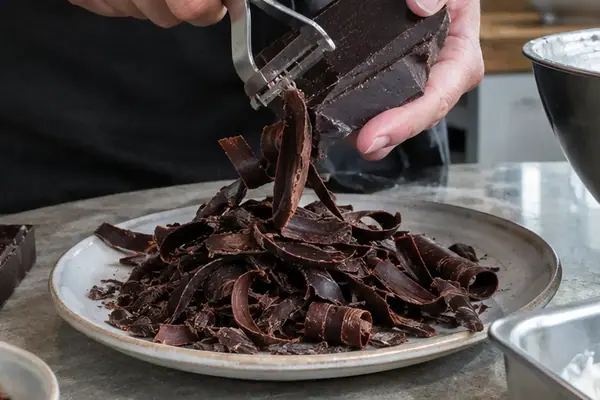
The shapes carry half the pleasure. Lambs, hearts, fish, and rabbits all appear, depending on family cutters and bakery habit. Some are iced in bright colours. Some are finished with chocolate. Some look tidy. Some look loved.
The practical detail matters. Figolli are best baked a few days ahead so the almond filling settles before icing. A cook who ices figolli the same day they bake often finds the warm almond filling weeps through the icing, which is why the 2-to-4-day rest matters.
-
2. Kwareżimal
Kwareżimal belongs to Lent, and that is the key to understanding it. It is sweet, yes, but not in the lavish way of Easter biscuits. Almonds, spices, citrus, and honey give it depth without turning it into a heavy feast dessert.
It keeps well in a sealed tin, which suits the slower pace of Lenten eating. A piece with tea feels restrained but not joyless. That balance is very Maltese: modest on paper, generous in the mouth.
-
3. Apostle’s rings
Apostle’s rings, often known as qagħaq tal-Appostli, are bakery bread rings associated with Holy Week. They are the kind of food that can pass unnoticed if a reader only looks for sweets and roasts.
Do not overlook them. Bread tells the season in a quieter voice. It sits beside soups, stews, and family plates, and it reminds the table that Easter cooking is not only about decoration. It is about sustenance.
-
4. Kusksu bil-ful
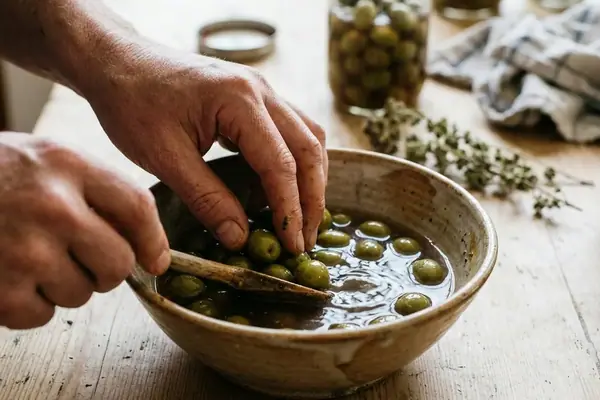
Kusksu bil-ful is a spring soup made with small pasta beads and broad beans. In Malta, its timing often fits naturally with Lent. In Melbourne, the cook may need to think seasonally rather than strictly by the church calendar.
The finish can include ġbejna, the small Maltese sheep’s cheese. One catch: ġbejna is hard to source outside Malta, so fresh ricotta or a mild pecorino can stand in without pretending to be identical.
This is where heritage cooking becomes honest. Substitution should not erase the original. It should keep dinner possible.
-
5. Stuffat tal-qarnit
Stuffat tal-qarnit, octopus stew, brings the meatless table into deeper territory. It is not a light little seafood gesture. It is a slow, savoury dish with a sauce that asks for bread.
During practice, the main lesson is patience. Octopus usually needs gentle simmering until it turns fork-tender, rather than a hard boil that toughens it. This is a good dish to cook the day before serving, because the sauce relaxes overnight and tastes more settled.
-
6. Timpana or ross il-forn
Every feast table needs a baked family dish, and this is where Maltese kitchens often show their appetite for abundance. Timpana, with pasta baked under pastry, has the drama. Ross il-forn, baked rice, has the steady comfort.
Neither dish needs to be treated as a side note. In many homes, a baked dish can carry the meal if the roast is smaller or the guest list changes. It also gives leftovers a second life, which may be the most practical Easter tradition of all.
-
7. Ħaruf il-forn
Ħaruf il-forn, roast lamb, brings the table into Easter Sunday proper. After weeks of restraint and careful timing, the roast feels deliberately generous.
For a home cook, the point is not to perform grandeur. It is to make a main dish that gathers people. Potatoes, onions, garlic, and pan juices do much of the work. Resting time matters too, especially when everyone is hungry and the kitchen is crowded.
How to build a Maltese-style Easter spread at home
Start with structure, not ambition. A Maltese-style Easter spread works best when the cook chooses one food for each role: one symbolic bake, one bread, one vegetable or soup dish, one seafood or meatless option, and one celebratory main.
- Symbolic bake: figolli, made ahead and decorated when the filling has settled.
- Bread: Apostle’s rings from a bakery if making bread at home will tip the week into chaos.
- Vegetable or soup: kusksu bil-ful, adjusted to the produce available where you live.
- Seafood or meatless dish: stuffat tal-qarnit, especially useful before Easter Sunday.
- Celebratory main: ħaruf il-forn, or a baked family dish if lamb is not right for your table.
The sequencing saves the cook. Bake figolli ahead. Prepare stews the day before. Roast lamb on the day. Buy bakery-style bread if time is short. No one wins a medal for doing every task by hand while resenting the feast.
Important: If you are cooking from outside Malta, do not force the calendar so tightly that the food stops making sense. Use the best local produce you can find, name the adaptation honestly, and keep the seasonal arc intact.
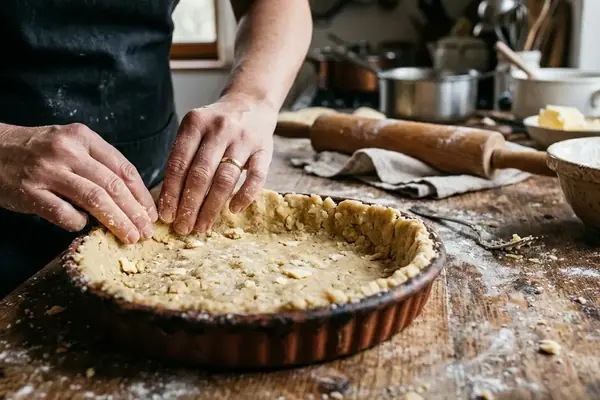
This is also where a Blind bake mindset can help, even when pastry is not the main event: do the quiet preparation early so the feast day does not collapse under last-minute heat.
What to remember before Easter
Bottom Line: Maltese Easter food moves through Lent, Holy Week, baking, family lunch, and leftovers. Remember the landmarks: figolli, kwareżimal, Apostle’s rings, kusksu bil-ful, stuffat tal-qarnit, a baked family dish like timpana or ross il-forn, and ħaruf il-forn.

The table does not need to be complete to be meaningful. Cook one dish well. Let it teach you the season.
That might mean a tin of kwareżimal on the bench, a tray of figolli waiting for icing, or a pot of soup that tastes like spring in the wrong hemisphere. Heritage cooking often begins there, with one honest dish and a little attention.