A Maltese Sweet Table, Seen Through a Home Cook’s Archive
The practical answer is this: bake imqaret, figolli, pudina tal-ħobż, ricotta pies, chestnut sweets, and almond-chocolate pies first. That set gives you the bones of a Maltese sweet table without asking you to master every village variation before you turn on the oven.
I am looking at these desserts through the Gourmet Worrier lens Nanette built so carefully: Maltese roots, Melbourne kitchens, family memory, and recipes that still have to work on a tired afternoon. Not museum food. Food made with a bench dusted in flour, a packet of pastry pulled from the fridge, and someone remembering how Nana used to judge a filling by scent.
The starting list comes from recipes and notes Nanette published and tested at home between 2009 and 2012. That matters. Rather than work outward from a glossy roll call of “famous” Maltese sweets, this guide works backward from the archive: family-source recipes from Nana or Nanna Marija, Easter figolli posts, and the World Figolli Day writing that tied private baking to a wider community mood.
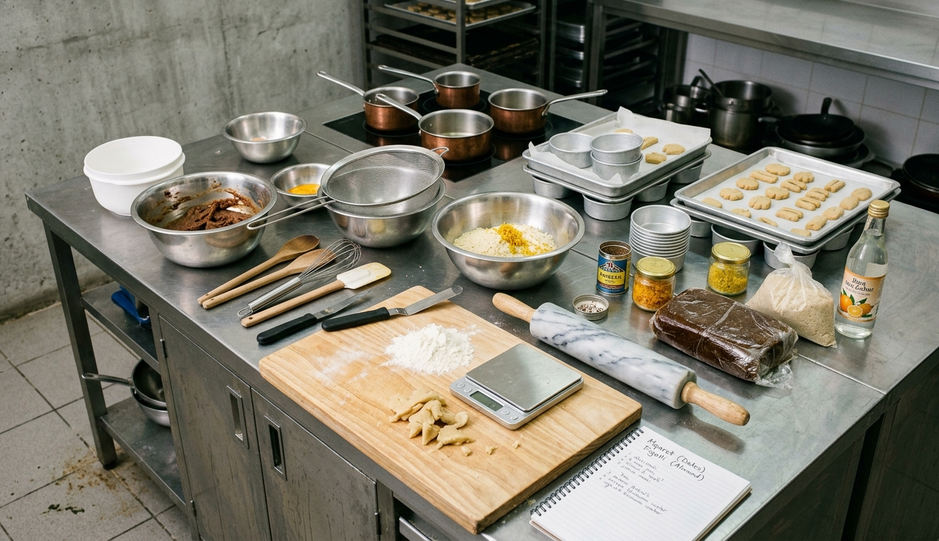
It is a curated home-baker’s guide, not an encyclopedia. That narrower frame makes the advice more useful.
How These Maltese Desserts Were Chosen
The filter was deliberately plain. A dessert had to carry cultural recognition, suit a home kitchen, connect to a Maltese occasion or habit, and appear in Nanette’s published recipe archive. If it only sounded important but did not clear the practical test, it did not lead the list.
That left a strong flavour map: dates, almonds, ricotta, chestnuts, orange zest, chocolate, and orange blossom water. These are not decorative details. They are the notes that make a sweet read Maltese even before anyone names it.
- Cultural recognisability: the sweet should feel familiar to Maltese cooks or Maltese-Australian families.
- Home-kitchen practicality: the method should be possible without specialist equipment.
- Occasion: the sweet should belong to a feast, season, family table, or everyday habit.
- Archive presence: the recipe or discussion should appear in Nanette’s Gourmet Worrier record from 2009 to 2012.
Some are celebration foods. Figolli belong to Easter. Imbuljuta, the warm chocolate and chestnut drink, belongs especially to Christmas morning. Others, like pudina tal-ħobż, sit closer to everyday thrift: old bread, eggs, dried fruit, and the quiet intelligence of using what the kitchen already has.
For a first sweep: choose one pastry, one pudding, and one festive bake. That gives technique, heritage, and occasion without turning the weekend into a pastry exam.
1–4. The Essential Maltese Desserts to Start With
1. Imqaret: date pastries that teach control
Imqaret are the best first lesson because they look simple and punish carelessness in very specific ways. The pastry is cut into diamond shapes, wrapped around a spiced date filling, then fried until crisp. The filling should smell deep and warm rather than sugary-flat, with the aromatic lift of ilma zaghar, or orange blossom water.
The key is not bravery with hot oil. It is sealing.
Imqaret pastry left unsealed splits in the oil and bleeds date filling, so clean diamond edges and a firm seal matter more than fry time. Cut decisively. Press the edges without crushing the shape. Fry until crisp without letting the pastry over-darken, because bitterness can drown the dates.
A useful caution: do not use colour alone as your guide. Date filling can make the pastry look darker at the seams, while the centre may still need a little more crisping.
2. Figolli: Easter pastry with a public life
Figolli ask for a different temperament. They are almond-filled Easter pastries, shaped, baked, iced, and decorated with the confidence of a family that expects children to hover nearby. Royal icing gives them their festive surface. The almond filling gives them their reason for existing.
For Gourmet Worrier, figolli became more than a seasonal bake. World Figolli Day, introduced in March 2011, made the pastry a tradition-keeping hub. The later links and blogger participation show reach in a community sense, though not as a verified attendance figure. That distinction matters, especially when family ritual moves online and begins to look larger than a kitchen table.
In practice, figolli teach shaping and restraint. Roll the dough evenly. Keep the filling generous but contained. Let the decoration carry affection, not panic.
3. Pudina tal-ħobż: thrift with texture
Pudina tal-ħobż is where I would send anyone who thinks Maltese sweets must be delicate to be meaningful. Bread pudding is blunt in the best way. It takes dry bread and turns it into something fragrant, dense, and family-sized.
Here, the danger is false precision. Pudina tal-ħobż baked to a fixed clock can come out dense or wet because dry, crusty bread absorbs egg differently than soft loaf. Aroma and set are better cues than minutes. When the pudding smells rounded, and the centre no longer moves like batter, you are closer to the truth than any timer can take you.
4. Torta tal-Rikotta: the savoury-sweet bridge
Ricotta pies sit at the edge of this sweet list because Maltese baking often refuses tidy categories. Nanette’s archive includes Nanna Marija’s Gozo-style family variation, and that family-source detail changes how I read the dish. It is not just “ricotta in pastry.” It is a remembered method, adjusted for a home kitchen.
Carême puff pastry appears in the archive as a practical shortcut, and I like that honesty. Good bought pastry can let a first-time baker focus on the filling. A ricotta pie built on un-blind-baked or warm puff pastry weeps moisture into the base, while the same filling sits well on a cold, pre-baked shell.
5–7. Richer Pies and Winter Sweets Worth Knowing
5. Imbuljuta: Christmas morning in a bowl
Imbuljuta stays on this list even though it is not baked. It earns its place because it explains the chestnut-chocolate-orange family of Maltese winter sweets. Think of it as a drinkable dessert: warm, aromatic, and built for Christmas morning rather than for a cake stand.
The method depends on attention rather than a fixed simmering claim. Chestnut size and freshness vary, so softness is judged by feel. Gentle heat protects the chocolate from turning harsh. Orange notes should brighten the bowl, not make it taste perfumed.
In community memory, imbuljuta often functions as memory before it functions as recipe. People describe when it appears, who made it, and how the kitchen smelled. The technical details follow.
6. Torta tal-Qastan: the baked cousin
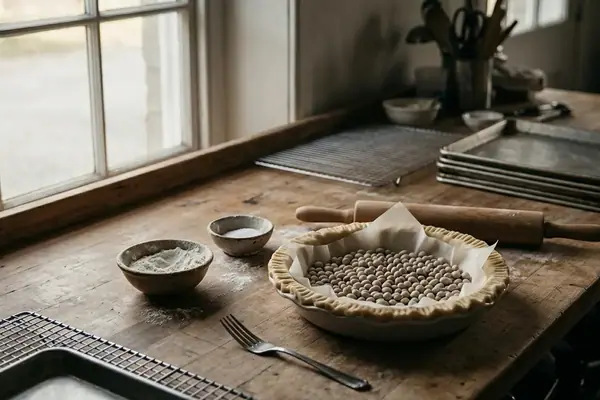
Torta tal-Qastan takes the same chestnut, chocolate, and orange world and gives it structure. This is where pastry discipline becomes less optional. The shell needs strength before the filling arrives, so blind bake it.
In Nanette’s ingredient context, Carême dark chocolate shortcrust appears as a workable base. The important thing is not the brand name by itself, but the technique it supports: a firm shell that can hold a rich filling without collapsing into paste. Blind bake first. Cool enough to steady the pastry. Then fill.
Field Note: Blind bake chestnut and chocolate pies when the filling needs a firm shell. If you are using puff pastry elsewhere, keep it cold until it enters the oven.
7. Torta tal-Marmurat: almond, chocolate, and orange blossom
Torta tal-Marmurat is the deeper cut, and it rewards patience. The archived marmurat recipe connects with The Food & Cookery of Malta from 2001, then passes through Nanette’s kitchen logic. Chocolate is melted over a bain-marie, and orange blossom water binds the flavour rather than announces itself from the doorway.
This pie belongs after figolli and imqaret because it assumes you already understand two Maltese instincts: almond gives body, and fragrance must be handled lightly. Too much orange blossom water turns heritage into soap.
What This List Does—and Does Not—Claim
Maltese sweets vary by family, island, village, feast day, and diaspora kitchen. Spelling varies too. The archive itself moves between forms such as rikotta and rikkotta, which is exactly what happens when food travels through speech, memory, and handwritten recipes.
So this guide does not claim an official national canon. It reflects Nanette’s published archive, named family sources, and Maltese-Australian food memories. That scope is smaller, but it is also sturdier. I would rather stand on one cook’s tested record than pretend every Maltese table agrees.
The event history needs similar care. World Figolli Day references relate especially to 2011 and 2012 activity, including announcements, donations, and community baking. They show a lively tradition-keeping moment, not a measured national survey.
That qualifier is not a weakness. It is how home cooking should be handled: closely, respectfully, and without smoothing away the family fingerprints.
Practical Tips Before You Bake Maltese Sweets
Field Note: Use orange blossom water as a fragrance, not the dominant flavour, especially in pastry doughs. Add less than your enthusiasm suggests, then let citrus zest and nuts do their share.
If your ricotta pie variation includes peas or broad beans, blanch them first. This is not a full recipe instruction so much as a texture safeguard. Blanching keeps the filling more pleasant, especially in a savoury-leaning Gozo-style version where the vegetables should sit inside the ricotta rather than fight it.
Pastry temperature matters more than beginners expect. Warm puff pastry smears, softens, and loses lift. Cold pastry enters the oven with a better chance of forming layers. For chestnut or chocolate pies, blind baking gives the base a head start before a heavy filling asks too much of it.
With pudina, trust the kitchen. Bread type and dryness change the result. A crusty loaf behaves differently from a soft sandwich loaf, so judge the pudding by texture and aroma rather than by a rigid clock.
The Sweetest Way to Begin a Maltese Baking Journey
Start with imqaret for technique. Move to pudina tal-ħobż for thrift and heritage. Bake figolli when you want celebration, colour, and almond filling under royal icing. Then take on ricotta or chestnut pies when you are ready for deeper pastry practice.
That pathway is not about ranking desserts by importance. It is about building hands. Sealing, frying, soaking, shaping, blind baking, balancing orange and chocolate: each sweet teaches one part of the Maltese table.
What stays with me is that these are not only recipes. They are family memory, diaspora continuity, and seasonal ritual, carried through ordinary kitchens. Choose one sweet. Learn its texture. Learn its aroma. Then let the next one call you back to the bench.