Quick Nav
- What do we lose when Sunday lunch disappears?
- Il-Ħadd as a family ritual, not just a menu
- The dishes that make Sunday feel Maltese
- Why the Sunday table is harder to protect now
- Rescuing tradition without turning it into nostalgia
- Start with one Maltese Sunday lunch this month
What do we lose when Sunday lunch disappears?
What disappears when Maltese families stop making time for Il-Ħadd around the table?
I do not think the answer is only “lunch”. That would be too small. A meal can vanish from the calendar and leave the fridge full. What goes missing is the shared rehearsal of family: the same jokes brought out with the plates, the same argument about whether the pasta needs more sauce, the same auntie insisting there is not enough food while everyone can see the second tray waiting.
This reflection comes from Nanette’s author-led Maltese kitchen, and from the Maltese-Melbourne table that sits inside it. It is not a claim to speak for every Maltese household. Some families kept Sunday tightly. Some never had the space, money, time, or temperament for a weekly spread. Some remember it with tenderness; others remember one tired cook and a room full of expectation.
Still, the pattern has weight. A pot set to simmer by 9 or 10 in the morning changes the mood of a house. The smell of baked pasta building through roughly 45 to 60 minutes in the oven does something that a last-minute meal cannot. Chairs get pulled closer. Someone tastes the sauce from a wooden spoon. Someone asks, again, who made it this way first.
Bottom Line: When Sunday lunch fades, the recipe may remain, but the occasion that taught people how to love it begins to thin.
The table as a memory machine
A written recipe stores ingredients. A Sunday table stores timing, tone, and permission. It tells the youngest person that they can set cutlery badly and still belong. It tells the eldest person that their version of the dish still matters, even if someone has changed the cheese or used a supermarket loaf.
That is why I worry less about whether every timpana follows an old family card exactly, and more about whether anyone is still gathering to cut it open.
Il-Ħadd as a family ritual, not just a menu
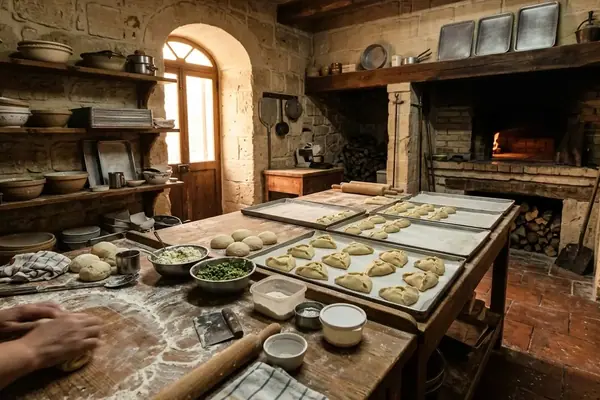
Il-Ħadd is not simply Maltese for Sunday in the kitchen sense. It is a rhythm. Cooking starts before the house is fully awake. Family arrives gradually, often across a 60 to 90 minute window rather than at one neat call time. The day moves around the table rather than the clock.
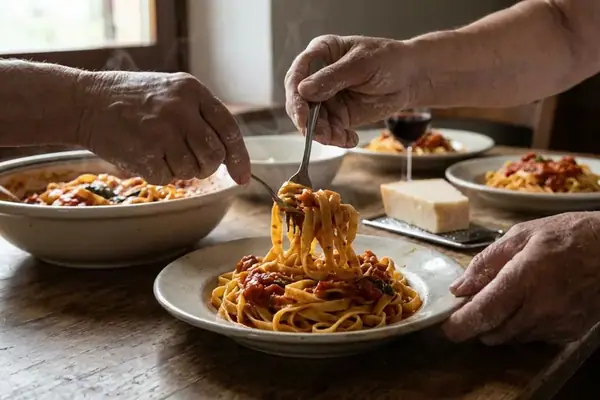
The ritual has its own signals. Sauce catches at the edge of the pan and needs scraping back in before it darkens too far. Timpana cools on the bench because it needs 15 to 20 minutes of rest before the first slice. Cutlery appears in bundles. Coffee waits until after lunch, not because anyone is hungry, but because leaving the table too quickly feels rude. Leftovers get wrapped for the person who “doesn’t need anything” and then takes two portions home.
Why the Sunday table is harder to protect now

Every family’s Sunday table has its own version, so I am describing a Maltese-Melbourne household pattern rather than a fixed template. That qualifier matters. Heritage food gets flattened when we pretend one home practice is the law.
Why ritual protects recipes
Recipe seekers often ask for the right measurements first. I understand the impulse; a vague “until it looks right” can test anyone’s patience. But recipes survive better when they attach themselves to repeated occasions and family roles.
The person who makes the sauce learns the sound of the simmer. The child setting the table learns who sits where. The uncle who brings bread becomes part of the method, whether or not his name appears on the recipe card.
Field Note: A timpana cut straight from the oven collapses into a slumped mess on the plate because the layers have not set. The tray teaches patience. Resting is not decorative; it is structural.
This is where Maltese cooking resembles the best of Sicilian Sunday food. The dish matters, but the waiting around it matters too. Pasta al forno, timpana, brodu, a roast with potatoes: each asks the household to coordinate appetite with time.
The dishes that make Sunday feel Maltese
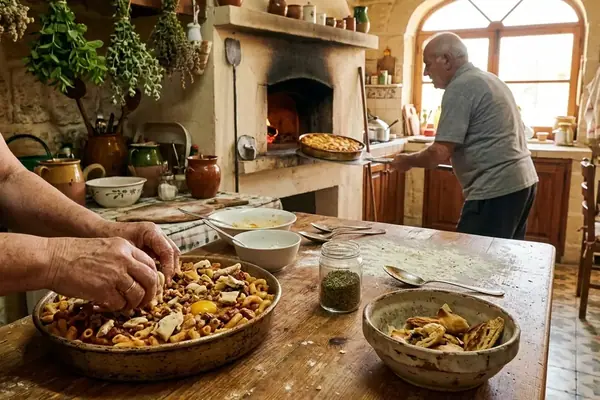
The dishes that carry Sunday best are rarely the fussiest ones. They are slow, generous, and built for sharing: timpana, baked macaroni, roast meat with potatoes, rich tomato sauce, brodu, stuffed vegetables, and seasonal sweets. They do not whisper. They arrive in trays, pots, and serving bowls that expect people to pass things across the table.
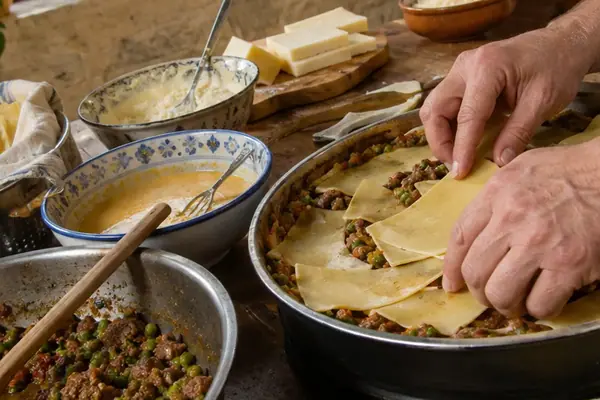
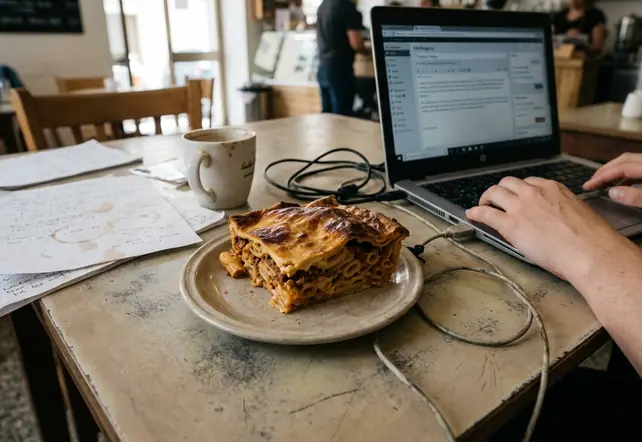
Timpana sits at the centre of this argument because it behaves like ceremony without needing expensive ingredients. Pasta, sauce, egg, cheese, pastry, time. That is the grammar. It takes planning, feeds many, and turns dramatic when cut open. The first slice is always a small public event.
Timpana as symbol, not museum piece
I resist the idea of one authoritative timpana. Some households use minced beef. Some mix meats. Some keep the sauce looser; others want it tight enough to slice cleanly. Maltese-Australian kitchens may swap in ingredients available in Melbourne, so the same dish name can produce two different but equally legitimate results between an island household and a migrant one.
That variation is not a weakness. It is proof that the dish travelled.
Practical timing shapes the table as much as memory does. Timpana can be assembled the night before, held covered in the fridge, then baked fresh for 50 to 60 minutes on the day. Brodu wants a long, low simmer of 2 to 3 hours. Baked macaroni needs the same oven window as timpana, so I would not plan both as competing mains unless the kitchen has space and calm to spare.
Important: Do not turn Sunday into an oven traffic jam. Choose one baked main, then let the rest of the meal support it.
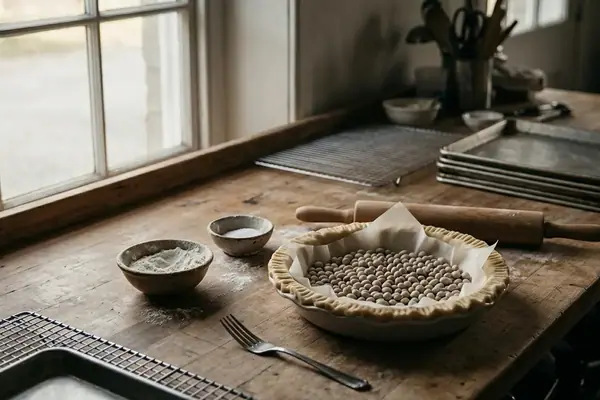
There is no need for pastry theatre either. Unlike a tart shell, this is not a Blind bake problem where crisp emptiness matters first. The pleasure is in the filled structure: pasta held, sauce absorbed, top bronzed, edges slightly rich from the tin.
The old Sunday table did not fade because people suddenly stopped caring. That explanation is lazy, and it unfairly blames younger generations who are already carrying plenty.
The pressures are ordinary and heavy: weekend work, sport, study, smaller households, apartment kitchens, distance between relatives, and the plain exhaustion that arrives after a busy week. In Melbourne, migrant food traditions often compete with long commutes, mixed rosters, and families spread across suburbs. A 45 to 60 minute drive each way can turn one lunch into a whole-day negotiation before anyone has peeled a potato.
The burden of one heroic cook
A full traditional spread can demand 4 to 5 hours of a single cook’s Sunday before anyone sits down. That is not heritage; that is a load-bearing wall with an apron on.
Here is the pattern I see most clearly: when a tradition becomes too large, too rigid, or too dependent on one exhausted person, it starts to shrink. Not because it lacks meaning. Because the cost of repeating it becomes too high.
This is where nostalgia can become unhelpful. It remembers the table full, the sauce glossy, the roast carved, the sweets waiting. It forgets the sink. It forgets the shopping. It forgets the person who woke early and barely sat down.
So the question should not be, “How do we recreate Sunday exactly?” That is too brittle. The better question is, “What part must remain for the meal to still feel like ours?”
Rescuing tradition without turning it into nostalgia
A tradition survives when it can bend. I trust a monthly Sunday lunch more than a weekly one that collapses under resentment. I trust a shared table more than a perfect table. I trust bought bread served proudly more than homemade bread used as evidence that someone has suffered enough for the meal.
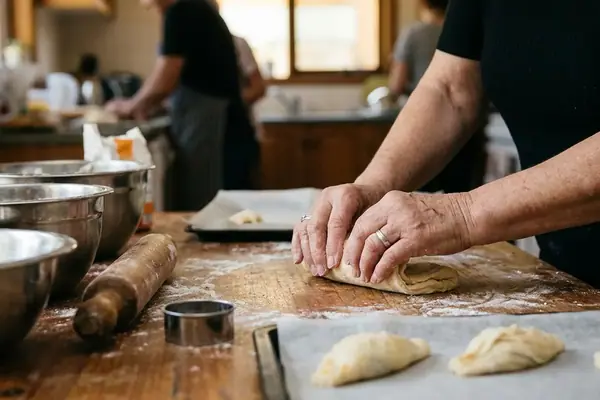
Start with the pressure points. Make the sauce on Saturday; it deepens overnight and gives Sunday a gentler beginning. Assemble timpana in the morning if the fridge is too full to hold it overnight. Ask one person to bring salad. Put someone else on coffee. Let a cousin buy pastizzi or ice cream without apology.
Keep the non-food parts alive
The food is only one carrier of memory. Preserve the words too. Say the dish names. Tell the story of who used to make it and what they changed. Let children set the table even if the forks wander. Write down one family variation, not the whole archive.
- Note whether your family uses peas, hard-boiled egg, minced meat, or a particular cheese in timpana.
- Record who insists the sauce should be thicker.
- Write the oven timing beside the family cue: “until the top smells toasted” or “until Nanette would say leave it five more minutes.”
- Freeze one portion for an elder or a student living away; a portion of timpana keeps well for 4 to 6 weeks.
That last act matters. Food heritage is not only what happens at the table. It is also what travels home in a container, labelled badly, loved anyway.
Field Note: If the table feels too formal, give everyone a job small enough to accept without fuss: bread, salad, chairs, coffee cups, wrapping leftovers.
This is the practical rescue. Not grand. Not staged. Just enough structure to make the next gathering easier to repeat.
Start with one Maltese Sunday lunch this month
Do not begin with the fantasy version. Begin with a table that can actually happen.
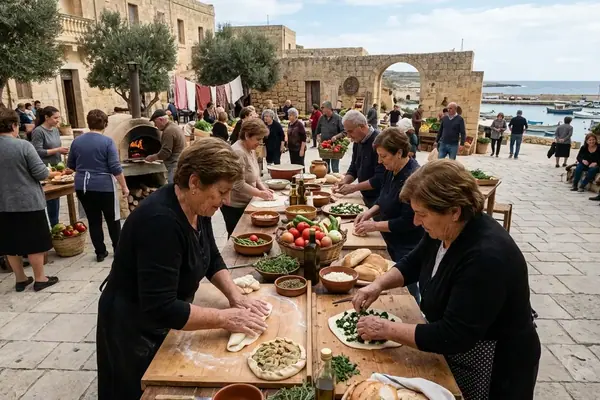
A workable first Sunday lunch needs five elements, not fifteen: one baked main such as timpana or baked macaroni, one salad or vegetable, bread, coffee, and one sweet or ice cream. Invite 4 to 6 people for the first attempt so the table gathers without overwhelming the cook. If more people want to come, let the second lunch grow from the first.
A simple plan for the first table
- Choose the date before choosing the dish.
- Pick one baked main and protect its oven time.
- Make the sauce on Saturday if the dish allows it.
- Assign bread, salad, coffee, and dessert before Sunday morning.
- Rest the timpana before slicing, even if everyone is circling the tray.
- Send one portion home with someone who will eat it the next day and remember where it came from.
The rescue of Maltese Sunday lunch does not start with a manifesto. It starts with one tray, one table, and a time people can reach.
Before this week is out, choose one Sunday this month, message 4 to 6 people, and assign the bread before you start writing the shopping list.