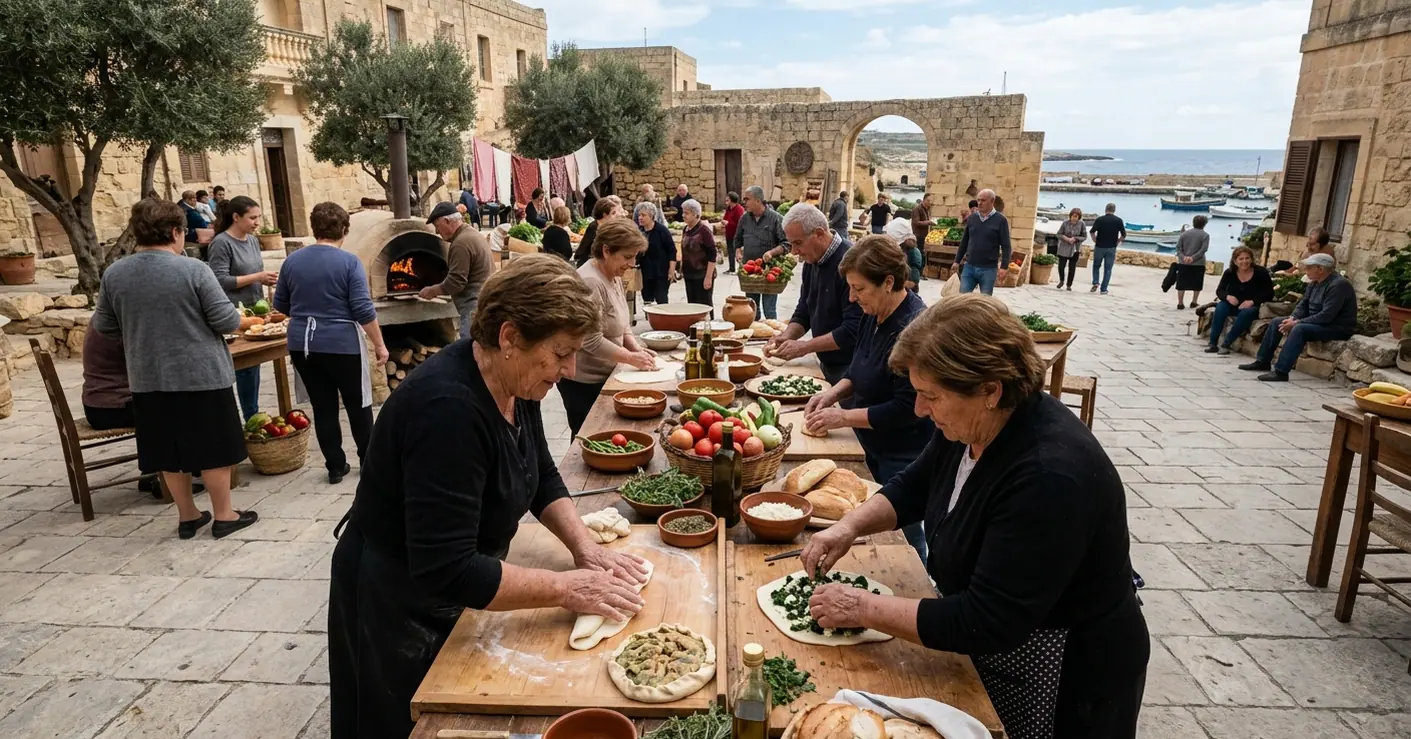
One Mediterranean table, three familiar accents
I look at restaurant menus and see neat, impenetrable categories. A Greek taverna serves spanakopita. An Italian trattoria serves baked pasta. A Maltese bakery sells pastizzi. But step into a home kitchen, and those rigid borders dissolve immediately. I have spent years examining the archives of Nanette, the Ms.Gourmet: author whose recipes published across 2009 and 2010 form the backbone of this exploration. Her Maltese roots, combined with a Melbourne food life, provide a distinct lens for viewing Italian and wider Mediterranean mains and desserts.
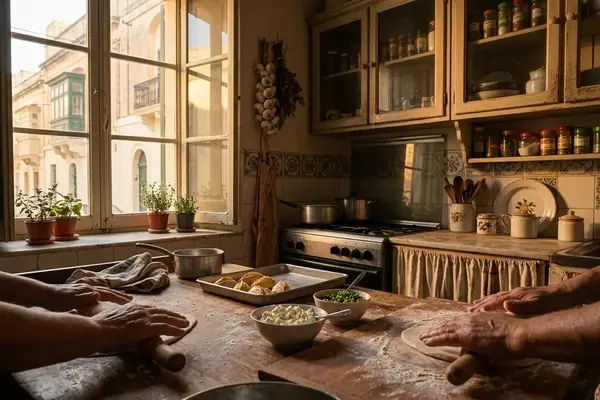
The framing decision here is to lead with the home kitchen rather than restaurant menus. The archive's recipes are written for a stovetop and oven a cook already owns, not a professional line. The overlap we see here is not sameness. It is a shared grammar of thrift, abundance, acidity, pastry, cheese, olive oil, legumes, and family serving.
The comfort is older than the borders
National labels are useful for memory. They help us categorize cookbooks and organize our thoughts. Yet, they remain insufficient for describing how Mediterranean home cooking actually behaves. Consider spanakopita, Maltese family cooking, Italian baked pastas, Sicilian-style ingredients, and Moroccan preserved lemons. These recipes travel by technique and pantry logic rather than strict geography.
The core overlap relies on seven repeating techniques: slow softening, caramelization, reduction, salting, preserving, layering, and baking. You cook the ingredients until the food becomes generous enough to share. During practice, I notice that a slow-cooked ragù and a long-simmered lentil stew demand the exact same patience. The comfort is built into the method long before the dish receives a name.
The shared pantry: sour, sweet, salty and preserved
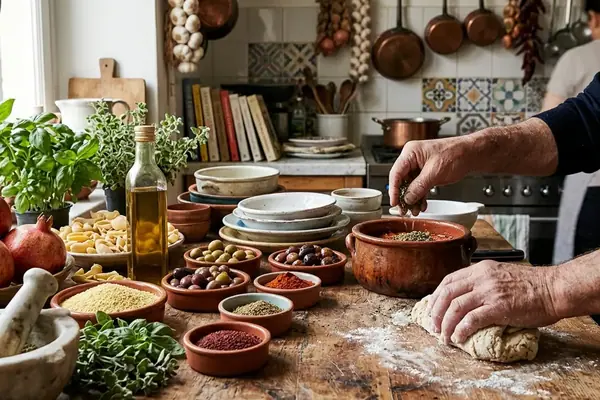
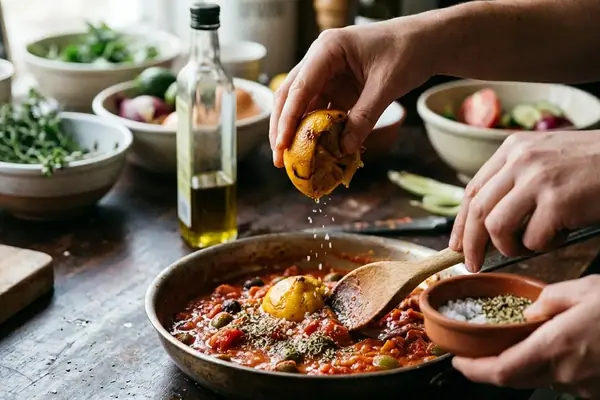
We build this shared Mediterranean pantry through concentrated flavor. Pomegranate molasses, preserved lemons, olives, cheese, fresh herbs, and olive oil form the foundation. Vincotto Originale stands out as a good example of this depth-of-flavor logic. Produced by the Calogiuri family since 1825, this cooked and reduced grape juice base ages in oak casks. The makers use Negroamaro grapes that wither on the vine for not far from 30 days post-maturity. It is a preservative-free ingredient that adds profound complexity.
We do not use these items for health benefits. They are strictly culinary tools for depth, brightness, and balance. The preservative-free description applies to that specific Vincotto product, not to vincotto as a broad category.
Important: Under typical conditions, sterilizing Moroccan Laymoun Hamid M'rakad preserving jars below 120C or for under 10 minutes leaves the preserved-lemon method short of safe. The temperature and the 10 to 15 minute window are stated rather than approximated for a reason.
Pastry is the architecture of comfort
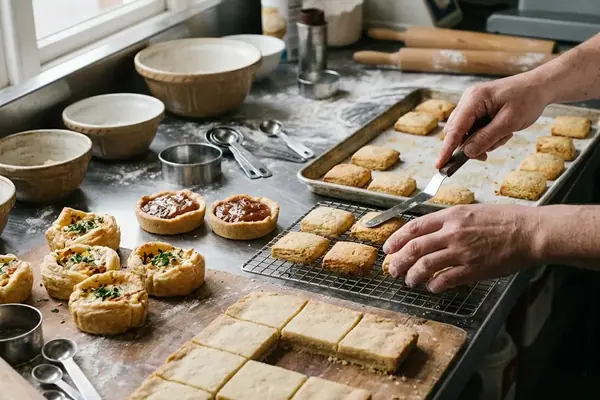
Pastry serves as the architecture of comfort. Spanakopita anchors this concept perfectly because the archive itself frames it as an approachable, 'easy peasy' version. We follow that accessibility lead rather than starting with the most technical pastry. In a post published on September 18, 2009, Anastasia contributed this recipe as the Greek culinary source.
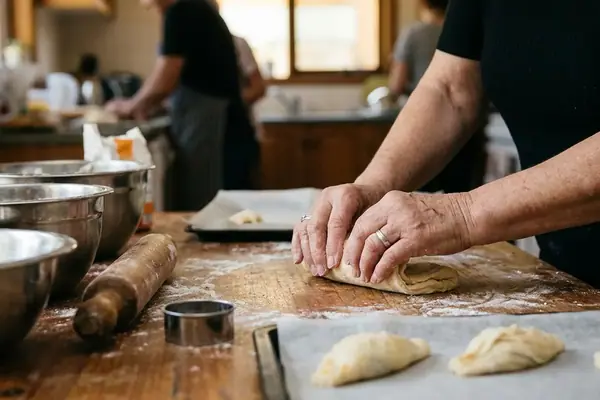
Filo pastry acts as a Greek-Mediterranean bridge. You handle the thin sheets in scrunched layers, packing them with cheese and greens. You might normally blind bake a base for a tart, but here the scrunched layers do all the structural work. Crucially, this version uses a butter-free method, relying instead on a cream and egg mixture to bind the layers.
Field Note: A filo dish bound with the cream-and-egg method instead of brushed butter will brown and crisp differently. A cook expecting glossy buttered layers should adjust expectations rather than the recipe.
The slow pot, the casserole and the tureen
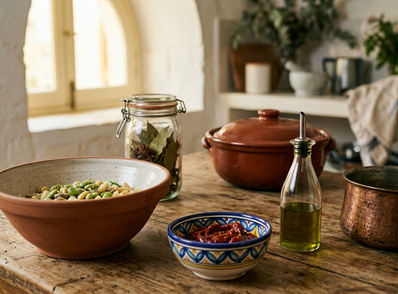
We must shift our focus from the pantry to the vessels that hold the food. Le Creuset casserole dishes, Le Chasseur cast iron pots, tureens, and springform pans act as practical markers of home cooking. Comfort is built in the pot. Take red lentil soup with dried mint, hot paprika, and sourdough cheesy fingers. Here, legumes break down into a rich creaminess entirely through the vessel's retained heat.
Italian-style baked comfort follows the same logic. A Kent pumpkin lasagna layered with gorgonzola, Grana Padano, and sage butter sauce relies on the slow-sauce logic of overnight marination and reduction by half. This specific approach was sourced from a July 2007 issue of Delicious magazine, showing how good ideas circulate widely.
Borrowing well is part of the tradition
Borrowing well is part of the tradition. Nanette's strongest editorial habit is not pretending invention. It is adapting, crediting, and translating recipes for the home table. The Ms.Gourmet: content author distributes authority by naming her cookbook and recipe influences directly.
Yotam Ottolenghi and Sami Tamimi's Ottolenghi: The Cookbook, Maria Elia's The Modern Vegetarian, mentor Anissa Helou, the London River Cafe, and Turquoise all appear in her notes. Her dated posts from 2009 and 2010 show a pattern of recipe testing, honest attribution, and personal commentary.
From Malta to Melbourne, comfort food becomes lived culture
Comfort food becomes lived culture when connected to a specific place. Nanette's Melbourne perspective gives Maltese, Italian, and wider Mediterranean recipes a diaspora-home-cook voice rather than a museum voice. She engages with the broader food culture, noting online news sources like Malta Media and participating in events like the Mediterranean Feast, a 10-day gastronomic tour scheduled for June 7 to 17, 2011.
Family presence grounds the cooking. We see this through mentions of Huxley, Hoover, and a tribute to Josephine 'Peppa'. In that context, the recipes can resonate more deeply. These details show engagement with food culture and travel, not universal authority over every Mediterranean cuisine.
Scope: overlap does not erase identity
We must acknowledge the counterargument. Greek spanakopita is not Maltese pie. Italian lasagna is not Greek or Moroccan. Calling everything 'Mediterranean' can flatten real differences. I am not claiming sameness. I am arguing that home cooks recognize repeating techniques and emotional purposes across neighboring food cultures.
This is an opinion drawn from one cook's archive, named cookbooks, dated 2009-2010 posts, and home-cooking observation. It is not an academic survey of Mediterranean food history. Ingredient claims such as preservative-free Vincotto and additive-free Cortas pomegranate molasses are framed as product-specific descriptions, not sweeping generalizations.
Bottom Line: Diagnostic cooking
The core pantry shortlist requires only a few reliable items: preserved lemon, pomegranate molasses, good cheese, olive oil, lentils, filo, and reduced grape sweetness. When a dish feels incomplete, the better approach is to adjust the acid, salt, sweetness, or browning before reaching for more ingredients.
Calling a flat dish 'underseasoned' often misreads it. The fix is frequently acid or browning, not more salt. Pomegranate molasses versus lemon will pull the same dish in entirely different directions. Master the technique, understand the pantry, and the borders between these cuisines will begin to feel much less important.