How Maltese Home Cooking Connects Malta and Australia
The Table Is the Bridge
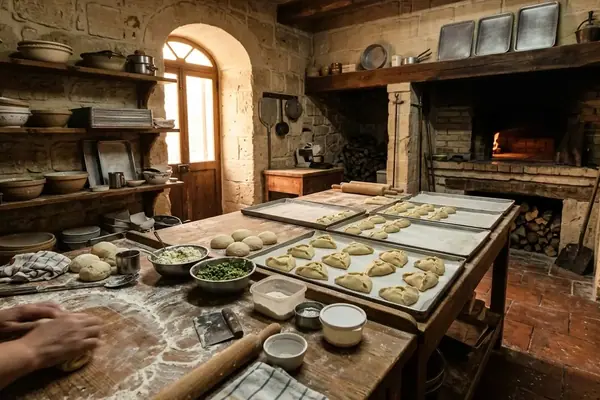
“I do not look first to the restaurant or the heritage festival. I look to the kitchen table, where pastry rests under a cloth and someone knows by touch when it has rolled thin enough to show a shadow.”
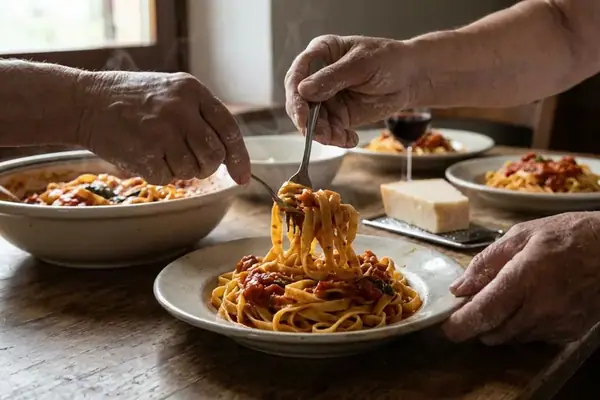
Nanette’s view gives this argument its centre: Maltese food in Australia is not a museum piece. It is a living family language, spoken through ricotta filling, simmering tomato sauce, a tray pulled from the oven at the right moment, and the quiet decision to make enough for whoever might come by.
The link between Malta and Australia survives because recipes travel. They adapt. Then they become ordinary again in new kitchens.
That ordinariness matters. A sauce left low on the stove for the better part of an afternoon says something different from a dish hurried for display. It says the food still belongs to daily life. This is an editorial view, grounded in heritage cooking and Melbourne food life, not a claim for every Maltese-Australian household.
A family language with flour on it
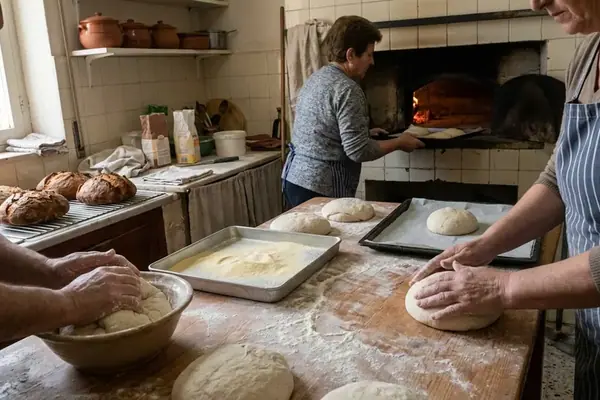
The table works as a bridge because it does not ask memory to stay still. It lets memory move through hands. Pastry can be rested, rolled, filled, folded, and argued over. A family may not tell the migration story each time, but the old and new places meet when the dish appears again.
That is the point. Maltese home cooking connects Malta and Australia because recipes carry intention across distance, then make that intention usable on a Tuesday night.
Migration Lives Quietly Inside Recipes
Some dishes do not announce themselves as archives, but they are. Pastizzi, timpana, rabbit stew, qassatat, and simple tomato-based sauces hold memory without asking anyone to give a speech at the table.
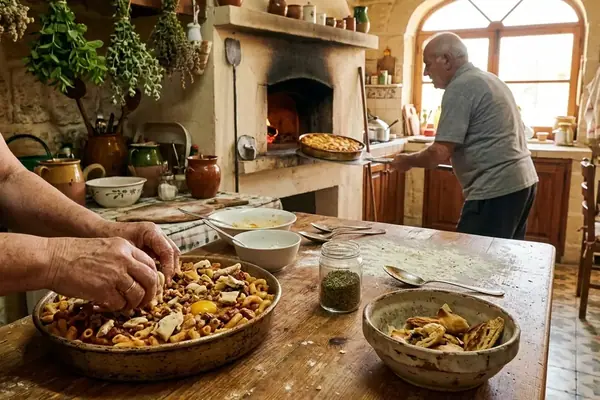
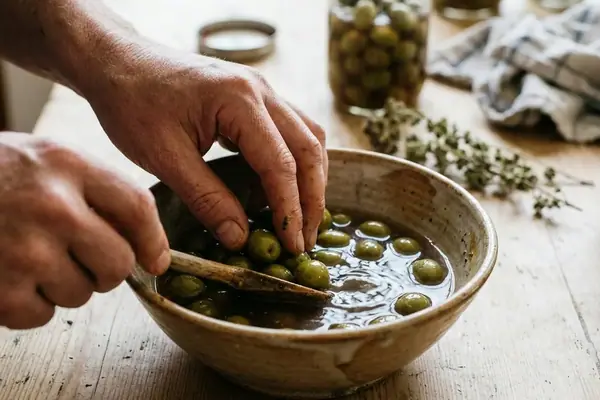
Timpana offers a good example. The cook does not only remember pasta, pastry, and sauce. She remembers how the pasta should set, how the pastry browns, and how long the dish can sit before cutting without collapsing. Rabbit stew carries another kind of record: meat marinated overnight with wine and bay, then slow-cooked the next day until the kitchen smells like patience rather than performance.
Recipes as practical archive
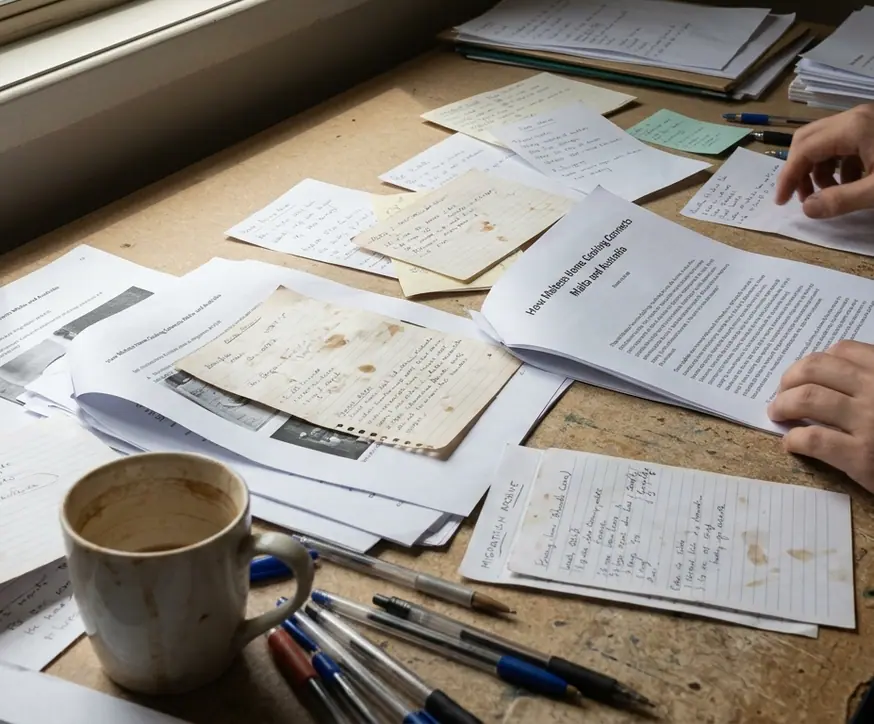
A recipe archive in a Maltese-Australian kitchen rarely looks like a neat folder. It may live in a gesture. A handful of cheese. A spoon dragged through sauce. A warning not to rush the onions.
During practice, measurements often appear as touch, ratio, and correction. Too wet. Not enough salt. Let it rest. These phrases may sound small, but they store method. They also store the circumstances of migration: substitutions learned through necessity, feast-day dishes repeated in a different suburb, and family visits planned around what can be baked before everyone arrives.
The migration context sits behind these kitchens. The Australian Government country profile for Malta provides official background on Malta and Australia without needing the home cook to turn dinner into a history lecture.
Still, dinner remembers.
What Changes When Maltese Food Lands in Australia
Adaptation is not the opposite of continuity. In a Maltese-Australian kitchen, adaptation often proves that continuity is still alive.
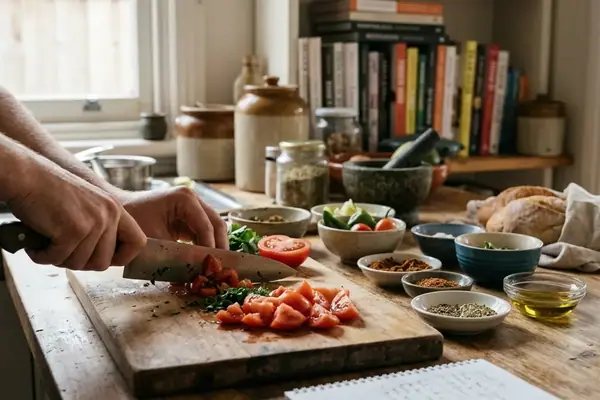
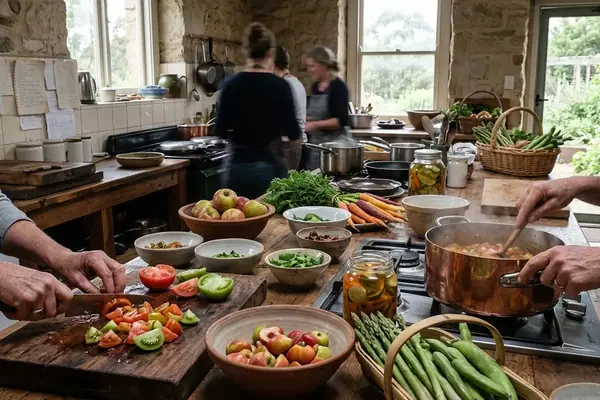
Australian flour behaves a little differently. Local ricotta may hold more moisture. Meat cuts do not always match what an older recipe assumes. Backyard mint, parsley, and marjoram enter the pot because they are there. Supermarket tomatoes replace the tomatoes of a remembered village, and Melbourne market produce brings its own seasons, prices, and temptations.
The ricotta problem
Take a timpana or a Maltese-style pie made with Australian ricotta. If the cheese goes in too wet, it weeps into the filling and turns the base heavy. The fix is not dramatic. Drain it in a sieve for several hours. Press gently. Taste again. Only then does the filling begin to behave like the cook expects.
This is where authenticity becomes practical rather than precious. The aim is not to freeze a single original version in place. The discipline is to keep the flavour logic, family memory, and purpose of the dish intact while using what the local kitchen can offer.
Field Note: In the Ms.Gourmet kitchen notes, blind bake is treated as a judgment call, not a badge of seriousness. If a filling runs wet, the pastry needs help before the nostalgia does.
A summer salad shows the same principle in a lighter form. On a punishing Melbourne day, the dressing may go on later, the bowl may sit colder, and the herbs may be added closer to serving. The dish changes because the weather asks it to change.
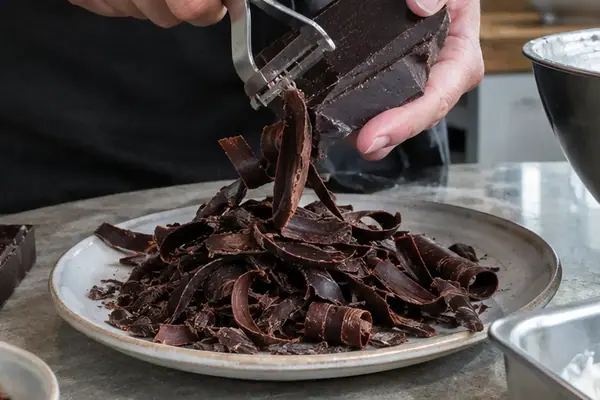
Desserts shift too. Local dairy and fruit can alter ice cream, custards, and simple sweets. That does not make them less Maltese in spirit. It makes them part of a Maltese-Australian kitchen that has learned where it lives.
Why the Home Kitchen Matters More Than the Restaurant Menu
Here is the sharper opinion: Maltese identity often survives more powerfully in home kitchens than in public food culture.
Restaurants matter. They introduce dishes to outsiders, give visibility to a cuisine, and help people taste something they might never meet at a family table. But a menu cannot always show the small rules that hold a dish in place. It cannot easily explain why qassatat appear before a visit, why a sauce must be made the day before, or why one aunt’s version remains the one everyone compares against.
Visibility is not the same as continuity
Home cooking protects the when, why, and for whom. Feast-day baking sessions that produce tray after tray of qassatat for family are not the same as a pastry sold across a counter. The shape may match. The meaning may not.
Melbourne helps, of course. Its markets, bakeries, delis, and multicultural eating habits make adaptation easier. A cook can find good herbs, decent cheeses, and vegetables with enough character to carry Mediterranean habits into Australian routines.
But the market is only the backdrop. The family table gives the recipes their emotional grammar.
Community observation suggests that the most durable food memories often attach to obligation as much as pleasure: who made the dish, who was expected to eat, who helped clean, who got teased for cutting too soon. Restaurants can offer welcome and appetite. Home kitchens keep the rules of belonging.
Is This Just Nostalgia? I Don’t Think So
The objection deserves respect. Heritage cooking can romanticise the past. It can flatten culture into comfort food and turn hard histories into a warm plate.
But cooking is not passive memory. Nostalgia can sit still; cooking cannot. Someone must shop, soak, drain, season, fold, taste, wait, adjust the heat, and decide whether the texture is right.
Labour makes memory honest
Pastry folding teaches this quickly. The first tray may look clumsy. Later batches improve because the hands learn what the written recipe cannot fully say. Thickness becomes a feeling. Filling becomes a balance. A good cook does not simply remember; she judges.
That judgment opens the door to harder conversations. Food memory can carry migration, class, gender, work, loss, and belonging in ordinary language. A stew may begin with seasoning and end with a story about who had access to meat, who worked long hours, who cooked for a crowd, and who left Malta with recipes but not always with written instructions.
So no, this is not just nostalgia. Or at least, it need not be. When handled honestly, Maltese home cooking gives families a way to speak about complexity without turning the dinner table into a seminar.
Important: Comfort is not the same as simplification. A beloved dish can be warm, practical, and historically alert at the same time.
The Limits of One Maltese-Australian Kitchen View
This piece leans on several forms of credibility: author heritage, official migration context, and practical recipe experience. That makes a scope statement necessary.
Maltese-Australian cooking is not uniform. It changes by locality in Malta, by generation, by religion, by migration pathway, by budget, and by personal taste. A coastal family may season rabbit stew differently from an inland family. Two households in the same Melbourne suburb may cook the same named dish with different pastry, different filling, and different confidence about which version is the real one.
What this view can and cannot claim
This is an author-led editorial from a food blog, not a demographic study or academic survey. Its strength is close attention to lived cooking. Its limit is the same thing.
It can describe how one heritage-minded kitchen reads adaptation as continuity.
It can show why a recipe may carry migration memory without formal storytelling.
It cannot settle what all Maltese-Australian families cook, remember, or value.
One catch: lived experience here stands in for evidence, so other Maltese and Maltese-Australian readers may legitimately remember different dishes, ingredients, or methods. That difference should not weaken the conversation. It should widen it.
How to Keep the Connection Alive in Your Own Kitchen
The connection between Malta and Australia does not need a special occasion every time. In fact, it may grow stronger when one inherited dish appears on an ordinary weeknight.
Start small. Choose one recipe that already has a person attached to it. Not the grandest dish. The one someone still makes, or the one everyone talks about but no one has written down properly.
A practical way to begin
Write down the recipe as it is actually cooked, including the vague parts.
Cook with an older relative if that is possible, and watch the hands as much as the ingredients.
Photograph the process, especially stages where texture matters.
Record the occasion attached to the dish: feast day, family visit, Sunday lunch, weeknight comfort.
Cook it again before changing it too much, so the flavour structure has time to settle in your memory.
Readers without Maltese heritage can still approach the cuisine with care. Learn the story of the dish. Avoid treating it as a novelty. Cook it more than once. Let repetition teach respect.
A Ms.Gourmet habit is useful here: keep the dish close enough to its purpose that the people who taught it would recognise the intention, even if the produce comes from an Australian market.
At the table: Maltese home cooking connects Malta and Australia because it turns migration into repeatable daily practice.
That is the quiet power of the home kitchen. It does not preserve culture by locking it away. It preserves culture by feeding people again.