A travel diary for cooks, not just tourists
The most inspiring food travel notes are the ones that connect place, appetite, memory, and something a home cook can recreate.
That is the useful answer. Not the grandest hotel, not the longest list of addresses, not the breathless promise of a perfect weekend. For cooks, a travel note earns its keep when it leaves behind a practical itch: a crust to chase, a market habit to copy, a supper to simplify, a child to invite into the kitchen.
This guide is a curated reading path through Gourmet Worrier’s Melbourne Food & Travel Notes, held together by Nanette’s warm, author-led eye. It follows four destination threads from posts spanning December 2008 through April 2011: Rome, Barcelona, Waiheke Island, and Melbourne-adjacent family cooking.
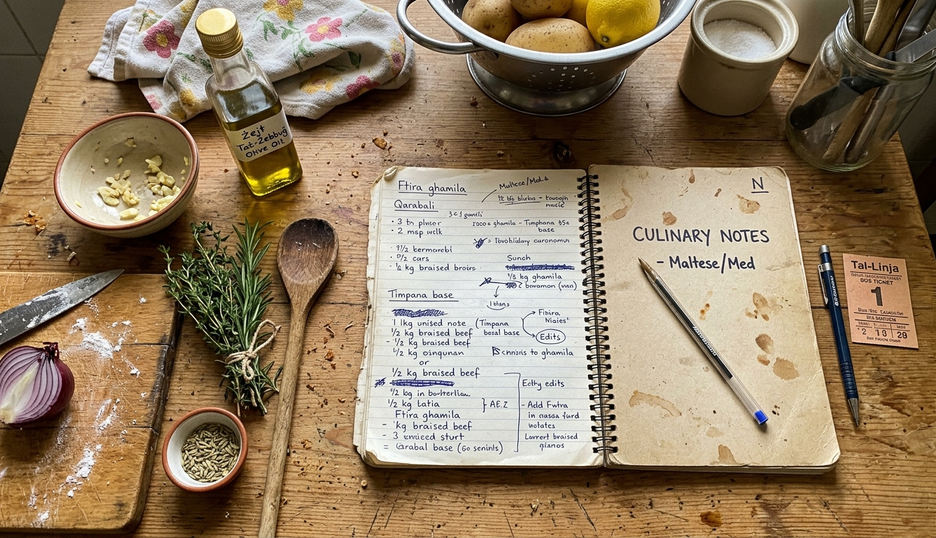
So this is not a generic city guide. It is a heritage-minded food reading list. Expect Roman bakeries, Barcelona market eating, island self-sufficiency, and children’s cooking culture. Expect small details. The kind that follow a person home.
Criteria for choosing these culinary adventures
The selection ran on three filters, in order.
- A strong sense of place came first. Rome needed to feel like Rome, not just a backdrop for lunch. Barcelona needed markets and cafe rhythm. Waiheke Island needed its water tanks, ferries, and practical island thinking. Melbourne-adjacent family food culture needed to show how children learn around food, not merely that they attended a class.
- Concrete food detail came second. A note had to name what was eaten or handled: pizza Romana, porchetta, salumi, sangria di cava, bocadillo, jamón, Manchego, or allergy-aware children’s cooking.
- Home-cook usefulness came third. The best entries offered something to borrow: texture, shopping behaviour, oven awareness, menu ideas, hosting cues, or family cooking lessons.
The anchor dates carried through the selection: December 30 2008, November 23 2009, February 18 2011, and April 2011. They matter because they keep the guide honest. These notes belong to their moments.
One caveat sits under the whole exercise: because the selection favoured notes with usable home-cook detail, place-rich posts that stayed purely descriptive were left out, even when they were evocative.
The 5 food travel notes worth revisiting first
-
1. Rome for pizza Romana, porchetta, and bakery texture
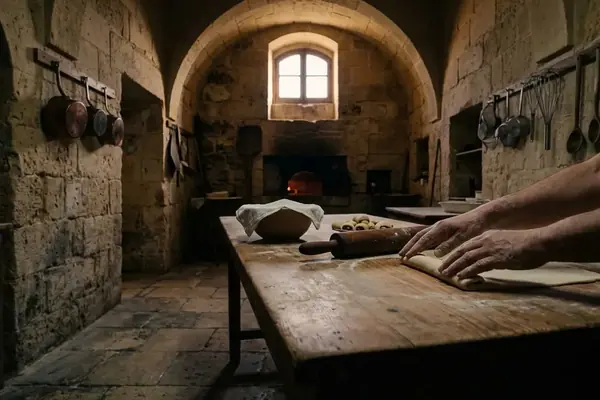
Why it matters: The Roman note belongs at the front because it teaches with texture. Pizza Romana is not just “pizza in Rome”. It is a lesson in crispness, oil, salt, heat, and restraint. A slice eaten near the source can correct a home cook’s idea of what bread dough can become.
Foods and places to notice: Watch for pizza Romana, porchetta, and salumi. These foods share a certain confidence. They do not need fussing. Bread carries oil and salt. Pork carries crackle and perfume. Salumi ask for a board, a knife, and patience.
What a home cook can borrow: Borrow the texture goal before the recipe. A cook making Roman-style bread at home can chase a thin, well-oiled base and a clean salty finish, even without copying the bakery exactly.
Field Note: A standard home oven without a stone or steel will usually give a softer, paler base than the original Roman bakery note describes, because domestic ovens rarely reach deck-oven temperatures. Work with that. Preheat properly, oil the tray, and aim for pleasure rather than imitation.
-
2. Barcelona for market appetite and a proper bocadillo
Why it matters: Barcelona earns its place through the rhythm of market eating. It shows how a cook can move from looking to buying to assembling without turning lunch into a project.
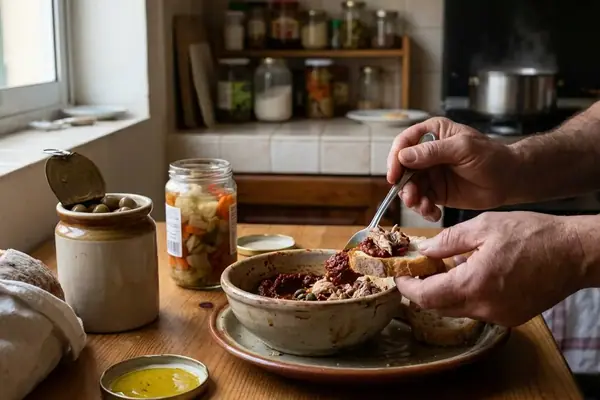
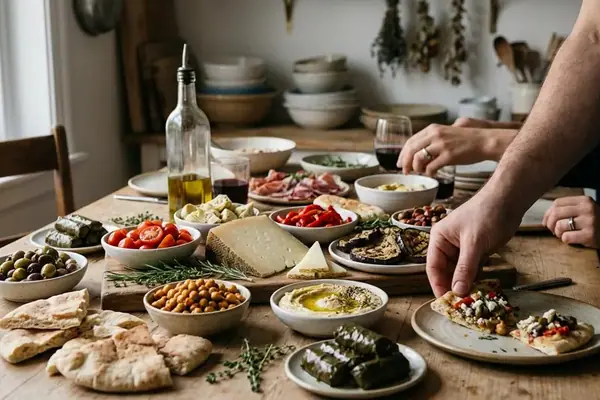
Foods and places to notice: The markers here are sangria di cava, bocadillo, jamón, and Manchego. The bocadillo is the useful centre. Bread, cured meat, cheese, and a drink with sparkle can become a complete food memory.
What a home cook can borrow: Borrow the shopping sequence. Buy one good bread, one cured element, one cheese, and one drink that suits the weather. That is enough for a balcony lunch, a picnic, or a Friday night table when no one wants a heavy dinner.
Practical tip: Do not overload the sandwich. Let the jamón and Manchego carry it. If the bread is good, it needs less help than a tired roll from the back of the cupboard.
-
3. Waiheke Island for low-waste supper thinking
Why it matters: Waiheke brings a different kind of culinary adventure. It is not only about what tastes good. It asks what a cook does when water, supply, and waste sit closer to the table.
Foods and places to notice: The note’s island infrastructure matters here. Water tanks and self-sufficiency are not decorative details. They shape the way a meal is planned, cooked, cleaned up, and valued.
What a home cook can borrow: Borrow the low-waste supper lesson, but keep its setting in view. On an island, the menu logic grows from limits: use what is already there, stretch good ingredients, and avoid creating a sink full of work.
Important: The Waiheke lesson depends on its water-tank and self-sufficiency context. The same supper reads differently for a city cook on mains water with daily market access.
Practical tip: Build one supper around pantry ends, vegetables that need using, and a small rich accent. Salumi, cheese, herbs, or yesterday’s bread can do more than expected.
-
4. Melbourne-adjacent children’s cooking for allergy-aware confidence
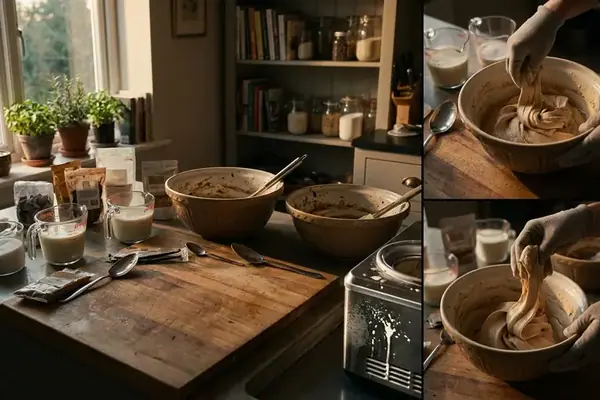
Why it matters: Children’s cooking can get treated as cute. The better view is more serious. It shows how food habits form: washing hands, naming ingredients, handling tools, asking questions, and learning that a shared table sometimes needs care around allergies.
Foods and places to notice: The Tiny Chef appears in the source context for its stated capability around allergy-aware catering. That detail matters because family cooking rarely happens in ideal conditions. Someone avoids nuts. Someone cannot eat dairy. Someone needs to feel included without being made into the whole story.
What a home cook can borrow: Borrow the teaching posture. Put one child in charge of a small task with a clear boundary: tearing herbs, spooning batter, laying out toppings, or counting pieces of fruit. During practice, the lesson often sits in the repetition rather than the finished dish.
Practical tip: If allergies are involved, treat old travel notes as prompts, not safety guidance. Confirm current procedures directly with any provider, and keep home kitchens plain, labelled, and calm.
-
5. The author-led food note for memory, dessert, and return visits
Why it matters: The fifth note is less a destination than a way of reading. Gourmet Worrier’s strength is the author-led thread: food seen through Maltese memory, Italian and Mediterranean home cooking, desserts, ice creams, and Melbourne food life.
Foods and places to notice: Notice how sweets and savoury dishes sit in the same world. A bakery visit, a family kitchen, a market plate, and an ice cream memory can all belong to one appetite. Ms.Gourmet’s voice does not flatten them into categories.
What a home cook can borrow: Borrow permission to connect travel with inheritance. A Maltese kitchen in Melbourne can still learn from Rome. A dessert maker can still learn from a market sandwich. A practical cook can still keep romance in the pantry.
Practical tip: Keep a small food notebook after reading. Write down one ingredient, one texture, and one occasion. That is often enough to turn a travel note into dinner.
What home cooks can take from these food guides
Bottom Line: Travel inspiration becomes useful when it turns into a shopping habit, a texture goal, a hosting idea, or a family cooking ritual.
That is the conversion point. A beautiful paragraph about Rome is pleasant. A note that sends a cook to buy better olive oil, salt bread properly, or preheat a tray with more patience has done more work.
Field Note: Choose one detail from each destination rather than copying a whole meal: Roman oil-and-salt bread, a Barcelona bocadillo, or a low-waste island supper.
Food travel rewards close observation. Ovens teach heat and texture. Markets teach proportion. Water systems teach restraint. Cafes teach pacing. Children’s kitchens teach how confidence is built in small tasks.
Community observation suggests that the most durable ideas are rarely the elaborate ones. They are the repeatable ones. A sandwich. A tray of bread. A board of salumi. A supper that uses what the kitchen already has.
Scope, dates, and what this guide does not claim
This piece is a curated editorial reading guide based on specific Gourmet Worrier notes and dated context. It is not a current restaurant directory.
Venues, menus, services, and opening details may have changed since the original publication dates. The guide makes no claim about current rankings, visitor numbers, or whether a particular address still operates in the same way.
The SBS Radio interview belongs to April 4 2011. Allergy-aware catering refers to the stated capability of The Tiny Chef in the source context. Island infrastructure details refer specifically to the Waiheke Island note.
Important: Allergy-aware children’s cooking guidance here reflects one provider’s stated capability in 2011 and should not be treated as a current allergen-safety standard.
That boundary is not a weakness. It is part of reading old food writing well. A dated note can still teach appetite, mood, texture, and method, even when practical details need checking before anyone books, visits, or serves.
The Gourmet Worrier lens: personal, Mediterranean, and practical
Nanette’s blog voice sits close to the kitchen bench. It connects Maltese roots, Italian and Mediterranean home cooking, desserts, ice creams, and Melbourne food culture without pretending to stand at a grand distance.
That is the charm. The food is not collected like specimens. It is noticed, tasted, remembered, adapted.
For heritage-recipe seekers, the appeal lies in continuity. For dessert makers, it lies in the way sweetness sits beside travel and family. For Mediterranean food enthusiasts, the notes open a wider table. For Melbourne readers, they show how far a local appetite can travel while still coming home for dinner.
The distinctiveness comes from lived curiosity rather than formal travel-guide distance. Ms.Gourmet’s energy, in this context, means the writing cares about what a dish can become once it reaches an ordinary home kitchen.
The best food travel notes leave you hungry to cook
The five notes form a path: Roman ovens, Barcelona markets, Waiheke resourcefulness, children’s cooking, and author-led food storytelling. Each stop offers a different lesson.
Rome teaches texture. Barcelona teaches shopping. Waiheke teaches restraint. Children’s cooking teaches patience and inclusion. The Gourmet Worrier lens teaches that memory is not a museum piece; it is something stirred, baked, sliced, and shared.
So the next step is modest.
Cook one borrowed detail. Oil and salt a tray of bread. Make a bocadillo with care. Plan a low-waste supper. Invite a child to do one real kitchen job. Let the travel note end where good food writing should end: not at the airport, but at the stove.