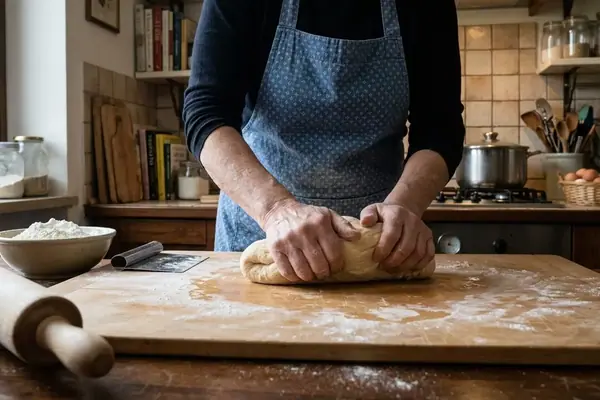
A golden timpana arrives at the Sunday table, and everyone watches the first cut. The knife passes through a flaky lid; the lifted slice shows macaroni held inside pastry rather than spilling across the plate. To assemble that slice, make a thick meat sauce, coat the pasta with it, fill a pastry-lined tin, seal the lid, bake until the crust and centre are ready, then let the timpana settle before cutting. The order matters as much as the ingredients.
The Sunday-lunch slice we are building
Nanette’s Maltese-rooted home cooking provides the reference point here: a deep-tin timpana with a flaky crust and enough structure to carry a warm portion onto a plate. Other households use other pastries and binders. This guide follows the handling that suits this particular Sunday version, from the sauce’s thickness to the pause before serving.
Think ahead to the first slice. A spoonful of loose sauce will work its way toward the base. Water trapped in macaroni tubes will follow it. A gap at the rim gives the filling somewhere to escape, and an early cut unsettles what the oven has just brought together. Deal with those points in that order, and the final lift becomes much easier.
Gather the macaroni, meat sauce and pastry
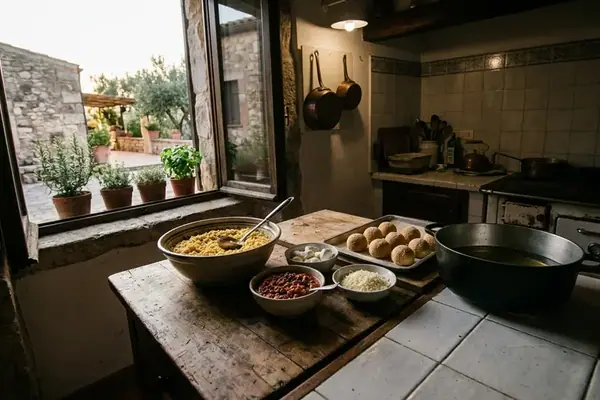
Set out short, sturdy macaroni; minced meat, onion, tomato and seasoning for the sauce; pastry for both the base and lid; and egg wash for the top. Short tubes keep their shape beneath the pastry. The meat sauce needs to coat them without flowing to the bottom of the tin. Egg and grated hard cheese can help bind the baked filling, though their use differs from kitchen to kitchen.
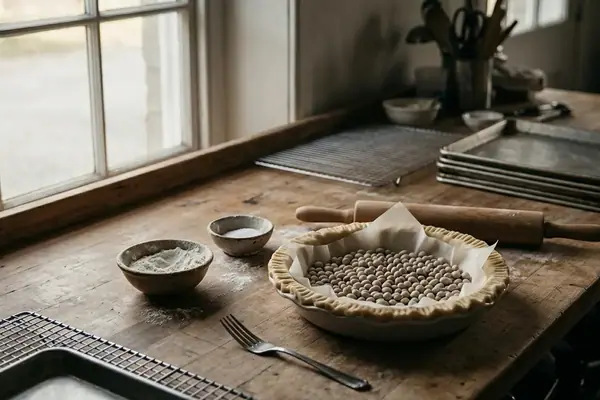
Choose a deep baking tin, roughly 24–26 cm across and 6–8 cm deep for the Sunday portions described here. Allow one sheet of pastry to cover its base and sides with a 2–3 cm overhang all around. Cut a separate lid about 1 cm wider than the tin. That spare pastry gives your fingers something to join and crimp.
Depth gives the macaroni room to sit beneath a proper lid. In a shallow tin, the filling crowds the rim and makes a clean seal awkward. Stretching pastry thin to reach up the sides creates a different problem: the corners may tear when the filling goes in. Keep enough pastry at the bottom to support the slice you intend to serve.
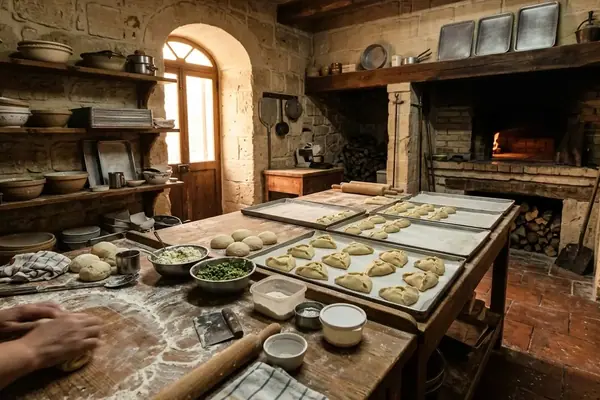
This is a flaky-crust timpana. Shortcrust and pastizzi-dough versions have their own ways of behaving, so I would keep the pastry choice and the assembly method together rather than treating every timpana as interchangeable.
Cook the meat sauce until it will stay inside the crust
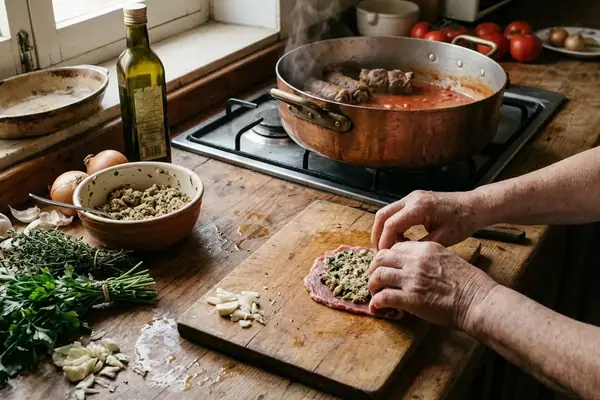
The sauce does the structural work. Soften the onion until translucent and sweet, then brown the minced meat in batches so it fries rather than steams. Add the tomato and seasoning, and simmer uncovered until the sauce clings to a spoon. For this deep-tin version, that reduction may take 40–55 minutes; once the surface begins to catch, stir every 8–10 minutes.
Use the pan to judge it. Drag a spoon across the base. The path should remain open for just about 2–3 seconds before the sauce creeps back. A sauce that immediately floods the gap will carry excess liquid into the timpana, where it can soften the pastry base and loosen the first slice. It is worth giving this stage more attention than the clock.
Taste the reduced sauce and correct the seasoning before it meets the macaroni. Once pasta and pastry surround it, adjustment becomes difficult. Let the sauce cool before adding any egg-based binder later; for this method, allow about 25–35 minutes after reduction. Warm sauce can still coat pasta well, but steaming-hot sauce is a poor place to stir in egg.
Coat the macaroni without making the filling wet
Boil the macaroni 2–3 minutes short of the packet’s lower cooking time. It should retain a firm bite at the centre because it will continue cooking inside the crust. Drain it thoroughly, shake the colander, and let it stand for 3–5 minutes. Water hides inside those tubes, even when the surface looks dry.
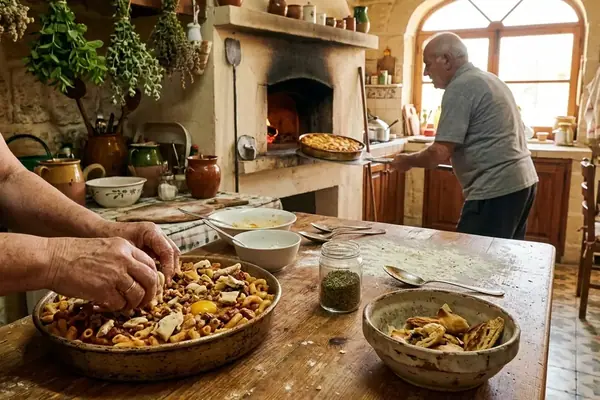
Toss the drained macaroni with the thick sauce in a bowl until each piece carries some seasoning. Separate layers of plain pasta and sauce make an uneven slice: the upper macaroni can taste pale while liquid gathers below. Coating everything before it enters the tin gives the filling a more consistent texture from top to base.
If using a binder, wait until the mixture is no longer steaming hot. For a tin this size, one or two eggs and a generous handful of grated hard cheese can help the baked macaroni hold together. Stir them through evenly rather than leaving pockets of egg or cheese.
Now tilt the bowl. The macaroni should look moist and evenly coated, with no liquid running toward the low side. If sauce collects there, the pastry will have to absorb what the pasta cannot hold. The bowl check tells you more about the coming slice than another ladle of sauce would.
Line the tin, add the macaroni and crimp the lid
Keep the assembly order simple and deliberate:
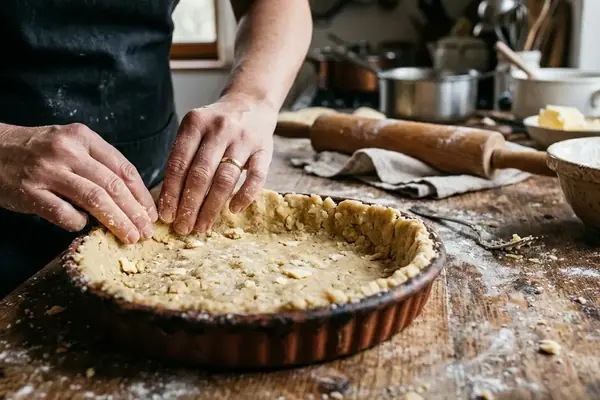
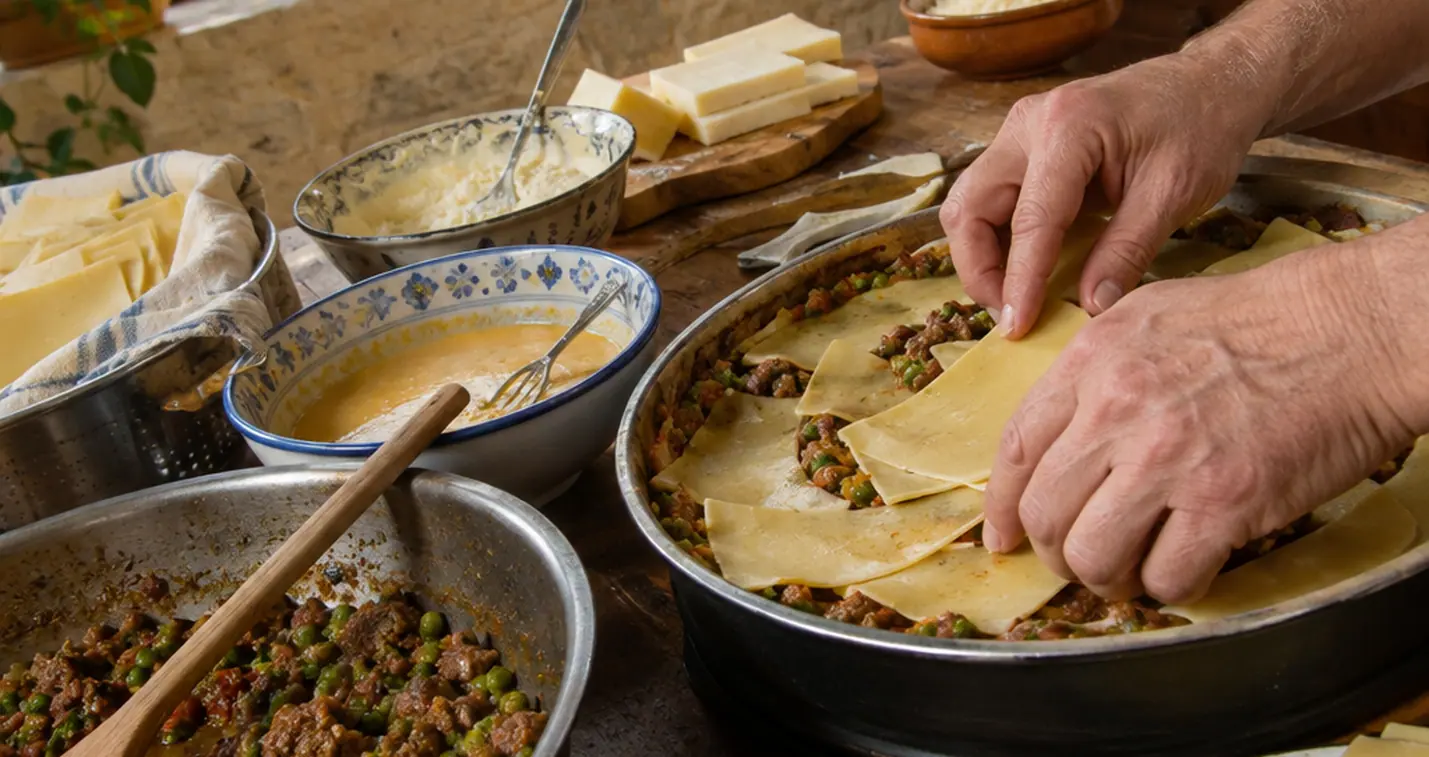
- Line the base and sides of the tin with pastry, leaving the 2–3 cm overhang. Ease it into the corners so it sits against the tin instead of bridging the space above them.
- Spoon in the coated macaroni. Move it into the edges with the back of the spoon, but leave it loose enough to settle naturally; packing it down produces a dense block.
- Lay the separate pastry lid over the filling. Join it to the overhang, fold and crimp the seam, then cut a single steam vent of about 1–2 cm in the centre.
- Brush the lid thinly with egg wash. One yolk loosened with approximately one teaspoon of milk gives you enough to cover the surface without pooling in the crimp.
Before the tin goes into the oven, travel around the rim with your eyes and fingertips. Cover any exposed filling and check that the join stays closed all the way around. Look at the base, too, for any obvious tear you can still repair. Once the filling heats and shifts, that seam must contain the sauce without help from your hands.
Bake for a golden crust, then wait before cutting
Put the timpana in a preheated oven on the lower-middle shelf and bake until the pastry is deeply golden and the centre is hot. Use the oven setting and timing suited to your pastry, tin and tested recipe. The spoon-path sauce test and the rest described here belong to this deep-tin, flaky-crust version; different pastry and tin materials change how quickly the crust bakes.
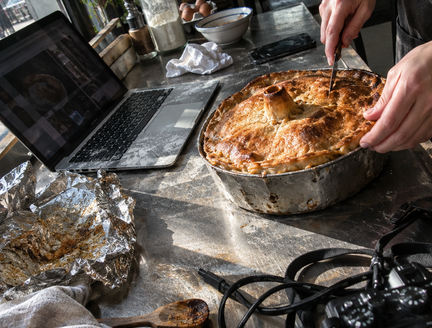
Check three places before taking it out. The lid should be golden, the side pastry should show colour when you lift a corner of the tin to inspect it, and heat should reach the centre beneath the steam vent. A handsome lid can finish ahead of a pale base or a cool middle. If the top browns rapidly while the sides lag, tent it loosely with foil and let the rest continue baking.
Leave the timpana in its tin for 25–40 minutes after baking, with a deeper or wider tin toward the longer end. This is a warm serving rest, not a plan to serve it cold. It gives the coated macaroni time to settle so the knife can separate portions without pulling the filling out of its pastry walls.
Lift out the first Sunday-lunch slice
While the timpana is still warm, run a thin knife between the crust and the tin to release the rim. Cut straight down through the lid with a long, sharp knife rather than sawing at it. Portions roughly 7–8 cm wide give the base pastry room to carry the filling. Slide a broad spatula right beneath the first one before lifting.
On the plate, the result explains the preparation: browned pastry around macaroni evenly coated in meat sauce, with no puddle beneath the slice. Begin your next timpana by cooking the sauce 1–2 hours before lining the tin, so it has time to reduce and cool before assembly.