The Short Answer: Creaminess Comes From Grind, Dairy, and Patience
If you want creamy nut ice cream at home, the formula relies on four non-negotiable levers: a medium fine nut grind, careful dairy incorporation, balanced sweetness, and proper freezing. Most home cooks want those answers up front. We build from there.
This guide bridges the culinary influences that shape my Melbourne kitchen. It draws on Maltese memory, Italian technique, and Spanish tradition to create desserts that feel generous rather than fussy. From there, it follows three distinct flavor paths. First, a clean pistachio base accented with rose water. Second, a Spanish turrón almond variation enriched with Pedro Ximénez. Finally, a Baci-inspired chocolate hazelnut profile featuring brittle nougat.
What Makes Nut Ice Cream Creamy Instead of Grainy?
Texture is best understood in plain cooking terms. Nuts bring essential fat and flavor to a base. However, they introduce sandiness if processed too coarsely or incorporated unevenly.
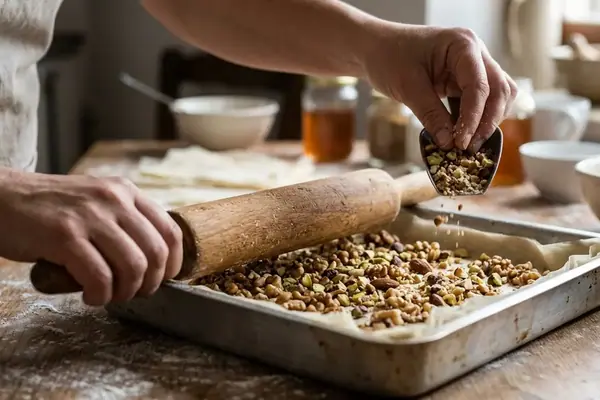
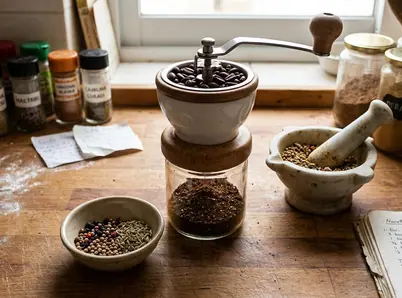
The target pistachio grind sits exactly between a coarse meal and a paste. It must be fine enough to pass through the dairy without leaving sandy specks, but you have to stop before the nuts release their oil and clump together. Achieving this requires watching the food processor closely.
Dairy handling matters just as much. Whisking crème fraîche and milk together is an act of gentle incorporation. You want to smooth the base without beating in an unstable foam. Vigorous aeration creates air pockets that later collapse into ice crystals.
Bottom Line: A home ice cream maker improves consistency but cannot rescue a grind that is too coarse. The texture problem starts at the food processor.
Choose a Nut Style: Pistachio, Turrón Almond, or Baci Hazelnut
I always recommend starting with pistachio. It isolates the core technique cleanly because you only have one delicate variable to manage alongside the nuts: rose water. You measure rose water in single drops, never spoonfuls. A heavy hand tips the flavor toward synthetic almond essence, ruining the subtle aromatic lift.
Once you master pistachio, you can move to Helado de Turrón. This is a Spanish-style almond ice cream based on turrón, the hard or soft almond nougat traditionally associated with Spanish sweets. It offers a deeper, more roasted flavor profile.
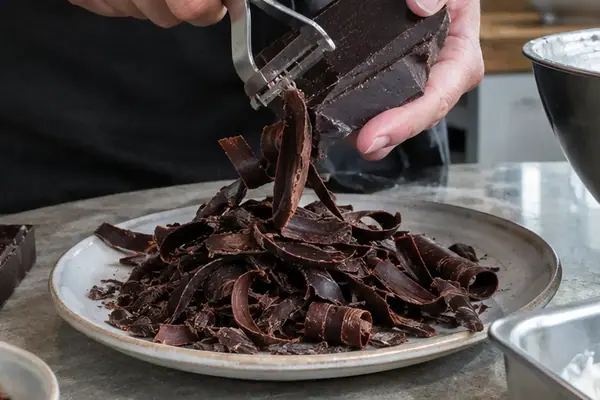
The Baci hazelnut style layers in chocolate and brittle. It requires more steps but delivers a rich, complex dessert suited for winter dinners.
The Home Method: Grind, Whisk, Chill, Churn, Ripen
The following sequence ensures the most failure-prone stages receive the attention they require.
Step 1: Prepare the Nuts
Toast hazelnuts and almonds to deepen their flavor, then cool them fully to room temperature before processing. Warm nuts go oily and clump immediately in the machine. Pistachios skip toasting because heat flattens their green aromatic note—the same prep step is wrong for one nut and right for another.
Step 2: Build the Dairy Base
Whisk the crème fraîche and milk until completely smooth. Remember that you are incorporating the fats, not aerating the liquid.
Step 3: Add Sugar and Flavorings
Introduce your aromatics thoughtfully. Use rose water drop by drop for the pistachio base. Pour in the Pedro Ximénez for the turrón variation, or fold in your chocolate-hazelnut elements for the Baci style.
Step 4: Chill Fully
The base must be cold through before it goes into the churn. Leave it in the refrigerator for 4 to 8 hours, or ideally overnight.
Step 5: Churn and Ripen
Process the mixture in your machine until it reaches a soft-set thickness. Transfer it to a freezer container and let it firm up for a few hours. Always rest the ice cream for 5 to 10 minutes at room temperature before scooping.
How to Balance Sweetness, Nuts, Florals, and Sherry
A successful nut ice cream protects the nut as the lead note. Sweetness, alcohol, and florals act as supporting players that can easily overwhelm the primary ingredient if left unchecked.
Always taste your base after it has chilled rather than while it is warm. A base tasted at room temperature that seems perfectly sweet will read flat once frozen, since cold suppresses both sweetness and aroma.
For the turrón almond variation, Pedro Ximénez plays a specific role. It is a dark, raisin-sweet dessert sherry from Andalusia. Used here, it rounds out the nougat notes rather than acting as a generic spirit splash. It is a flavor enhancer, not a substitute for proper sweetness control.
Troubleshooting: Grainy, Icy, Too Sweet, or Too Firm
When a batch fails, map the fault back to a specific upstream cause. This allows you to correct your process rather than blindly tweaking the recipe.
Fixing Graininess
Graininess usually stems from grind coarseness, uneven whisking, or hazelnut skins. Leftover hazelnut skins are a hidden grit-and-bitterness source that survives even a correct grind, so skinning matters as much as processor technique. Rub roasted hazelnuts vigorously in a clean towel to remove loose skins before grinding.
Preventing Iciness
If the texture is icy, suspect a warm base or insufficient chilling time. Storage also plays a role. Store your finished ice cream in a deeper, well-filled container rather than a shallow tray to limit air contact and surface ice crystals.
Correcting Artificial Flavors
If the flavor tastes artificial or medicinal, you have likely overused your aromatics. Reduce the rose water next time and avoid almond-style essences entirely unless a specific recipe demands them.
Important: A domestic ice cream maker will produce scoopable home ice cream, not Mr Whippy-style soft serve, so judge the result against the right benchmark.
Citations: Source Notes and Scope
This methodology draws on several distinct culinary traditions and historical records. The Gourmet Worrier archive includes original Ms.Gourmet: content author posts dating from 30 November 2009, 17 February 2010, 19 May 2010, and 4 November 2010. These entries serve as historical recipe context that has been updated and refined over a decade of testing.
The foundational pistachio approach references Anissa Helou, creator of the original pistachio recipe and author of Mediterranean Street Food. Her work provides vital recipe-source context. Similarly, Claudia Roden’s 2008 book The Food of Spain serves as the source context for the Helado de Turrón.
Field Note: While these culinary texts provide excellent foundational ratios, this is a home-cooking guide, not a commercial gelato formulation, nutrition analysis, or food-science trial.
Serving It the Gourmet Worrier Way
Ice cream is ultimately about the table it sits on. These desserts belong at home, served family-style, rather than plated with restaurant tweezers.
Serve the pistachio ice cream as a clean, fragrant finish after a heavy Mediterranean meal. The turrón almond variation pairs beautifully with a small glass of Pedro Ximénez poured neat. If you make the Baci hazelnut, serve it alongside warm bombolini or a simple, unadorned chocolate cake.
Sourcing good ingredients makes the work easier. Specialty items like authentic Spanish turrón and Pedro Ximénez can often be found at local grocers—I pick mine up from Mediterranean Wholesaler in Brunswick, Melbourne. Take the time to find the right components, respect the resting times, and let the natural fats do the heavy lifting.