Herbs can give gelato and ice cream a fragrance that fruit, chocolate and vanilla cannot quite imitate. They can also turn a good dairy base bitter, grassy or strangely medicinal. The difference often comes down to how the leaves meet the dairy.
The reliable approach is controlled infusion. Warmth releases aroma, regular tasting sets the stopping point, and prompt chilling preserves what the cook has captured.
Quick Nav
- What herb-infused gelato or ice cream means
- Matching the herb to the dairy base
- A controlled warm-infusion method
- How basil, rosemary and mint behave
- Chilling, churning and ripening
- Fixing bitter, weak or muddy flavour
- A first basil gelato batch
What Is Herb-Infused Gelato or Ice Cream?
Herb-infused frozen dessert is a dairy base that has absorbed aromatic oils and flavour compounds from fresh herbs before churning. Thinking of infusion as a transfer process matters. It discourages the tempting shortcut of throwing torn leaves into the machine and hoping the blades will do the rest.
The core sequence has six moves: warm the base, add the herbs, taste while they steep, strain, chill and churn. Each move protects either flavour or texture. None requires specialist equipment.
Infusion is not the same as blending herbs directly into the base. Blending leaves behind fibres and plant particles, often producing a stronger green colour along with bitterness or a grassy finish. An infusion usually gives a smoother texture and a cleaner aromatic line. The finished scoop tastes of basil, rosemary or mint without asking the diner to chew the evidence.
Bottom Line: Extract the herb’s aroma into the dairy, then remove the plant material before freezing.
Match the Herb to the Dairy Base
A herb does not behave independently of the mixture surrounding it. Fat, milk solids, sugar and egg yolks all change which notes reach the palate.
Start with the richest base
Custard-style ice cream contains egg yolks and carries a rounded, rich flavour. That richness softens sharp herbal edges. Rosemary may seem gentler in custard than it does in a leaner base, while delicate basil can become less distinct if the custard itself is strongly flavoured.
Eggless Philadelphia-style ice cream sits in the middle. Cream still cushions the herbs, but there is no yolk flavour competing with them. It makes a useful canvas when the aim is a clear infusion with familiar ice-cream richness.
Milk-forward gelato exposes the herb most directly. That can be beautiful with fresh basil, but it also reveals bitterness quickly. Identical steeping times will not taste identical across these three bases.
Choose herbs by condition, not appearance alone
Use fresh, fragrant leaves or sprigs without slime, blackened edges or dried stems. Wash them, then dry them thoroughly. Even a few grams of rinse water clinging to leaves can noticeably dilute a small home batch.
Herb strength changes with variety, plant age and season. A large sprig is not automatically a strong one. Measured weight provides a repeatable starting point, but aroma and tasting cues should decide when the infusion stops.
Use a Controlled Warm-Infusion Method
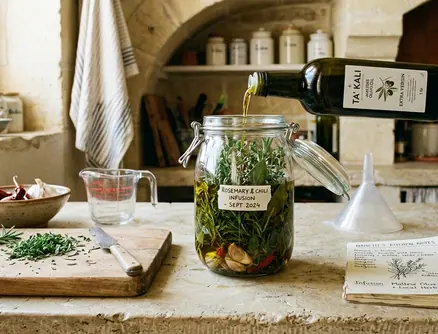
Gentle warmth carries aromatic compounds into dairy without battering the herbs. A rolling boil does the opposite: it can flatten basil, concentrate the base and push rosemary towards a harsh, resinous flavour.
- Measure and record the herbs. Note the herb, amount, base style and whether the leaves were torn, bruised or left intact.
- Warm the dairy gently. Under typical conditions, bring it to steaming, roughly 70–80°C, but never allow a rolling boil.
- Move the vessel off direct heat. Submerge the prepared herbs and cover the vessel so the rising aroma stays close to the base.
- Start tasting early. Use a clean spoon every 3–5 minutes rather than relying on one fixed steeping time.
- Strain at the right sensory cue. The warm base should taste slightly more aromatic than the intended frozen dessert because cold dulls flavour perception.
- Cool the strained base promptly. Cover it and chill it thoroughly before churning.
This method emerged from a useful kitchen correction. Taking the base to a full boil flattened basil and made rosemary bitter, so aggressive heat was set aside in favour of steaming dairy and an off-heat steep. That lesson should not become another rigid rule about minutes. Batch volume, herb condition and base composition all move the stopping point.
Field Note: A refrigerated cold infusion can run for 4–12 hours. It offers a different route for delicate herbs, but still needs regular tasting whenever practical.
How Basil, Rosemary and Mint Behave Differently
The most useful comparison begins with failure. Basil becomes cooked and vegetal. Rosemary grows resinous and dominant. Mint’s cooling freshness can slide into grassiness with little warning.
How Basil, Rosemary and Mint Behave in Dairy
| Herb | Preparation | Infusion approach | Sensory cue to stop | Common failure | Compatible additions |
|---|---|---|---|---|---|
| Basil | Tear leaves lightly to expose fresh surfaces. | Steep off the heat and taste frequently. | Fresh, softly peppery or anise-like aroma. | Cooked, vegetal or spinach-like flavour. | Lemon zest, strawberry, peach or a restrained olive-oil finish. |
| Rosemary | Use fewer exposed leaves or leave a sprig intact. | Keep contact controlled because rosemary dominates quickly. | A clear piney fragrance that still leaves room for dairy. | Resinous flavour from crushed needles, excess heat or a long steep. | Honey, lemon, roasted stone fruit or dark chocolate. |
| Mint | Bruise the leaves without pulverising them. | Taste closely as the cooling note develops. | Clean freshness without a raw green finish. | Grassy over-extraction. | Chocolate folded in near the end of churning. |
Rosemary deserves the lightest hand. A base steeped too long or made with crushed needles can become so resinous that a later swirl of honey or chocolate cannot rescue it. Mint presents a subtler trap: a steeping window that suits basil may already have pushed mint past cooling and into grassy.
Chill, Churn and Ripen Without Losing the Aroma
Strain the base through fine mesh, without squeezing or forcing the leaves through. Promptly cool it, cover it and chill it to fridge temperature, around 4°C. Warm dairy should not sit on the counter waiting for the machine.
Taste the base cold
This is the final useful checkpoint before churning. Cold reveals imbalances that the warmth may have concealed. If the herb is too forceful, dilute it with reserved uninfused base. A small adjustment to sweetness, salt or acidity can also sharpen a blurred flavour, but the herb should remain recognisable before the machine starts.
Gelato usually presents as softer and more milk-forward, while ice cream tends towards greater richness and aeration. Home machines vary in freezing speed and the amount of air they incorporate, so texture cues are more dependable than a promised scoop consistency.
Add chocolate, fruit ripple or nuts during the final 1–2 minutes of churning. Earlier additions can interfere with freezing or muddy the base before its herbal balance is clear. After hardening, temper the container at room temperature for roughly 5–10 minutes before serving.
Fix Bitter, Weak or Muddy Herbal Flavour
When the herb is overpowering
Strain immediately. Blend the infusion with reserved uninfused base before churning, adding the plain portion gradually and tasting cold. A rosemary base that has already become sharply resinous may remain difficult to recover, which is why early tasting matters more than a late addition.
When the flavour is bitter or cloudy
Look first at preparation and straining. Crushed rosemary needles, excessive heat, hard pressing through the mesh and an overlong steep all carry bitter compounds or fine particles into the dairy. Fine mesh should catch the solids; pressure only pushes grassy material through.
When the flavour is weak
Continue a gentle steep if the herbs are still in the warm base and their aroma remains fresh. For the next batch, use fresher herbs rather than blending in a large quantity of raw leaves. Raw leaf purée may deepen the colour, but it also changes the texture and can replace a weak infusion with a grassy one.
Keep a small batch record
Log six fields: herb type, measured amount, base style, preparation, steeping checkpoints and final result. This is more useful than recording a final time alone. It captures what the cook smelled and tasted as the herb changed.
Important: Do not press spent herbs to recover the last drops of base. Those drops often bring particles, cloudiness and the very flavour the straining step was meant to remove.
Make a First Basil Gelato Batch by Taste
This is an adaptable home-kitchen exercise, not a universal commercial formula. Its purpose is to isolate one variable: how a modest, measured amount of fresh basil changes a plain milk-forward gelato base.
- Wash the basil and dry every leaf thoroughly.
- Measure the basil, then tear the leaves lightly. Do not mince or pulverise them.
- Reserve roughly a tenth of the plain, uninfused base in a covered container.
- Warm the remainder to steaming, around 70–80°C, without boiling.
- Remove the vessel from direct heat, add the basil, cover and start a timer.
- Taste with clean spoons at regular intervals. Write down each checkpoint rather than relying on memory.
- Strain as soon as the aroma tastes clear and rounded, with basil leading but the milk still present.
- Chill to around 4°C, then taste again. Use some reserved base if the cold infusion feels too forceful.
- Churn and ripen according to the machine’s normal process, then temper briefly before serving.
The target is unmistakably basil-led and still creamy. It should not suggest cooked spinach, wet grass or a bowl of chopped leaves. Serve the first test plain or with strawberries so the result remains easy to read.
For the next batch, set out the basil, thermometer, fine-mesh strainer and six-field batch note before warming the dairy.