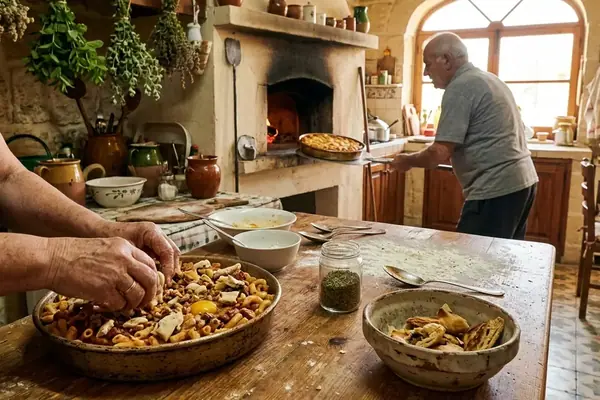
A Melbourne Greens Basket with Mediterranean Roots
Red radicchio and many leafy green chicories belong to the same cultivated species, Cichorium intybus. A tight burgundy head and a loose bunch of green, toothed leaves can therefore be closer botanical relatives than their appearance suggests. That matters at the shop: neither the name on the box nor the shape of a leaf tells you everything about dinner.
Buying Mediterranean greens in Melbourne takes a little translation. The useful sequence is to recognise the likely plant, find promising sellers, ask about the actual bunch and choose a substitute that suits your cooking method.
Nanette’s Maltese roots and Mediterranean home-cooking focus give this search its editorial bearings. I favour a practical question: which leaves will work with the beans, garlic and olive oil already waiting in the kitchen?
Read the Chicory, Endive and Dandelion Labels Closely
Leafy chicory has no single silhouette. Depending on the variety, its leaves may stand upright, grow narrow or broad, or carry deeply toothed edges. Use this table as a set of buying cues for cultivated produce.
| Shop label | Typical cultivated appearance | Cooking behaviour | What to confirm |
|---|---|---|---|
| Leafy chicory; radicchio | Green leaves vary widely; radicchio forms may be red, burgundy or speckled. | Leafy types suit cooked greens; radicchio contributes a different crunch in salad. | Which variety, and is it intended for salad or cooking? |
| Curly endive; frisée | Finely divided, curly leaves. | Tender inner leaves suit a raw bitter salad. | How tender is this bunch? |
| Broad-leaved endive; escarole | Broader leaves than curly endive. | An option for cooked dishes that call for leafy chicory. | Does “endive” mean broad-leaved or curly here? |
| Dandelion; Italian dandelion; catalogna | Toothed leaves; appearance alone cannot settle the plant. | Ask whether the bunch suits brief wilting or longer cooking. | Is this true dandelion or a chicory variety? |
Curly endive and escarole belong to Cichorium endivia. True dandelion belongs to a different genus, Taraxacum; “Italian dandelion” and “catalogna” often describe toothed chicory instead. Radicchio shares leafy chicory’s species, but cannot replace every green-leaved variety in every dish.
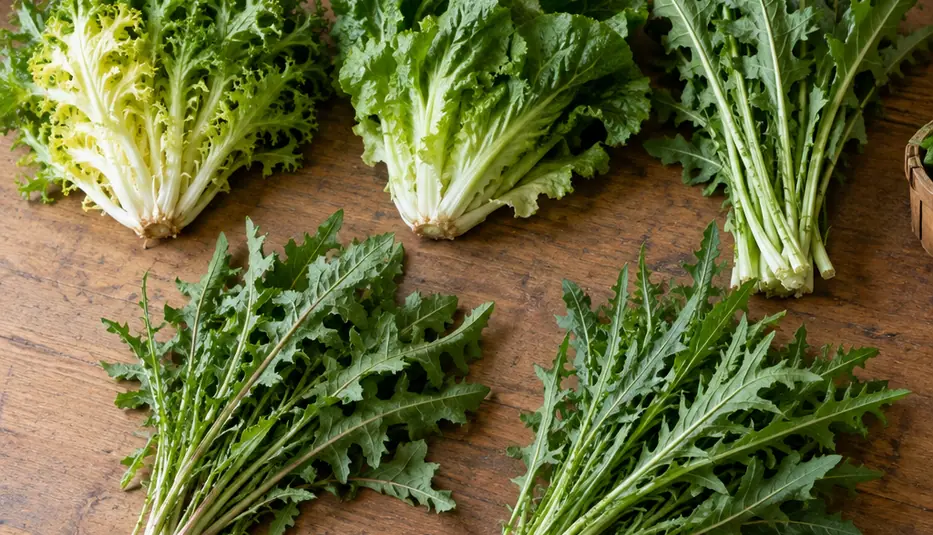
For freshness, look for leaves that spring back when lightly bent, firm pale stem bases and no translucent or slimy patches where leaves meet. Burgundy colouring is normal for radicchio; judge its condition by texture and stem ends.
Keep Identification at the Stall
These comparisons apply to cultivated produce sold as food. Leaf shape, teeth and colour cannot establish whether greens growing beside a road or in a park are safe to eat.
Plan a Melbourne Route Before Chasing a Bunch
Start with current farmers’ market stallholder listings, then contact growers who list leafy vegetables. Follow with calls to suburban greengrocers carrying Mediterranean produce. Preston, Coburg and Oakleigh are geographic starting points for that search, not verified stock locations. Choose the nearest useful cluster rather than crossing Melbourne on an assumption.
- Check the market’s current listing and opening hours.
- Contact a relevant grower or greengrocer about the greens you need.
- Phone again on the morning of your trip: deliveries can change availability.
“Do you currently have leafy green chicory, broad-leaved endive or cultivated dandelion greens? What name is on the box, and when is your next delivery?”
Grower stalls may offer variety and harvest information; greengrocers may fit more easily into regular shopping. Neither format guarantees local origin or specialist knowledge. Ask where the greens were grown separately from where they are sold.
Cooler months are a useful prompt to enquire about Victorian-grown chicories and endives, without assuming supply. At a morning market, arrive early rather than leaving leafy greens until the stalls begin packing down.
Ask Questions That Change What Goes in the Bag
A productive conversation stays close to the bunch in front of you:
- What variety is this?
- Where was it grown?
- When was it picked?
- Are these tender young leaves or mature cooking greens?
Then name the method: raw salad, a brief wilt or longer cooking in a bean pot. The seller’s answer concerns that produce; it cannot promise that cooking will remove its bitterness. Maturity and texture deserve attention alongside flavour.
Describe the Bean Pot
Try: “I’m making a warm greens side with garlic and olive oil. Which of these would you choose?” A specific dish gives the seller more to work with than a request for the “authentic” leaf.
Match the Substitute to the Dish’s Job
I separate bitterness, pepperiness and leafy bulk when choosing a replacement. Rocket supplies pepper; English spinach supplies tenderness. Neither recreates every quality of chicory.
| Missing green and dish | Possible substitute | Adjustment to expect |
|---|---|---|
| Leafy chicory in a cooked side | Broad-leaved endive, when available | Check tenderness and taste during cooking. |
| Bitter leaves in a raw salad | Tender inner curly endive or finely sliced radicchio | Different leaf structure and crunch; slice radicchio into narrow ribbons. |
| Dandelion in a cooked preparation | Another cultivated bitter green | Confirm the variety and cooking suitability. |
| Chicory in a bean-and-greens supper | Silverbeet for leafy bulk | A milder result; cook substantial stalks before adding leaves. |
For a tender cooked component, English spinach can go in at the end. For a peppery raw component, consider rocket. Taste after any swap before final seasoning: a milder leaf may call for more lemon or a little more salt alongside beans and olive oil.
Bring Greens Home Cool, Then Compare Two Cooking Methods
Pack a breathable produce bag and use an insulated bag when the day is warm or the journey lengthy. Keep tender greens out of a parked car.
At home, remove damaged leaves. Refrigerate sound greens loosely wrapped in a clean, slightly damp towel inside a suitable bag or container; avoid leaving the bunch standing in water. Harvest date and handling affect how long it keeps, so check condition rather than assigning a fixed storage life.
Before cooking, separate the leaves and rinse thoroughly in changes of cold water, especially around the base. Lift the leaves out so grit stays behind. Drain well, and dry anything destined for salad.
Compare Wilting with Blanching
Cook one small handful directly in olive oil. Blanch another in salted boiling water, drain and squeeze it, then finish with olive oil and garlic. Keep the seasoning similar so you can notice differences in bitterness and stalk tenderness.
This is a kitchen comparison, not formal testing. Its value lies in deciding how to cook the rest of that particular bunch.
Give Your Next Bunch a Kitchen Record
For the next shop, confirm stock before leaving, buy a modest bunch of cultivated chicory or endive, and write down the seller, labelled variety and purchase date. Add brief notes on raw versus cooked bitterness, stalk tenderness and whether blanching helped.
Suppose the chicory is unavailable and you choose silverbeet for a bean supper. This hypothetical fallback needs its own sequence: separate the stalks, slice them, cook them first, then add the torn leaves with the beans. Expect a milder dish and season after tasting.
There is a botanical clue to that different character: silverbeet and beetroot are both Beta vulgaris, bred for leaves and roots respectively.