A promising semolina cake can come out gritty, while a tart meant to crumble gently can turn hard under the fork. Often, the trouble starts before the oven is on: the grind is wrong for the sweet, or the grains have too little moisture. The goal is a pleasantly textured Mediterranean-style crumb. Getting there means treating cake batter and shortcrust as different jobs.
What semolina brings to a sweet crumb
Semolina gives a cake a gentle grain that plain flour cannot quite imitate. In a tender slice, that texture offers a little resistance, then softens as you chew. In pastry, a small amount can give the crust a pleasing bite. Those are useful qualities in a home kitchen where lemon cake, yogurt and a fruit tart might all appear across the same weekend.
The distinction is in how the grain feels after baking. A slightly sandy crumb can be lovely. Dry grains that remain distinct against the teeth belong to a different category, and a crisp tart shell should still give way cleanly to a fork.
Before changing oven temperature or reaching for more syrup, check what went into the mixing bowl. Grind and moisture shape the result long before the surface turns golden.
Match the semolina grind to the sweet
Packets labelled simply “semolina” can hold noticeably different grinds. Check the contents rather than relying on the name. Rub a pinch between thumb and forefinger over a dark plate: fine semolina flour leaves a pale, dusty film with few visible specks; coarse semolina scatters distinct grains, closer in appearance to caster sugar. In liquid, the fine grind clouds and blends in, while the coarse grains remain easier to see.
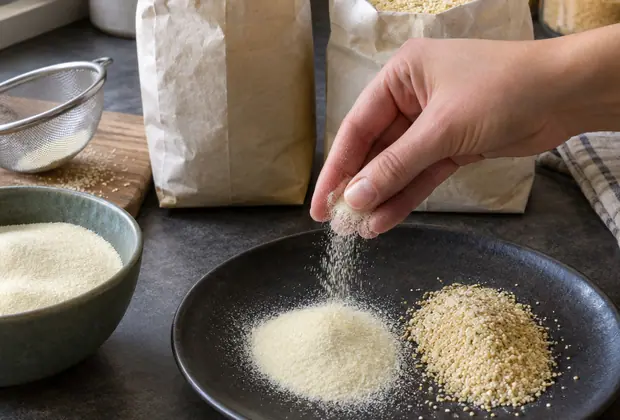
Choose fine semolina for a delicate cake or shortcrust, where obvious grains would distract from the crumb. Save a coarser grind for a sweet in which that grain is part of the pleasure, and give it time and liquid to soften. Label the grind if the semolina moves from its packet into a jar; the two grades are harder to tell apart at a glance on a shelf.
Pair Grind With Moisture
The coarser the grain, the more deliberately the recipe must make room for hydration. Choose the grind and the liquid together, before mixing begins.
Semolina comes from wheat. It is unsuitable for someone avoiding wheat or gluten, and a gluten-free flour blend will not follow the hydration guidance here in the same way.
Let yogurt soften the cake batter
For a yogurt cake, stir the semolina into the yogurt before it meets the remaining dry ingredients. Milk or another wet ingredient in the recipe can do the same work. Stir until no dry pockets remain, then leave the bowl while the tin is prepared and the lemon is zested. Fine semolina generally needs a shorter rest than coarse grains; the useful test is in the bowl rather than the clock.
Draw a spoon through the rested mixture. The trail should close slowly and evenly. When the spoon lifts, there should be no dry, sandy skirt around the base of the bowl. Once the full batter is mixed, it should still be evenly moistened and spoonable. If it stiffens enough to hold a standing peak, loosen it a little at a time with the liquid already called for in the recipe.
This order matters. Adding semolina at the end, as though it were plain flour, can leave grains at the bottom with too little chance to absorb moisture. Letting it sit with the yogurt gives the cook a chance to see how much liquid it takes up before the batter goes into the tin.
A cake destined for syrup still needs a sound batter. Syrup can finish a baked crumb, bringing softness and citrus flavour, but it cannot reliably rescue dry grains or an underbaked centre. That work has to happen before the cake leaves the oven.
Give semolina shortcrust a lighter hand
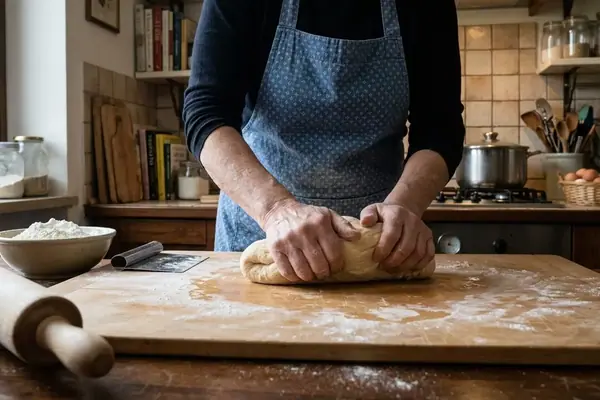
Shortcrust calls for almost the opposite approach. Here the aim is to coat fine semolina and plain flour with cool fat before adding liquid. Rub cold butter into the flours, then add just enough liquid for the dough to clump when squeezed in a palm. It need not look smooth in the bowl.
Keep the semolina a modest share of the flour. Too much makes the shell harder to roll and more prone to cracking; a finer grind also sits more comfortably in a delicate crust. Stop handling the dough once it holds together. Prolonged kneading works against the tender, short texture the butter is there to provide.
Wrap the dough and rest it in the fridge before rolling. The pause firms the fat and makes the pastry easier to handle. If the butter smears under the fingers while mixing, chill the dough before going further.
Patch The Tart Edge
When a rolled shell cracks at the rim, press a small piece of spare dough into the gap. Repeatedly rerolling the whole sheet warms and works the pastry. A neat patch is kinder to the finished crust.
When a filling calls for a Blind bake, look at the base as well as the rim. A pale, damp-looking bottom needs more attention even if the edge already has colour.
Set the centre before pouring syrup
Semolina sweets can colour at the surface while the middle still needs time. For a cake, look for a golden top and a set centre that springs back gently under a fingertip. Then put a skewer into the middle: it should come out without wet batter. A moderate oven gives the centre a better chance to set before the surface darkens.
A tart shell offers a different cue. Lift the tin and inspect the base rather than judging by the rim alone. It should look dry and lightly coloured, ready to support its filling without turning soft underneath.
If the cake will take syrup, pour it onto the baked cake gradually. Let each addition soak in before the next. Flooding the top at once can leave a wet seam at the base while the centre remains much as it was. Give the finished cake time to settle before cutting it.
Lemon or orange zest brings freshness to this kind of crumb. Rubbing zest into the sugar before mixing releases its aroma through the cake; it is a lovely home-baking choice, rather than a rule for every Mediterranean semolina sweet.
Read the crumb before changing the recipe
A cold slice and a forkful of pastry give useful evidence. Semolina that softens and disappears as it is chewed belongs to a pleasantly grainy crumb. Grains that stay chalky and catch against the teeth suggest that the grind or pre-bake hydration needs attention. Syrup added afterward will not make those dry grains behave like softened ones.
| What you notice | What to check | One change for next time |
|---|---|---|
| Distinct, chalky grains in cake | Grind and time in the wet ingredients | Use finer semolina or rest it with the yogurt before mixing |
| Dense or wet cake centre | Batter thickness and centre doneness | Check the spoonable batter cue, then test the centre before removing the cake |
| Hard tart shell | Grind and dough handling | Use a finer grind or handle the dough less |
A darker tin can brown the outside sooner than a pale one, and a change of pan or oven can shift the result too. Note the grind, rest, tin and oven setting in the recipe book. On the next bake, change one variable so the result actually teaches you something.
Start with a fine-semolina lemon yogurt cake
A familiar lemon yogurt cake makes a sensible first bake. Its yogurt gives the semolina moisture to absorb, and its crumb is easier to assess than a delicate tart shell. Take the flour weight from a recipe you already know. Replace a modest portion of that weight with fine semolina, keeping the total flour-and-semolina weight the same. Weigh the swap rather than using cups; semolina and plain flour do not fill a cup at the same weight.
- Stir the fine semolina into the recipe’s yogurt and let it rest briefly while preparing the tin and lemon.
- Finish mixing the batter, checking that it remains evenly moist and spoonable, then bake it without another long wait.
- Once cool, taste a slice and note whether the grains soften as you chew or remain conspicuous.
Keep that note beside the recipe. If the crumb feels chalky, adjust the grind or its time with the yogurt on the next bake. For a first semolina dessert, choose the fine-grind lemon yogurt cake before a coarse-grind syrup cake or a delicate tart.