Fenek Moqli Belongs Beside the Family Stove
Maltese fried rabbit, or fenek moqli, is rabbit cooked in pieces in a frying pan, usually with plenty of garlic. It belongs to the garlic-scented family kitchen and the celebratory table. Its method differs from stuffat tal-fenek, in which rabbit braises slowly in sauce: frying keeps the cook beside the pan, watching the meat and managing the heat.
That distinction matters before memory takes over. The smell of garlic meeting hot oil can bring the childhood kitchen close again, yet it tells us little about how the meal reached the plate. Someone handled the rabbit. Someone knew which piece needed longer and when the garlic had taken enough colour.
I want to keep those actions in view, because this is where affection for a dish becomes the ability to cook it.
A family can hold rabbit close as an expression of Maltese identity while the people expected to prepare the next meal feel uncertain about buying or handling it. The useful question starts there: how do we make room at the stove for someone who knows the flavour but has yet to learn the work?
Garlic Carries the Memory; Hands Carry the Method
Garlic in hot oil announces dinner before a plate appears. Its sharpness softens as it cooks; pale edges begin to turn gold. Beside it, the pan gives its own account of what is happening through the strength of the sizzle and the colour developing on the rabbit.
These are the sensory details that give a childhood kitchen its lasting shape. Remembering them can feel wonderfully complete. Cooking from them is another matter.
Rabbit has a recognised place in Maltese celebratory eating, including the communal meal known as fenkata. In a diaspora household, preparing it gives island food culture a place at the present-day table. A Melbourne kitchen can carry that connection through the ordinary business of shopping, preparing and feeding people.
Yet the finished plate preserves only part of the knowledge. The less visible inheritance includes turning pieces with tongs, tilting the pan to inspect the oil, and lowering the heat as garlic begins to darken. Those gestures deserve the same attention as the remembered flavour.
Compare a recollection with a usable instruction. “Plenty of garlic” describes an impression. “Watch the edges turn gold, then lower the heat” gives the next cook something to recognise and do. Family memory becomes teachable when it reaches that level of detail.
Five Hesitations Behind an Empty Rabbit Pan
A younger cook's hesitation can look like indifference from the other side of the table. Before treating it as a rejection of family food, separate the decisions involved.
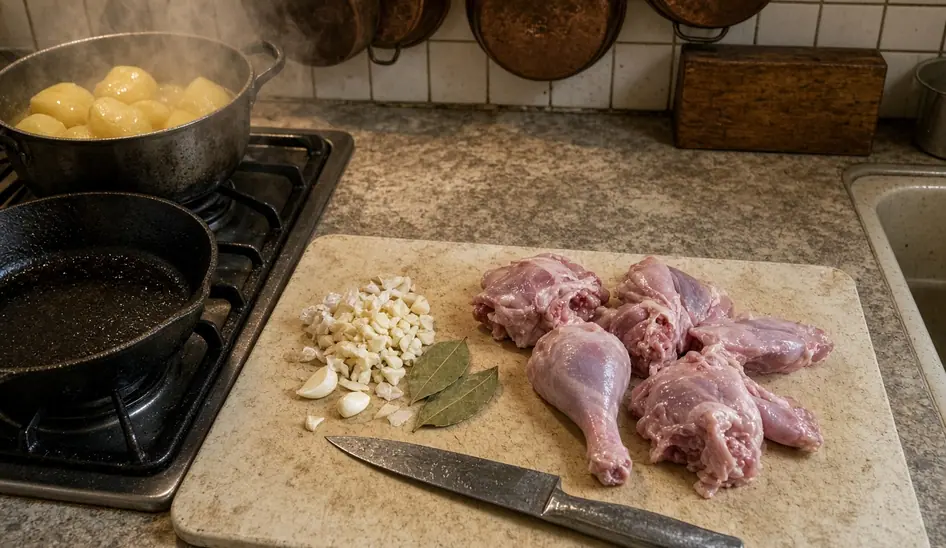
- Finding rabbit: in Melbourne, specialist butchers and game suppliers are more useful starting points than assuming it will be available beside supermarket chicken. Ask ahead about ordering.
- Facing the carcass: a whole rabbit remains recognisably an animal. Handling it can feel quite different from opening a packet of familiar portions.
- Cutting it: identifying joints and using a knife confidently require skills that the frying itself does not teach.
- Risking the purchase: uncertainty about cooking lean meat can make the prospect of wasting it especially discouraging.
- Choosing to eat rabbit: discomfort with eating the animal belongs to the person's values and deserves a respectful answer.
These barriers call for different responses. A shopping question needs a supplier and a planned purchase. Unfamiliar handling benefits from prepared pieces and company. Anxiety about the pan needs close observation and a manageable first meal.
An ethical preference deserves room at the family table without an argument attached. Invite someone who wants to learn; let willingness set the terms of the cooking session.
That distinction keeps heritage generous. Passing on a dish works best when the invitation carries practical help rather than an obligation to prove belonging.
Ask the Butcher for Pieces Ready for the Pan
The simplest bridge into cooking rabbit is to order it jointed into cooking pieces. This separates two substantial tasks: learning the animal's structure with a knife and learning how its different cuts behave over heat.
Make the request precise. Ask whether “jointed” means individual cooking pieces or merely a rabbit cut in half. Confirm whether the head and offal are included, and discuss how many people the purchase will feed alongside the rest of the meal.
Then ask the butcher to identify the cuts. The hind legs are thick and meaty, so they need longer attention. The saddle contains lean loin meat that dries readily when left too long. The smaller, bony forelegs cook more quickly. Seeing those differences on the counter makes the later conversation at the stove much easier.
Prepared pieces also let the newer cook concentrate on surface moisture, pan space and heat. Each task becomes easier to understand when knife work has already been taken care of.
Whole-animal preparation can have its own place later. For this first meal, the useful achievement is recognising what each piece needs once it reaches the pan.
Teach the Browning, Then Explain the Garlic
Organise the shared session around things the newer cook can observe. Rabbit is lean compared with chicken thighs or pork, so attention matters: it has less fat to cushion overcooking. The experienced cook should explain decisions while making them, with the learner close enough to see.
Give Each Piece Room to Brown
- Identify the pieces before cooking. Set the thicker legs apart from the lean saddle and smaller forelegs. Discuss their order of entry into the pan.
- Pat the surfaces dry. Surface moisture must evaporate before browning can begin. Drying the pieces reduces that delay and helps reduce spitting oil.
- Arrange space in the pan. Leave gaps between pieces. Crowding traps steam around the meat and encourages a grey, wet surface rather than a browned one.
- Watch the changes together. Use tongs to turn the pieces and describe the developing colour, the sound of the sizzle and any heat adjustment.
Explain the reasoning as well as the sequence. Starting thicker pieces earlier gives them more cooking time; adding everything together makes the leaner pieces wait for the thickest. A crowded pan changes the conditions for every piece in it.
Keep Garlic Within Sight
Garlic needs its own attention. Slices can move quickly from pale gold to bitter brown. Adding them later, or lowering the heat before they enter, gives the cook more control over that change.
Ask the experienced cook to say what prompts the next action: garlic edges turning gold, a sizzle quietening, a piece needing to move. Ask how they judge readiness, too, so the learner hears the reasoning behind taking meat from the pan.
The written record should name the cuts, the pan's material and size, the order of ingredients and those sensory cues. Keep the household's actual seasonings and sequence intact. That is how a family version remains recognisable while becoming possible for another pair of hands.
Put the New Cook in Charge of the Next Meal
The next garlic-scented kitchen needs a date in the diary. Order butcher-jointed rabbit, invite a willing relative or friend, and cook alongside someone who knows the family approach when possible. Keep the gathering small enough for conversation at the stove.
Give the newer cook the tongs and space to act. Let the experienced cook explain a heat adjustment before reaching across to make it. Shared attention gives the learner a chance to connect an instruction with the colour and sound that prompted it.
Write the method down that evening, in the newer cook's words, while the sequence still feels familiar. Include what happened in the pan, not simply what went into it.
My recommendation is to book the following rabbit meal within a few weeks and put that newer cook in charge. Keep the familiar hand nearby, but let the next pair of hands carry the meal to the table.