Maltese Ravjul Begin with Ricotta and Parsley
Maltese ravjul are filled pasta parcels, made here with sheep’s milk ricotta and parsley enclosed in homemade pasta dough. Cut through a cooked parcel and the aim becomes clear: tender pasta around a soft, cohesive centre, with the parsley running through the creamy cheese.
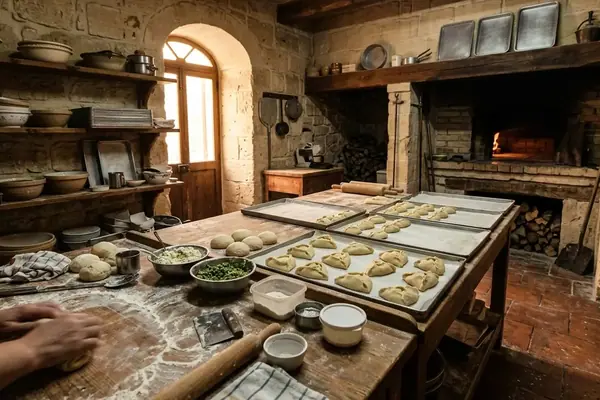
This is Maltese home cooking suited to a kitchen table cleared for rolling. It belongs comfortably in Gourmet Worrier’s Maltese kitchen, where the making matters as much as the bowl at the end.
The sequence follows the dough’s needs: mix and rest it, prepare the filling, roll, seal and simmer. Allow about 2 to 2.5 hours from mixing to serving, including 30 to 60 minutes of resting. Check the ricotta beforehand, since wet cheese needs separate draining time.
Set Out the Cheese, Flour and Rolling Tools
A dough made with two eggs and about 200 g of flour gives roughly 20 to 28 parcels, depending on their size and spacing. Sheep’s milk ricotta brings a creamy texture and rounded flavour; parsley keeps each mouthful fresh.
For the pasta dough
- About 200 g plain or ‘00’ flour, plus a little for dusting
- 2 large eggs
- Water, only if the dough needs it
For the ricotta filling
- 400 to 500 g sheep’s milk ricotta
- A small bunch of flat-leaf parsley, about 15 to 20 g picked leaves
- Fine salt and black pepper
For serving and shaping
- 400 to 500 ml plain tomato sauce
- Grated hard cheese, if liked
- A mixing bowl, fine sieve, clean cloth, rolling pin or pasta machine, pastry cutter, tray and wide pot
A rolling pin and plain pastry cutter leave the parcel size in the cook’s hands. A fluted cutter gives a different edge, while the sealing method stays the same. Keep the sieve ready before opening the ricotta.
Give the Egg Dough Time to Relax
Tip the flour into a bowl, make a hollow in the centre and add the eggs. Beat them gently, drawing flour inward a little at a time. Once the mixture becomes too thick to stir, bring it together by hand and move it onto the work surface.
Knead for about 8 to 10 minutes, incorporating loose flour gradually. The dough should become cohesive and smooth, with a fingertip dent that slowly fills back in.
Texture guides the adjustment. If the dough remains crumbly after a few minutes of kneading, add water a teaspoon at a time. If it sticks to the bench, dust the surface sparingly with flour. Work each correction through before adding more.
Cover with an upturned bowl or cloth and rest at room temperature for 30 to 60 minutes. That pause lets the dough relax so it rolls more readily. The filling can come together meanwhile.
Roll a portion at a time, keeping the rest covered. Aim for a sheet about 1 to 1.5 mm thick: it should drape over the back of a hand without tearing, with the fingers’ shadows just visible through it. On many home pasta machines, this falls around the second- or third-thinnest setting.
If the sheet keeps shrinking back, cover it for another 10 to 15 minutes. Pressing harder tends to leave thick patches beside thin ones.
Prepare a Filling That Stays in a Soft Mound
The ricotta needs attention before the parsley goes in. Whey pooling on the surface or around the tub’s edge calls for draining: place the cheese in a fine sieve over a bowl, cover and refrigerate for 1 to 3 hours, or longer for very wet cheese.
Loose whey softens pasta from within and can weaken the join. Dealing with it now makes shaping much easier.
Wash the parsley, spin or pat it dry, then spread it on a clean cloth for 10 to 15 minutes. Chop finely so the leaves distribute through the cheese rather than gathering in leafy pockets.
Fold the parsley into the drained ricotta with black pepper and salt. About half a teaspoon of fine salt per 500 g of ricotta gives a starting point; taste and adjust. Mix gently, keeping the cheese’s soft texture.
A teaspoonful should sit as a soft mound that holds together. If it slumps flat, drain the ricotta mixture further before filling the pasta.
Fold Each Sheet Around Clean, Air-Free Mounds
Shape one sheet at a time. This keeps the pasta supple while leaving room to adjust the parcel size as the tray fills.
- Lay a sheet on a lightly floured surface. Arrange heaped teaspoons of filling along one half, about 4 to 5 cm apart, leaving the other half free to fold over.
- Check that each mound has enough clear dough around it for a border roughly 1 to 1.5 cm wide after cutting. Keep ricotta smears and excess flour off these joining surfaces.
- Fold the free half over the filling. Starting close to each mound, press the air outward towards the open edges, then press the clean dough firmly together.
- Cut individual parcels with the pastry cutter. Check each border with fingertips and press any loose sections closed.
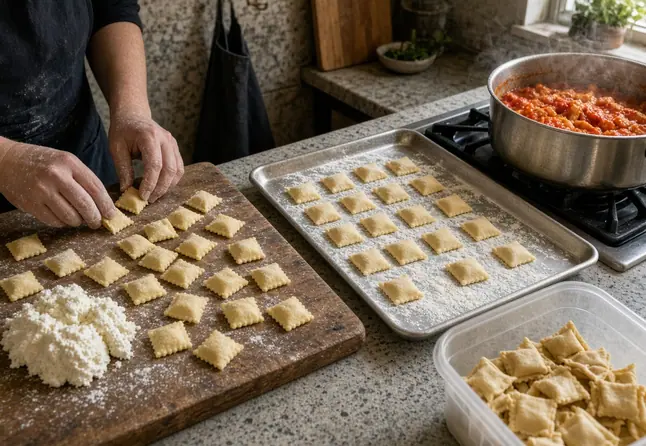
- Set the ravjul on a lightly floured tray in a single layer, leaving space between them.
Freshly rolled dough should seal with pressure. A sheet left exposed for 5 to 10 minutes may need a damp fingertip along the joining edge. Use water lightly; a slippery join is difficult to press together.
A thin scrap of dough can patch a small tear when pressed flat over it. Reduce the filling by about a quarter in the next few parcels if the pasta keeps tearing around the mound.
Let One Cooked Parcel Guide the Batch
Bring a wide pot of water to a gentle boil, salted at roughly 10 g per litre. Lower in one ravjul first. This small test checks the dough, filling and seal together before the whole tray enters the pot.
Fresh parcels usually take about 4 to 7 minutes. Floating is the cue to inspect the pasta. Lift the test parcel with a slotted spoon and cut through its thickest folded edge. That double layer should feel tender through the centre.
- If the cut seam opens, check for trapped air or ricotta on the join, then press the remaining parcels’ borders again.
- If the dome splits, reduce the filling in the parcels still being shaped.
- If the folded edge remains chewy, allow another 1 to 2 minutes before checking again.
Cook the batch in groups of about 8 to 10, giving the parcels room to move. Keep the boil gentle and lift them out with a slotted spoon rather than tipping them into a colander.
Spoon Over Tomato Sauce and Freeze Tomorrow’s Share
Warm the tomato sauce over low heat while the final batch cooks. Lift the ravjul into warm, shallow bowls and spoon the sauce over gently. Grated hard cheese can follow at the table. Keeping the sauce ready means the cooked parcels reach the bowl without sitting and sticking together.
For another meal, freeze uncooked ravjul separately on a floured tray for 1 to 2 hours, until firm, then transfer them to a sealed freezer container. They keep their best texture for about 4 to 6 weeks. Choose fresh ricotta that has never been frozen for this batch, since thawed ricotta becomes grainy and releases whey.
Frozen parcels go straight into gently boiling water, usually for about 6 to 9 minutes. Check the thickest sealed edge for tenderness before lifting them into bowls.
Will the whole tray go into tonight’s tomato sauce, or will a portion go into the freezer for the next ravjul supper?