From the back-door basket to winter figs
A basket of soft figs sits beside the back door. Outside, the morning is clear and an empty mesh rack waits above the garden table. It is an ordinary late-summer kitchen moment in Melbourne: fruit ready now, with more sweetness than the household can comfortably eat fresh.
Sun-drying begins with sound, ripe figs cut into pieces of similar thickness. They dry on raised, insect-protected racks, come indoors before evening damp, and stay under watch until the cooled flesh feels leathery throughout. Conditioning follows, then packing for the freezer or, when the fruit is thoroughly dry, the cupboard.
The sequence matters. A fig can look wrinkled outside while holding a wet centre.
Dried figs belong comfortably in Mediterranean winter cooking: chopped into baking, tucked into fig-filled pastries, or served alongside cheese. Bay and aniseed bring familiar pantry aromas. Getting there takes attention to the fruit and Melbourne's changing weather, with the rack moving between garden and house as conditions require.
A drying window needs a breeze as well as sunshine
The forecast deserves attention before the knife comes out. A single hot afternoon gives little room for thick, juicy fruit to lose its moisture. A run of dry days, moving air and a sunny position gives the process a useful start.
Warmth helps moisture leave the flesh; dry air can take it up, and a breeze carries that moisture away. A sheltered corner that feels hot but holds still, humid air can leave figs drying slowly. The rack needs ventilation as much as exposure.
A sunny spot away from road dust, pets and garden spraying suits the job. The route indoors matters too: a loaded rack should be easy to lift without tipping sticky fruit into its cover.
- Check the forecast for the coming days before preparing the batch.
- Bring racks inside before evening dew settles, keeping them somewhere dry and ventilated.
- Return them outdoors only after morning damp has cleared.
When rain, persistent humidity or a cool change interrupts drying, partly dried figs should move promptly to a food dehydrator on its fruit setting, following the manufacturer's instructions. Waiting through damp weather lets moisture linger in the flesh.
Sort the figs before any cutting begins
A suitable fig smells sweet and fruity, yields gently under a finger, and holds together when lifted. A softened neck and a slight droop on the stalk help identify ripeness on the tree. Hard figs will not continue ripening once picked, so they make poor candidates for the rack.
Sorting works best with a separate bowl for discarded fruit. Mould, a sour or fermented smell, leaking juice and insect damage all send a fig into that bowl. Cutting away a damaged patch leaves too much uncertainty about the remaining flesh; affected fruit stays out of the drying batch.
Keep the pieces close in thickness
Sound figs get a gentle wash under running water, followed by thorough surface drying with a clean cloth or paper towel. Water caught around the neck or eye adds moisture before drying has even begun.
The stems come off next. Small figs can be halved lengthways; larger fruit can be quartered. The aim is comparable thickness across the rack, especially through the plumpest part. Gloves are useful when stemming a large basket because fig latex can irritate skin.
Build the rack around airflow and a clear cover
A modest reusable rack needs a rigid frame, food-safe mesh and raised supports. The supports leave an air gap beneath the fruit, allowing its underside to dry along with the exposed flesh. A separate fine-mesh cover keeps insects away.
Mesh sold for food drying is the straightforward choice. Stainless-steel mesh suitable for food contact or food-grade plastic drying mesh can support the figs. Unidentified window screening, galvanised mesh, copper or aluminium screening, treated timber and rusty metal should never touch the fruit.
The frame must hold its shape when carried indoors. A flexible rack that bows in the middle encourages pieces to slide together, making the evening move unnecessarily awkward.
Leave room above and below
The figs sit cut-side up in a single layer, with space between pieces. Hoops or a second frame can hold the insect cover clear of the sticky surfaces. Its edges need securing so flies cannot slip underneath, while the mesh still allows air through.
A solid tray directly beneath the figs obstructs that airflow. If juice needs catching, a drip tray can sit lower down with a clear gap beneath the rack. The whole arrangement should be easy to clean before the next batch.
Read the flesh, then test a cooled piece
Freshly cut figs begin with glossy, wet flesh. As drying progresses, that shine fades. The edges pull inward, the pieces shrink, and the centre gradually changes from juicy to soft and leathery.
The rack needs regular attention through the day. Rotating its position helps share sun and air across the batch. Pieces that stick can be loosened gently, and thin pieces that finish early can come off while thicker quarters continue drying.
A dry-looking skin can conceal a moist pocket. The stopping check belongs in the thickest part of a cooled piece. Warm fruit feels softer, which makes texture harder to judge.
- Take representative pieces from different parts of the rack and allow them to cool completely.
- Cut through the thickest flesh and look for any glossy, wet centre.
- Press the cut piece gently. Finished flesh should feel leathery and pliable, without releasing moisture.
Natural sugars can leave a little surface tackiness. Visible wetness, juice under pressure or a moist pocket calls for more drying. Any piece that develops mould or an off smell goes straight out of the batch, untasted.
This is patient kitchen work. Moving finished pieces off the rack gives the remaining fruit room and keeps the decision tied to each piece's condition.
Let the cooled batch settle before adding aromatics
Conditioning gives moisture a chance to redistribute between pieces after drying. It also makes uneven drying easier to spot before the figs disappear into winter storage.
Completely cooled figs go loosely into clean, dry, transparent containers, filled about two-thirds full. The empty space lets the pieces move when the container is gently shaken. The lids close, and the jars stay in a dry place where they can be checked easily.
For in the range of 7–10 days, each container gets a gentle daily shake and an inspection. Pieces should separate readily. New clumping deserves a closer look for dampness, and droplets on the glass call for action.
Condensation sends sound fruit back to drying
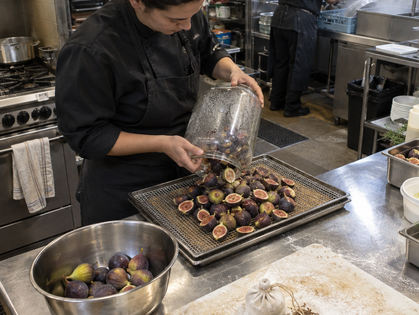
Moisture inside a conditioning jar means some of the fruit still holds excess water, often in a thicker centre. Otherwise sound figs return to drying, then cool completely before a fresh conditioning period begins. If mould appears, the entire contents of that container are discarded.
Only after conditioning should fully dried culinary bay leaves or aniseed join the fruit. A small removable sachet keeps the aromatics easy to retrieve. Damp leaves would introduce moisture again.
Bay and aniseed contribute fragrance. Drying, careful conditioning and the chosen storage method do the keeping.
Pack small portions for winter pastries and cheese plates
For a backyard batch, small sealed freezer portions are the practical default. A portion sized for a pastry filling or a small cheese plate avoids opening the whole supply whenever a few figs are wanted.
Containers or freezer bags should be clean, dry and airtight. Labels need the packing date and any added bay or aniseed, so the scent inside is no mystery several months later.
Cool, dark cupboard storage belongs to thoroughly dried fruit that completed conditioning without condensation. A handsome jar on a shelf is a storage decision, and it deserves the same care as the drying rack.
Freezing cannot rescue spoiled figs. Every container needs checking before use, with mould or an off smell prompting disposal. Frozen portions should remain sealed while reaching room temperature, keeping condensation away from the fruit.
The useful final decision happens while the batch is still on the kitchen bench: will the first freezer portion hold enough figs for a winter pastry filling, or just enough for a cheese plate?