Start With the Maltese Kitchen You Will Actually Cook From
A beginner Maltese pantry does not need to look like a museum shelf. It needs to make dinner.
The practical list begins with bread, olive oil, tomatoes, legumes, garlic, herbs, cheese, salt, preserved vegetables, and a few fresh proteins planned around the week. That is the working answer, assembled by looking backward from the first dishes a new cook is most likely to make: Hobz biz Zejt, Fażola bit-Tewm, and Aljotta.
That shape suits the Gourmet Worrier kitchen. Ms.Gourmet’s author-led archive moves between Maltese memory, Italian and Mediterranean habits, and Melbourne shopping reality. It is not detached from the bench. It asks what a cook can buy on a Saturday, what will survive the week, and what still tastes like home when the exact ingredient is out of reach.
So this guide is not a rigid inventory of every Maltese ingredient. It is a stocking guide. Buy what helps the first meals happen, then add the more particular things as your hands learn what they like.
Quick Nav
- Scope: What This Guide Can—and Cannot—Claim
- The Foundation Trio: Bread, Olive Oil, and Tomatoes
- Beans, Garlic, Herbs, and Salt
- ġbejna and Dairy
- Fresh Staples to Plan Around
- Preserved Flavour Makers
- Three-Pass Pantry Build
- Starter Meals
Scope: What This Guide Can—and Cannot—Claim
This guide draws from a bounded archive, not from a claim to cover all Maltese cooking. The notes sit mainly in Ms.Gourmet’s Maltese kitchen writing from 2008 to 2010, including travel through Malta and Gozo, Melbourne adaptations, and recipe references carried back into the home kitchen.
That matters. Gesther in Xaghra, Gozo, and restaurateur Giusa appear as a recipe source for Gozitan food. Ta’Rikardu in the Cittadella, near St Mary’s Cathedral, gives a concrete reference point for ġbejna and local eating. These are not badges pasted onto a pantry list. They are field points in a small, particular archive.
Important: Maltese family recipes vary from household to household. Seasonal fish changes with the market. Diaspora cooks, especially in Melbourne, often need substitutions the archive cannot anticipate.
Citations
- Ms.Gourmet’s Maltese kitchen notes from 2008 to 2010, including Malta and Gozo travel writing and Melbourne cooking adaptations.
- Archive references to Gesther in Xaghra, Gozo, restaurateur Giusa, and Gozitan recipe context.
- Archive references to Ta’Rikardu in the Cittadella near St Mary’s Cathedral, especially for ġbejna and local eating.
The Foundation Trio: Bread, Olive Oil, and Tomatoes
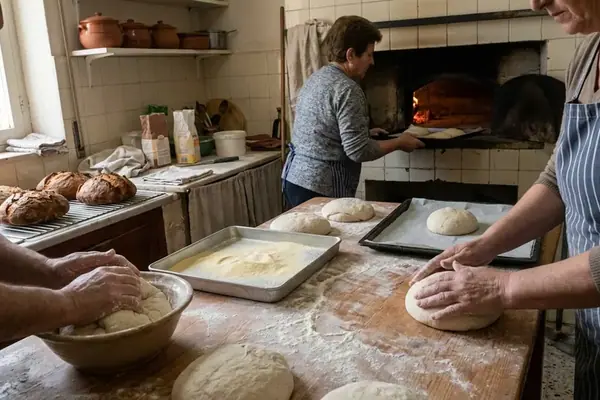
Bread comes first because it decides the texture of the meal. A soft loaf collapses under tomatoes and oil. A proper crusty loaf carries them.
For a Maltese pantry, the emotional ideal is ħobża Maltija. For Melbourne readers, Ms.Gourmet’s archive points toward casalinga-style sourdough, with Irrewarra noted as a bread reference. The aim is not to imitate Malta perfectly. Choose a sturdy, open-crumb loaf that can absorb oil and tomato without turning to paste.
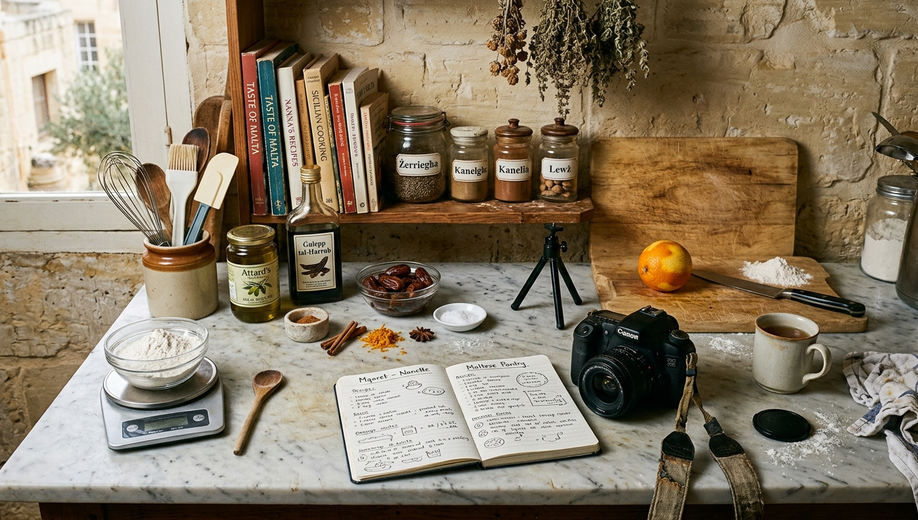
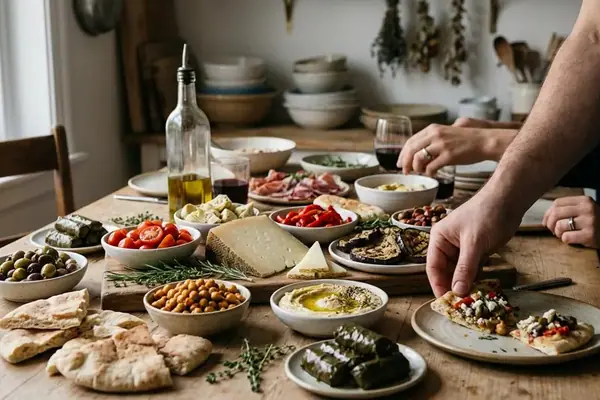
Hobz biz Zejt, or Ħobż biż-Żejt, is the beginner’s first Maltese pantry meal. Rub or layer bread with tomato, dress it with olive oil, then add simple toppings from the shelf or fridge. It teaches balance before it teaches technique.
Tadam is the Maltese word for tomato, and tomatoes sit everywhere in this beginner pantry: sandwiches, sauces, soups, and fresh salads. Keep ripe tomatoes at room temperature, because the fridge dulls their aroma. If the tomatoes are poor, canned tomatoes are not a moral defeat. They are supper.
Oil for Cooking, Oil for the Table
If the budget allows, keep two extra virgin olive oils. One everyday bottle handles cooking. A better finishing oil stays for bread, beans, salads, and the last spoonful over soup.
Beans, Garlic, Herbs, and Salt: The Quiet Workhorses
Fażola bit-Tewm is the best teaching dish here because it refuses drama. White butter beans, garlic, parsley, oil, and seasoning: that is enough to make a plate feel Maltese in spirit.
Keep dried or canned white beans. Add chickpeas if they suit the way the household eats. Garlic should never be an afterthought. Parsley earns a permanent place, while mint and bay leaves help when the cooking moves toward soups, braises, and salads.
- White butter beans, dried or canned
- Chickpeas, if they will be used often
- Garlic
- Parsley, mint, and bay leaves
- Coarse salt and black pepper
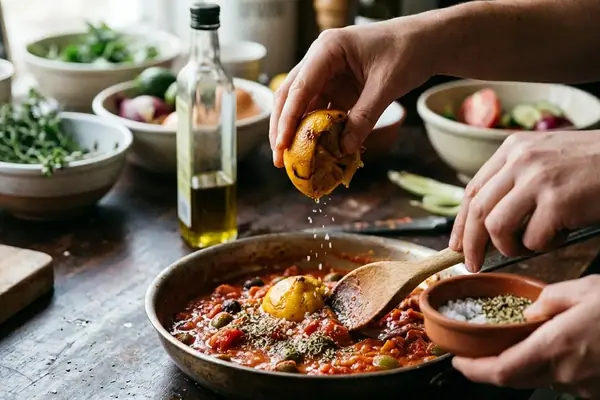
- Vinegar or lemon for brightness
Salt deserves more respect than a line on the shopping list. In the Maltese cycle recorded in the archive, salt-pan repair follows winter. Once the pans are mended, the harvesting season opens in April. That knowledge changes how a cook seasons. Salt is not merely a pinch; it is a preserved landscape.
Field Note: Do not salt preserved ingredients before tasting. Olives, cheese, capers, and brined vegetables often arrive seasoned already, and a second heavy hand can ruin the dish.
ġbejna and Dairy: The Cheese That Changes the Meal
ġbejna earns its own section because it changes the structure of a meal. It is not just a garnish scattered at the end.
This traditional Gozitan cheese, made from sheep or goat milk, can sit on bread, crumble beside beans, sharpen a salad, or fill ravjul, the Maltese-style ravioli that makes cheese feel like a centre rather than an accent. The archive also notes peppered ġbejna, which brings its own savoury edge.
Ta’Rikardu in the Cittadella near St Mary’s Cathedral matters here as a food memory and producer context. It gives the cheese a place, not just a name.
Melbourne cooks rarely find ġbejna fresh, so the substitution path matters more than purity in diaspora kitchens. Use a firm sheep or goat cheese when the cheese needs to be sliced or crumbled. Use a ricotta-style filling when making ravjul. Buy small amounts and store carefully, because ġbejna’s character shifts quickly once cut.
Fresh Staples to Plan Around: Fish, Rabbit, and Beef Olives
Fish and meat are not pantry staples in the shelf-stable sense. Still, they belong in a Maltese kitchen plan because they decide which dry goods and aromatics should be ready before the fresh purchase comes home.
Aljotta is the clearest example: a garlicky fish soup with tomatoes and herbs. If the pantry already holds oil, garlic, tomatoes, parsley, salt, and bread, a market fish can become dinner without a second expedition.
The archive names seasonal fish for Aljotta and grilling: white bream, John Dory, amberjack, dentex, and bass. The sensible beginner move is not to chase every name. Ask what is fresh, then cook with the Aljotta frame in mind.
Why the Luzzu Belongs in the Pantry Conversation
The luzzu, the traditional Maltese fishing boat, often carries the Eye of Osiris on its bow. That image belongs here because seafood is not just an ingredient category; it is part of Maltese food memory. A pantry that keeps garlic, tomatoes, herbs, oil, and bread ready makes room for that memory when the right fish appears.
Rabbit for Fenek and beef slices for Bragioli work the same way. They are fresh purchases supported by a dry pantry: tomatoes, herbs, garlic, oil, salt, and patience.
Preserved Flavour Makers: Olives, Lemons, Spices, and Butters
Preserved flavour is where beginner cooks can accidentally overdo things. The jars look small, but they carry force.
The olive-curing sequence in the archive is worth keeping because each step solves a problem. Crack the olive flesh without breaking the stone. Soak the cracked olives overnight in cold water to draw out bitterness. Then marinate them in extra virgin olive oil.
Important: Olive curing fails if the stone breaks during cracking. The flesh loses structure in the overnight soak, and the marinade cannot hold it together properly.
Preserved lemons sit slightly differently. They are a Mediterranean staple and work beautifully with tagine-style dishes and fish, but they sit beside classic Maltese pantry cooking rather than at its centre. Keep them if the household will use them.
Sumac and pomegranate molasses enter through the pomegranate butter recipe adapted from Arabesque in 2007. Treat them as broader Mediterranean flavour builders. They can brighten the table, but they should not crowd out bread, oil, tomatoes, beans, garlic, herbs, cheese, and salt.
How to Stock a Beginner Maltese Pantry in Three Passes
The three-pass system keeps the beginner from buying everything at once. It also shows which ingredients do the most work.
Pass One: Buy the Daily Base
Start with crusty bread or sourdough, extra virgin olive oil, ripe tomatoes or canned tomatoes, garlic, parsley, white beans, and coarse salt. This pass cooks the most meals and teaches the palate fastest.
Pass Two: Add Identity Ingredients
Add ġbejna or a thoughtful substitute, olives, capers if desired, dried herbs, tomato paste, and pasta or ravioli ingredients. This is where the pantry begins to taste less general Mediterranean and more Maltese in its habits.
Pass Three: Add Meal-Specific Extras
Buy fish for Aljotta, rabbit for Fenek, beef slices for Bragioli, or lemons for preserving and liqueur projects. These purchases should answer a meal plan, not sit around waiting for inspiration.
Three-Pass Maltese Pantry Build| Pass | What to Buy | Meals It Unlocks | Storage Note |
|---|---|---|---|
| Pass one: daily base | Crusty bread or sourdough, extra virgin olive oil, ripe or canned tomatoes, garlic, parsley, white beans, coarse salt | Hobz biz Zejt, Fażola bit-Tewm, simple tomato soups | Keep tomatoes at room temperature and move olive oil away from heat and light. |
| Pass two: identity ingredients | ġbejna or substitute, olives, capers if desired, dried herbs, tomato paste, pasta or ravioli ingredients | Ravjul, dressed beans, fuller bread suppers | Taste brined ingredients before adding salt. |
| Pass three: meal extras | Fish, rabbit, beef slices, lemons for preserving or liqueur projects | Aljotta, Fenek, Bragioli, preserved lemon projects | Label every preserved jar with its fill date. |
Starter Meals That Prove the Pantry Works
The first three meals should stay simple: Hobz biz Zejt, Fażola bit-Tewm, and an Aljotta-style fish soup. They build from the pass-one base, with pass-two ingredients added only when useful.
- Hobz biz Zejt: Slice sturdy bread, add tomato, olive oil, and a restrained topping such as olives or cheese.
- Fażola bit-Tewm: Warm or dress white beans with garlic, parsley, olive oil, and careful seasoning.
- Aljotta-style fish soup: Use fish with garlic, tomatoes, herbs, and bread nearby for the bowl.
During practice, the most useful habit is tasting before every seasoning step. A beginner who salts an Aljotta after adding already-brined olives and ġbejna can end up with a soup too salty to serve.
Stock for the dishes you will cook first. Bread, oil, tomatoes, beans, garlic, herbs, cheese, salt, preserved vegetables, and planned fresh proteins will take a beginner further than a crowded cupboard of rare ingredients.